More than five weeks of violent hostilities across the Middle East have left civilian populations in catastrophic conditions, and United Nations humanitarian officials are holding out cautious hope that a newly declared ceasefire will open a window to deliver life-saving aid and stem spiraling human suffering across the region.
The UN Office for the Coordination of Humanitarian Affairs (OCHA) released an update Wednesday outlining both the fragile optimism brought by the pause in fighting and the stark unmet needs facing communities across Iran, Lebanon, and Gaza. Sustained cross-border and internal attacks have leveled critical civilian infrastructure, including electricity grids, water systems, energy networks, and transportation links, leaving millions without access to basic services. The ceasefire, OCHA says, could finally reduce pressure on shattered communities that have endured daily violence and displacement.
In Iran, UN humanitarian teams and their partner organizations are working hand-in-hand with national government officials to rapidly expand support for displaced people and vulnerable local communities. Current operational priorities focus on restoring broken basic services, protecting at-risk groups including children, the elderly, and displaced families, rehabilitating damaged emergency shelters and school facilities, and moving critical supply stockpiles to areas cut off by hostilities.
The situation grows increasingly dire in Lebanon, where mass displacement has pushed humanitarian needs to record highs. OCHA confirmed that new government displacement orders now encompass the entire region south of the Zahrani River as well as the southern suburbs of Beirut, forcing tens of thousands more people to flee their homes in search of safety. The UN Refugee Agency and its partners, coordinating closely with Lebanese state authorities, have been working to support newly displaced populations by providing emergency shelter and essential household items. But officials issued a stark warning that conditions in collective shelters are rapidly deteriorating.
Severe overcrowding and a lack of functional sanitation facilities have already led to confirmed outbreaks of scabies and lice infestations, creating elevated public health and safety risks that disproportionately harm children and elderly residents. Lebanese health authorities have deployed mobile medical teams to address the outbreaks, and humanitarian partners are trucking in clean water, medical supplies, and additional shelter materials to contain the spread of disease and uphold basic living standards for displaced people. Even with these efforts, OCHA cautioned that the entire life-saving aid response is at growing risk due to crippling funding shortfalls. To date, less than one-third of the $308 million requested in the Lebanon Flash Appeal has been secured by aid groups, putting emergency operations in jeopardy just as needs surge across the country.
In Gaza, despite persistent logistical and access constraints, UN and local partners have made incremental progress in restoring routine public health services. A five-day vaccination campaign is currently underway to reach children under the age of 3 who missed all routine immunizations over the past 30 months of ongoing conflict and instability. The campaign is led by Gaza’s local health authorities, with backing from the World Health Organization, the UN Children’s Fund, the UN Relief and Works Agency for Palestine Refugees, international donors, and local humanitarian partners. Nearly 150 vaccination teams are deployed across the enclave, including operating in hard-to-reach areas that have seen limited aid access in recent months.
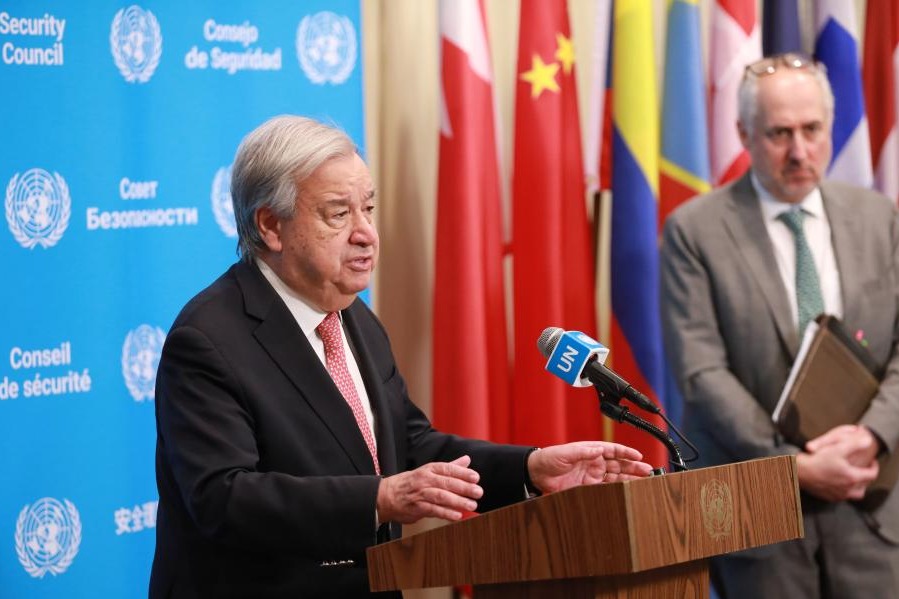
On the diplomatic front, UN spokesperson Stephane Dujarric confirmed that Secretary-General António Guterres welcomed the ceasefire announcement made late Tuesday. “The secretary-general underscores that an end to hostilities is urgently needed to protect civilian lives and alleviate human suffering,” Dujarric said in a statement. On Wednesday, Farhan Haq, deputy spokesperson for the UN chief, confirmed that Jean Arnault, Guterres’ personal envoy for the Middle East conflict and its fallout, has arrived in Iran to support diplomatic and humanitarian efforts aimed at securing a permanent end to hostilities across the region.