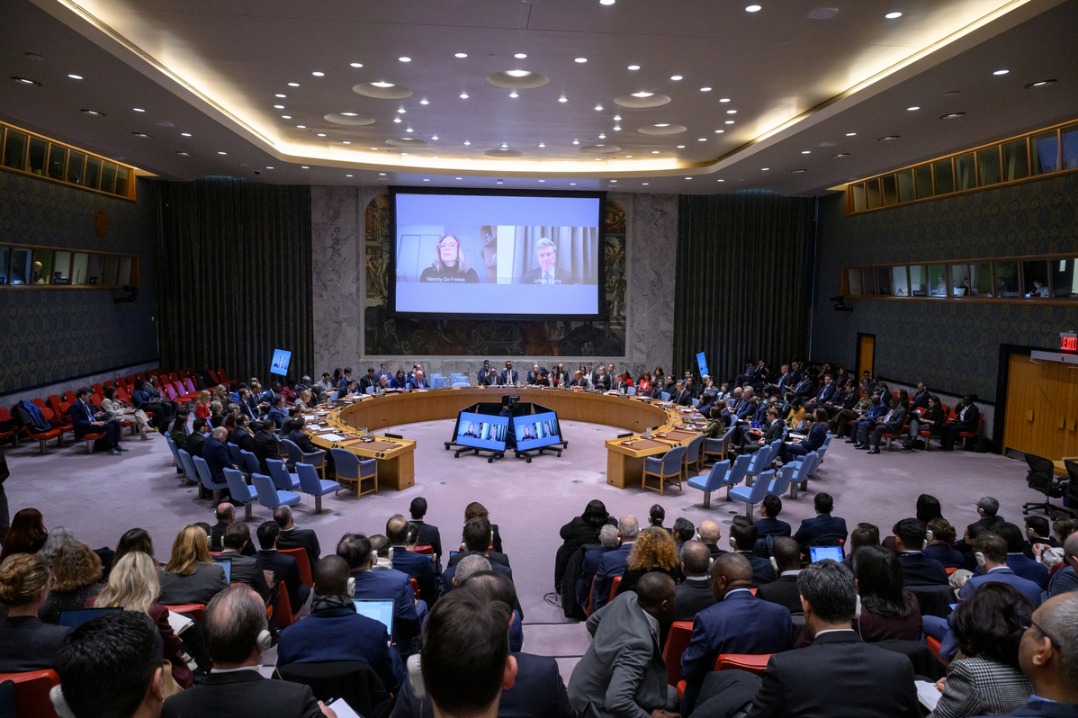
The United Nations Security Council convened its inaugural 2026 session amidst unprecedented diplomatic turmoil, as numerous member states delivered scathing condemnations of the United States’ military operation in Venezuela. The emergency meeting witnessed a remarkable display of international unity against what multiple diplomats characterized as a flagrant violation of established international law and the UN Charter.
China’s Deputy Permanent Representative to the UN, Sun Lei, articulated the position of many nations when he denounced the American strike as “unilateral, illegal and bullying acts” that represented a dangerous escalation in hemispheric relations. The Chinese diplomat emphasized that Washington had effectively “placed its own power above multilateralism and military actions above diplomatic efforts,” creating grave implications for regional stability throughout Latin America and the Caribbean.
The controversy stems from Saturday’s large-scale US military operation that resulted in the capture and extradition of Venezuelan President Nicolas Maduro, who subsequently appeared in a New York federal court facing narco-terrorism charges. While US representatives defended the action as a “surgical law enforcement operation,” the overwhelming majority of Security Council members rejected this characterization.
Russia’s UN Ambassador Vassily Nebenzia joined China in demanding Maduro’s immediate release, labeling the American intervention a “crime cynically perpetrated” that signaled a return to an era of “lawlessness.” This perspective found support across geographical blocs, with representatives from Mexico, Chile, Spain, Brazil, South Africa, Pakistan, and the A3 group (Democratic Republic of Congo, Somalia, and Liberia) all expressing variations of the same fundamental objection: that democracy cannot be imposed through military coercion.
Notably, US economist Jeffrey Sachs provided expert testimony condemning the operation as violating Article 2, Section 4 of the UN Charter. Sachs contextualized the intervention within a historical pattern of American “covert regime change” operations, citing documentation of approximately 70 such operations between 1947 and 1989 alone.
The emergency session revealed a stark division between the United States and its few supporters—including Argentina, which framed the operation as anti-narco-terrorism enforcement—versus the majority of international community that viewed the action as establishing a dangerous precedent for unilateral military interventions against sovereign nations.