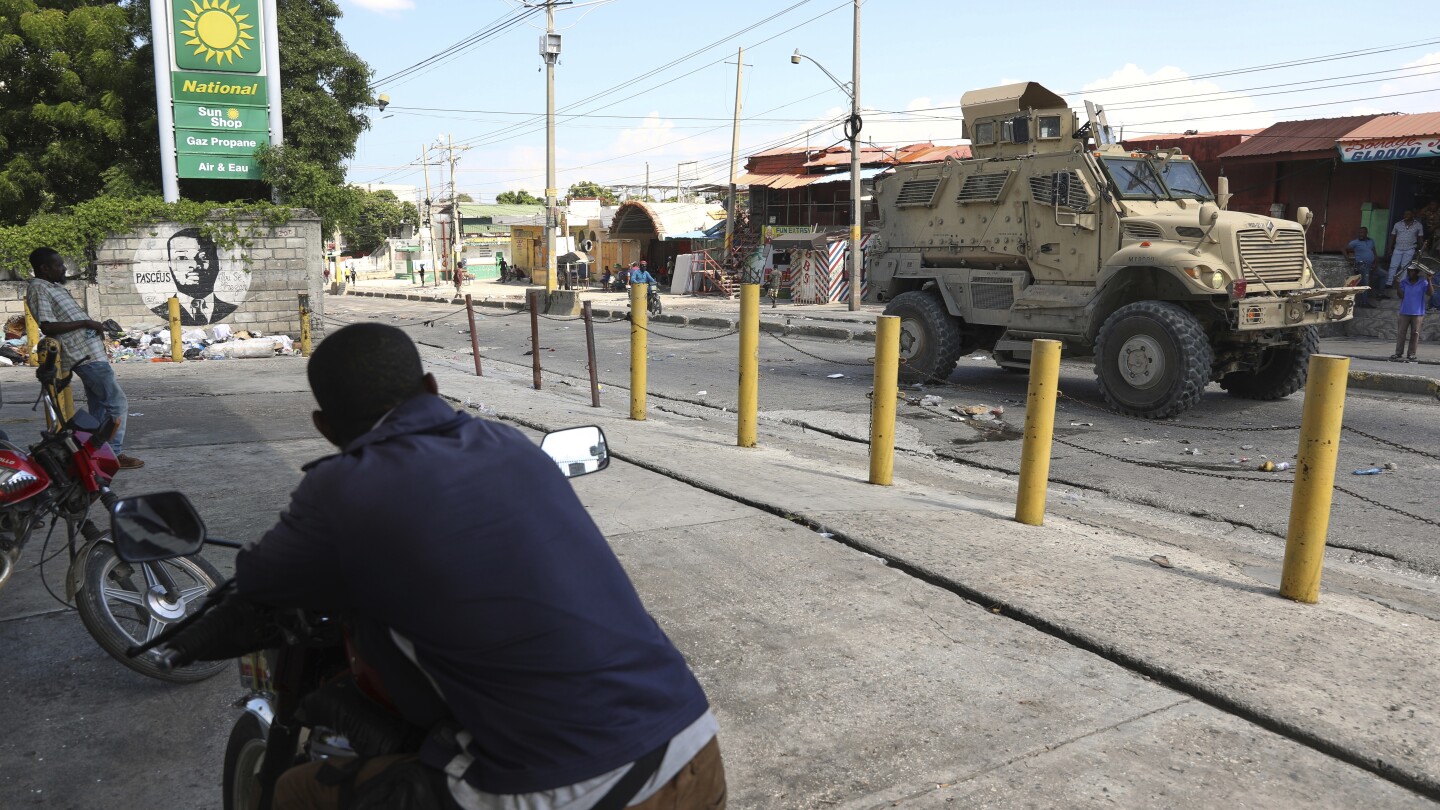
In a decisive move to address Haiti’s escalating gang violence, the United Nations Security Council unanimously approved a resolution on Tuesday to authorize a significantly larger international force. The new 5,550-member ‘Gang Suppression Force,’ co-sponsored by the United States and Panama, will replace the current Kenya-led multinational mission, granting it enhanced powers to arrest suspected gang members—a capability the existing force lacks. The vote passed 12-0, with Russia, China, and Pakistan abstaining. U.S. Ambassador Mike Waltz hailed the resolution as a beacon of hope for Haiti, emphasizing the urgent need to curb the rampant violence that has destabilized the nation. Since the assassination of President Jovenel Moïse in 2021, gangs have seized control of 90% of the capital, Port-au-Prince, and expanded their criminal activities into rural areas, including looting, kidnappings, and sexual violence. Haiti has remained without a president since the assassination, further exacerbating its political and economic turmoil. The U.S. Embassy in Port-au-Prince underscored the resolution’s message, declaring an end to impunity for those destabilizing Haiti. Panama’s U.N. Ambassador Eloy Alfaro de Alba expressed optimism that the force would restore security, enabling political reconstruction, elections, and economic revival. However, China’s U.N. Ambassador Fu Cong criticized the resolution, warning it could worsen Haiti’s already dire situation. He also accused the U.S. of failing to fulfill its financial commitments, including $800 million owed to the U.N. peacekeeping budget. Russia’s Ambassador Vassily Nebenzia echoed concerns, labeling the mission as poorly conceived and unlikely to succeed. The resolution, adopted under Chapter 7 of the U.N. Charter, authorizes the force for an initial 12-month period. It mandates intelligence-led operations to neutralize gangs, protect critical infrastructure, and support Haitian efforts to combat arms trafficking. The force will consist of 5,500 uniformed personnel and 50 civilians, funded by voluntary contributions. U.S. envoy Waltz urged nations to contribute personnel and resources, while Secretary-General Antonio Guterres was tasked with establishing a U.N. office to provide logistical support. Laurent Saint-Cyr, leader of Haiti’s transitional presidential council, welcomed the resolution, calling it a pivotal step in combating the gangs that have devastated the nation.
UN authorizes a much larger force to fight gangs in Haiti with new power to arrest gang members