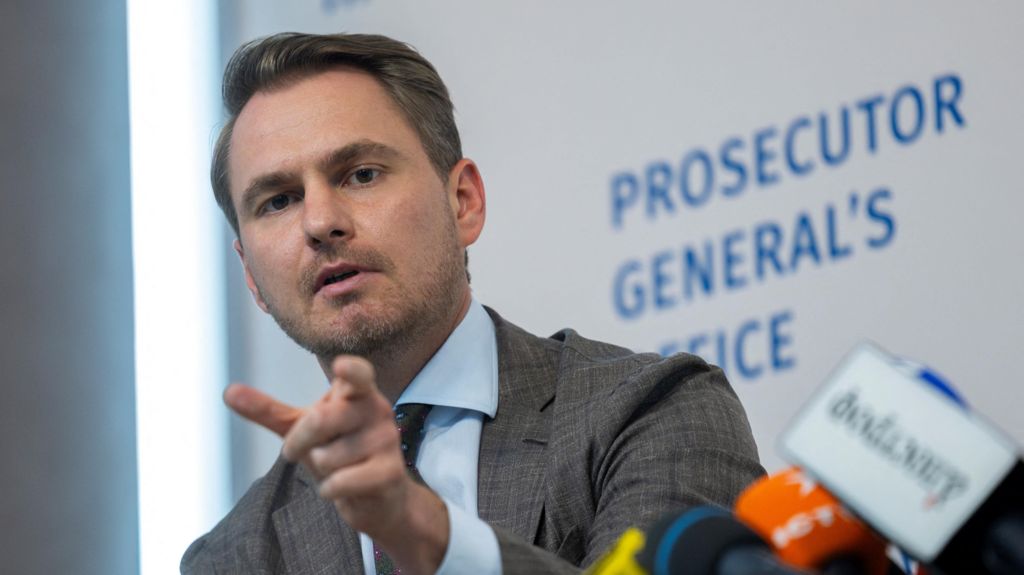
Ukraine’s highest law enforcement official, chief prosecutor Ruslan Kravchenko, has stepped down from his post following explosive corruption allegations tied to a criminal ring that protected illegal telephone scam operations. The resignation comes on the heels of a coordinated search of Kravchenko’s offices carried out over the weekend by the country’s top anti-corruption investigative bodies, which uncovered an alleged large-scale money laundering operation led by a senior official within Kravchenko’s own team.
In his formal resignation letter, Kravchenko stated that he was stepping down to prevent his position from being weaponized as a bargaining chip in domestic political clashes. He reaffirmed his earlier public rejection of the accusations, labeling them entirely unsubstantiated and denying any personal wrongdoing. One day after issuing a public statement dismissing all claims against him, Kravchenko tendered his resignation, publicly thanking President Volodymyr Zelensky and the Ukrainian parliament for the trust they extended to him during his tenure. As of this reporting, President Zelensky has not issued any public comment on Kravchenko’s departure.
According to joint statements from Ukraine’s National Anti-Corruption Bureau (NABU) and the Specialized Anti-Corruption Prosecutor’s Office (SAP), the criminal network embedded within the chief prosecutor’s office accepted bribes to shield unlicensed call centers running transnational phone fraud schemes. Investigators say the ring laundered millions of dollars in illicit proceeds, which were then used to purchase high-end residential and commercial property, luxury jewelry, and other high-value assets.
This latest corruption scandal is part of a long string of public controversies that have plagued Kyiv’s leadership throughout the ongoing full-scale war with Russia, with multiple senior officials and close associates of President Zelensky having been hit with corruption accusations over the past three years. While Ukraine established NABU and SAP more than a decade ago to root out systemic graft, corruption remains one of the most pressing systemic challenges facing the country, a hurdle that directly impacts its bid for European Union membership.
As an official EU candidate country, Ukraine was granted candidate status explicitly on the condition that it deliver meaningful, credible anti-corruption reforms. In 2025, widespread national protests erupted across the country after Zelensky proposed legislative changes that would have curbed the institutional independence of NABU and SAP. The proposal also triggered sharp alarm among Kyiv’s Western backers, with ambassadors from the G7 group of major economies warning that the move could put Ukraine’s EU integration trajectory at serious risk. Facing widespread public and international backlash, Zelensky reversed the proposed changes and restored the full independence of the two anti-corruption bodies, but lingering questions have persisted about the administration’s genuine commitment to deep anti-corruption overhauls.
Just last month, NABU announced the discovery of another major corruption scheme involving the misappropriation of more than $3 million in Ukrainian public funds to post bail for a former energy minister facing money laundering charges. A senior official from Zelensky’s own office who was implicated in that scheme was subsequently dismissed from his post.
In comments made to the BBC in a recent interview, former Ukrainian defense minister Mykhailo Fedorov, who was removed from his post in mid-July following reported disagreements with the leadership of Ukraine’s armed forces, called on Zelensky to publicly address questions about his awareness of potential corruption among his inner circle. “Let him answer this question… I believe that he’s ready for such questions. It’s his responsibility to tell us all whether he was aware of all that or not… I don’t want to make any assumptions,” Fedorov stated.
During his time in cabinet, the 35-year-old former minister was known for leading high-profile anti-corruption initiatives within the government. Since his dismissal, he has been openly critical of what he describes as a “systemic crisis of governance” in Ukraine, though he has been careful to emphasize that he has no evidence to suggest Zelensky is personally involved in any corrupt activity. “In all the time that I worked with him, not a single time have I received from him any task or assignment that would go against law or my sense of integrity,” he told the BBC.