In a coordinated expansion of its cross-front offensive targeting Russia’s wartime capabilities, Ukraine carried out a series of long-range nighttime strikes on critical Russian oil infrastructure deep inside Russian territory, Ukrainian President Volodymyr Zelenskyy confirmed Thursday. The operation marks the latest step in Kyiv’s strategy to weaken Moscow’s war-time economy and erode public confidence in the Kremlin amid the full-scale invasion that has stretched into its third year.
The targets of the attacks included two major oil refineries: one located in the Republic of Bashkortostan, more than 1,300 kilometers (800 miles) from the active front lines in eastern Ukraine, and a second in Russia’s Yaroslavl region, nearly 700 kilometers (400 miles) north of the Ukrainian border, Zelenskyy announced via social media. Beyond energy infrastructure, the Ukrainian president added that strikes also hit two Russian military patrol boats operating in the Black Sea, alongside multiple vessels belonging to Russia’s so-called “shadow fleet” — the network of unregistered and opaque vessels Moscow uses to bypass Western price caps and export sanctions on crude oil. Zelenskyy did not release additional details on the extent of damage to the vessels or casualty figures from any of the strikes.
In an immediate response to the attacks, Russia’s Defense Ministry claimed that its air defense systems intercepted and destroyed 605 Ukrainian drones overnight across multiple Russian regions, the illegally annexed Crimean peninsula, and the Black and Azov Seas. The repeated deep strikes into Russian territory have exacerbated domestic fuel shortages across Russia, sown unease among the Russian public, while boosting morale among Ukrainians who have faced relentless Russian aerial assaults that Kyiv’s depleted air defenses are struggling to repel.
While Kyiv advances strikes on Russian rear-area infrastructure, Russian forces have intensified their own bombardment campaign across Ukrainian territory, leaving Ukraine scrambling to secure additional air defense interceptors from its Western allies. Overnight Russian attacks using drones and glide bombs killed at least three civilians and wounded 22 more across multiple regions of Ukraine, local Ukrainian officials confirmed Thursday. In recent weeks, Moscow has increasingly relied on ballistic missiles in its barrages — weapons that Ukrainian officials say only advanced U.S.-made Patriot air defense systems are capable of intercepting. However, global stockpiles of Patriot interceptor missiles have been depleted by ongoing conflicts including the Iran crisis, leaving critical gaps in Ukraine’s aerial defenses that Russian forces are actively exploiting to devastating effect.
Following a deadly Russian barrage that killed 17 people in the Kyiv region just days prior, Zelenskyy stated via social media that Kyiv is working at full speed with international partners to secure urgent supplies of interceptor missiles to protect civilian lives and infrastructure from what he called “insane Russian strikes.” The Ukrainian president added that he had already held discussions with NATO Secretary General Mark Rutte and Finnish President Alexander Stubb about urgently drawing down existing allied stockpiles to send missiles to Kyiv. “It is important to cut through all red tape and make the necessary political decisions,” Zelenskyy emphasized. Rutte echoed the urgency in a post on X, writing, “I am discussing with allies how we can continue to get Ukraine the air defenses they urgently need.”
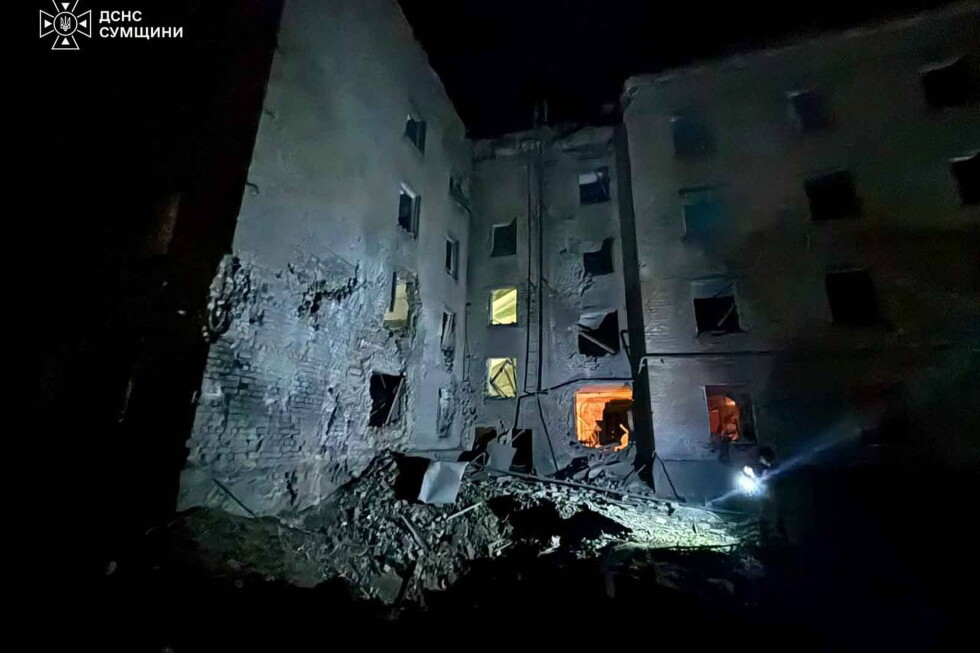
Details of Thursday’s civilian casualties from Russian attacks emerged as follows: Three civilians were killed in the city of Balakliia, located in Ukraine’s northeastern Kharkiv region. Balakliia military administration head Vitalii Karabanov reported that the first strike hit a private home, killing one woman and sparking a blaze, while a follow-up strike near a second residence killed another man and woman. In the neighboring Sumy region, 12 people were wounded by Russian glide bomb attacks, according to Ukrainian national police. Regional military governor Oleh Hryhorov reported that apartment buildings and critical infrastructure were damaged, with hundreds of windows shattered across the impact zone.
Further afield, in the southern Kherson region, a Russian drone strike hit a civilian bus carrying agricultural workers to their fields, wounding six people, regional authorities confirmed. In southeastern Zaporizhzhia, a drone attack on a residential neighborhood wounded four more people, regional governor Ivan Fedorov said. In total, Ukraine’s air force reported that Russia launched four missiles and 101 long-range attack drones at targets across Ukraine between Wednesday and Thursday. Ukrainian air defenses managed to shoot down or jam 66 of the drones, leaving dozens of Russian munitions to hit their targets.
Western defense analysts and officials note that Moscow’s strategy of sustained mass bombardment and ground offensive pressure is rooted in a deliberate plan to wear down Ukraine’s military and civilian resistance over time. Russian President Vladimir Putin is widely assessed to believe that time favors his campaign, that Western public and political support for Ukraine will gradually erode, and that Ukraine’s ability to sustain resistance will eventually collapse under the constant weight of Russian manpower, armor and firepower.