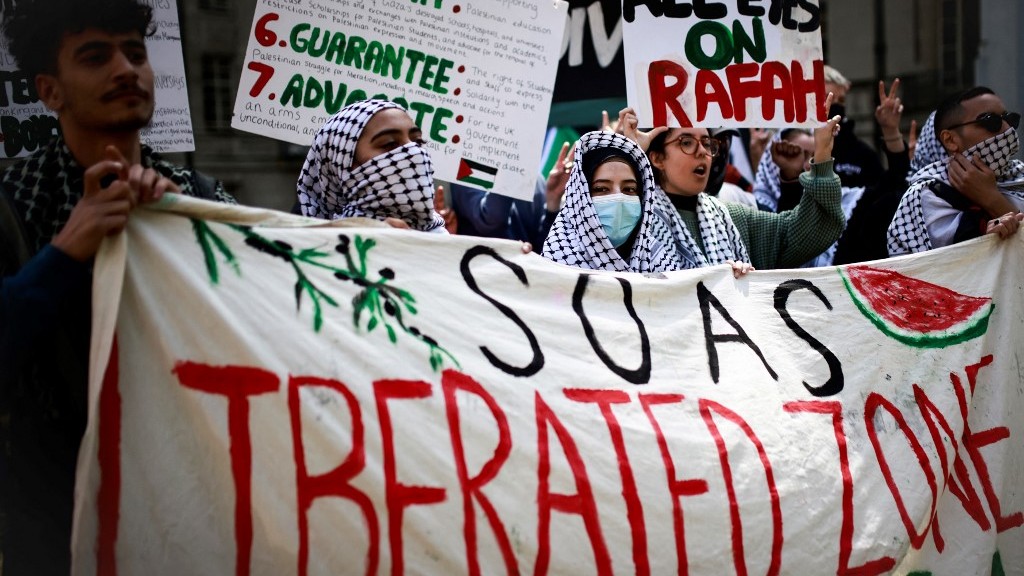
A high-profile dispute over free speech, student democracy and pro-Palestine activism at one of the United Kingdom’s most politically engaged universities has concluded with an out-of-court settlement, drawing renewed attention to escalating tensions over the Israel-Gaza conflict on British higher education campuses.
Two recently elected former student leaders at the University of London’s School of Oriental and African Studies (SOAS), Alexander Cachinero-Gorman and Abel Harvie-Clark, have settled their wrongful dismissal claims against the SOAS Students’ Union (SU) and university administration. The pair were removed from their elected full-time sabbatical positions in June 2024, just months after winning student votes, before they could even take up their posts.
The election results, held in March 2024, saw Gorman win the race for vice president of welfare and campaigns, while Harvie-Clark secured the role of vice president of democracy and education. Both won clear mandates from the student body, but the SU trustee board voted to dismiss the pair over stated concerns around their conduct and public criticism of SU leadership. The activists have long maintained their removal was driven entirely by their openly anti-Zionist beliefs and longstanding pro-Palestine organizing work on campus.
Tensions between the student activists and SOAS leadership had been building for months before the election, rooted in widespread pro-Palestine protests that swept the campus following Israel’s October 2023 military bombardment of Gaza. These actions included mass rallies, a months-long pro-Palestine encampment that was one of the longest-running in the UK, and a demonstration opposing the inclusion of the Union of Jewish Students in the university’s freshers’ fair. Prior to this case, SOAS had already drawn controversy for expelling Haya Adam, president of the SOAS Palestine Society, over her pro-Palestine activism in August 2024, in a move critics framed as an attack on free speech.
After the pair launched legal action and tribunal proceedings got underway, both sides reached a confidential settlement that brought the case to a close without a full public hearing. While the undisclosed financial settlement marks a resolution to the legal dispute, the activists have framed the outcome as a partial win that exposes deeper systemic issues at the institution.
Gorman described the outcome as a “bittersweet victory” that acknowledged the wrongdoing done to him and Harvie-Clark, but emphasized it does not resolve the entrenched hostility toward anti-Zionist students and staff at SOAS. “By dismissing us before we even took office, they tried to send a warning that they can unilaterally forge relationships with Zionist organisations, invite speakers with genocidal views to our campus, and attack trade unionists without pushback,” Gorman said in an interview with Middle East Eye.
Harvie-Clark echoed these concerns, noting that the pair had spent years in legal limbo over the dispute. He argued the SU’s actions sent a clear message that student democracy and activism are only permitted if they align with institutional leadership’s views. “They are attempting to bypass liberal norms around free speech in higher education in order to transform the university into an authoritarian space where academic freedom and workers’ rights are gifts they can withdraw at will,” he said.
The students’ legal representative, Franck Magennis, argued the settlement amounts to a de facto recognition that the SU and SOAS have systematically suppressed anti-Zionist speech and pro-Palestine organizing on campus. “This important legal victory further demonstrates what has been clear for at least two and a half years of genocide: Zionist positions are collapsing everywhere and are now incapable of defence, whether inside or outside court,” Magennis said. He is now supporting his clients in filing a complaint with the UK Charity Commission, which oversees the regulation of students’ unions as charitable bodies, to push for further accountability, and is calling on the SU to issue a public apology and launch a full investigation into institutional anti-Palestinian racism.
The SOAS case is part of a broader wave of conflict on UK campuses over the Gaza war. While SOAS has publicly cut research ties with arms companies working on Israel’s military campaign in Gaza, it has faced sustained criticism from pro-Palestine activists for its existing research partnerships with the UK Ministry of Defence and Israeli universities, as well as its financial investments in Barclays, a bank accused of financing Israel’s military operations. In October 2024, the University of London, which owns the SOAS campus, secured a High Court injunction banning all unsanctioned protests on university premises, a move that mirrored similar restrictions implemented by other leading UK institutions including the University of Cambridge and the University of Bristol. Even with the settlement of this legal case, the dispute underscores the deepening divides over free speech, institutional accountability and pro-Palestine activism across British higher education.