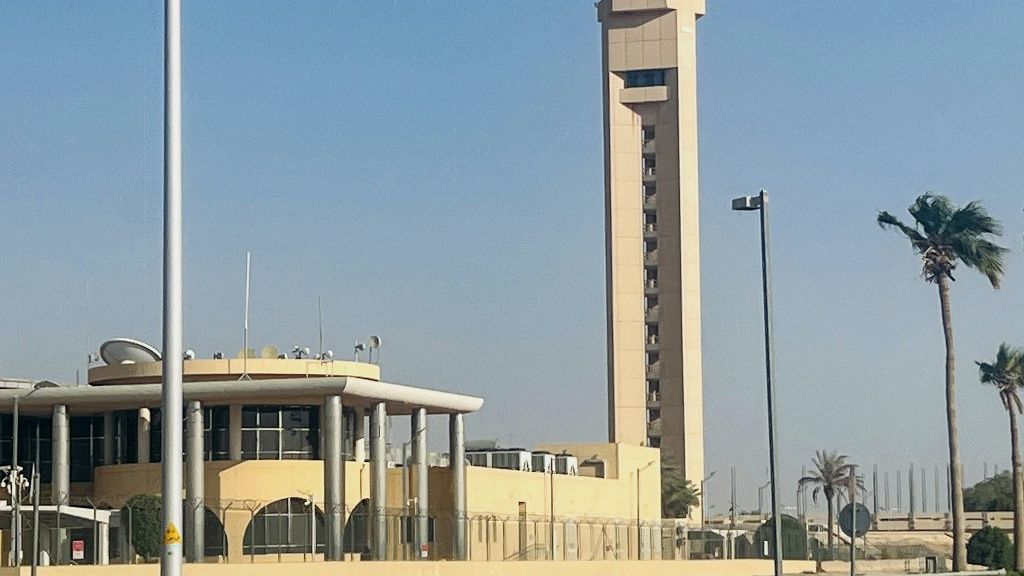
A sharp escalation of cross-border attacks by Yemen’s Houthi movement targeting key Saudi infrastructure has triggered sweeping new travel warnings from Western governments, as diplomatic efforts emerge to de-escalate spiraling regional violence linked to the broader post-February 28 US-Israeli military campaign against Iran.
The violence began with a devastating Houthi strike on Riyadh’s King Khalid International Airport Saturday that left at least 13 people dead and more than 300 injured, marking the deadliest attack on a Gulf Cooperation Council nation since the US-Israeli offensive on Iran launched last month. A second assault on the same airport Sunday killed an additional person and wounded 11 more, making it the third attack on the critical air hub in just seven days. Earlier strikes had already claimed four lives and damaged a commercial Saudi passenger plane.
Officials with Saudi Arabia’s General Authority of Civil Aviation released a full breakdown of the Saturday attack’s fatalities, revealing victims from 11 nations: four Saudi citizens, two Bangladeshis, one American, one Egyptian, one Jordanian, one Syrian, one Palestinian and one Sudanese.
Within hours of the Sunday attack, the UK Foreign Office updated its official travel guidance to impose sweeping restrictions. The agency now advises British nationals against all non-essential travel to a wide swathe of Saudi territory, including all of the country’s airports with the sole exception of Medina International Airport, as well as Aseer province, Riyadh province, Najran province, Jizan province, and the major cities of Taif, Jeddah and Dammam. A full ban on all travel remains in place for areas within 10 kilometers of the Saudi-Yemen border. In a highly unusual move, British authorities also explicitly warned UK citizens against attempting to depart Saudi Arabia via any domestic airport, instead advising travelers seeking to exit the country to arrange overland travel to neighboring nations and fly out from international hubs there.
Houthi military spokesperson Yahya Saree doubled down on the group’s targeting strategy, issuing a direct warning to international travelers, commercial airlines and global shipping companies to avoid using most Saudi airports and airspace. He confirmed Houthi forces carried out the coordinated strikes on King Khalid International Airport Saturday, saying the attacks successfully disrupted air traffic and forced a full closure of the facility. Saree added that King Fahd International Airport in Dammam, an Aramco-operated fuel station and a Saudi Eastern Province refinery were also targeted in the recent wave of operations. Only the airports serving Mecca and Medina were explicitly excluded from Houthi targeting threats.
The latest wave of attacks represents a major escalation in the long-running conflict between Saudi Arabia and the Iran-aligned Houthi movement, coming amid a renewed Saudi-led military offensive against the group in Yemen. In a statement, UK Defence Secretary Wes Streeting condemned the Saturday airport attack as a “dangerous escalation” and “completely contemptible action.”
Yemen has also seen a corresponding uptick in airstrikes from the Saudi-led coalition. Local Sanaa-based media outlets report recent air raids targeted the Hamdan district of Yemen’s capital Sanaa, the al-Zurbi Road area of Taiz’s Hayfan district, and the border al-Dhaher district of Saada province. No casualties have been reported from the retaliatory strikes to date.
Washington has also followed London in issuing urgent warnings for its citizens. The US State Department urged American travelers to exercise “extreme caution” when using any major Saudi airports, noting that US government personnel stationed in Saudi Arabia now require special official authorization to access King Khalid International Airport, Jeddah Airport and Dammam Airport. The agency also warned US citizens to prepare for potential flight cancellations, unexpected airspace closures and widespread travel disruptions across the kingdom.
Amid the rapidly escalating violence, diplomatic moves to facilitate a political resolution have begun. Iranian Foreign Minister Abbas Araghchi held a telephone call with his Saudi counterpart Faisal bin Farhan to discuss the crisis. According to Iranian state media, Araghchi emphasized that Tehran remains prepared to mediate dialogue between Saudi Arabia and Yemeni stakeholders, and expressed deep concern over the rising tensions. “A military approach and ignoring a political solution will only further complicate the current situation,” Araghchi said, adding that “the crises in this region have no military solution” and that Iran stands ready to provide all necessary support to advance a negotiated political settlement.
This independent report is part of ongoing coverage from Middle East Eye, which specializes in original reporting on the Middle East and North Africa region.