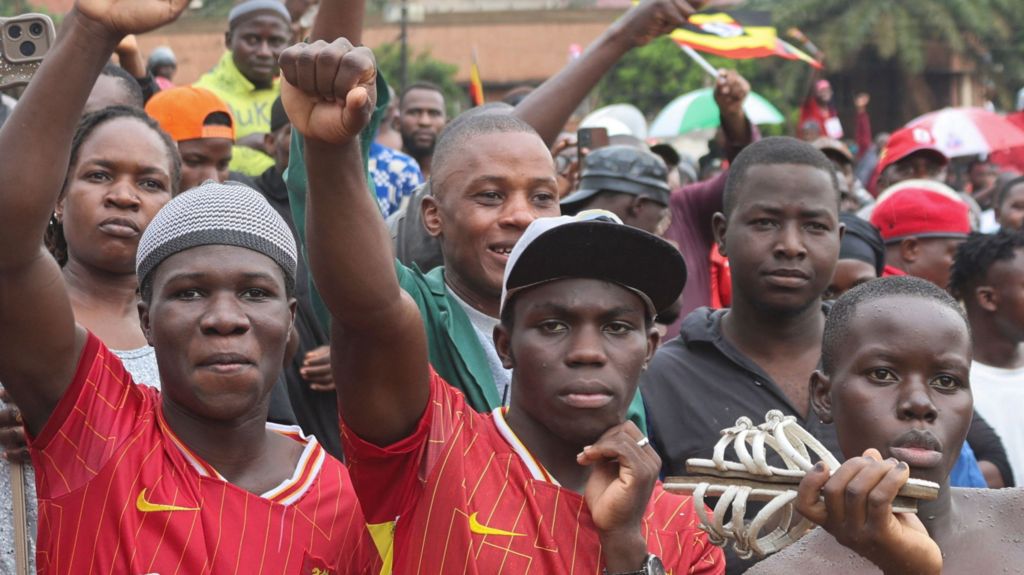
Uganda stands at a critical democratic crossroads as over 21 million registered voters participate in a presidential election pitting long-serving leader Yoweri Museveni against the formidable challenge of pop star-turned-politician Bobi Wine.
The electoral contest represents a classic power struggle between continuity and change. President Museveni, who seized power through guerrilla warfare four decades ago, positions himself as the indispensable guardian of stability and progress. His opponent, 43-year-old Robert Kyagulanyi (known professionally as Bobi Wine), campaigns on an ambitious platform of anti-corruption measures and comprehensive governmental reforms.
This election occurs against a backdrop of significant constitutional modifications that removed presidential age and term limits, enabling Museveni’s continued candidacy. The incumbent previously secured victory in the 2021 polls with 59% of votes against Wine’s 35%—results the opposition leader dismissed as fraudulent.
Pre-election conditions have drawn international concern. A government-imposed internet blackout, justified by authorities as necessary to prevent misinformation and electoral violence, has been condemned by the United Nations human rights office as “deeply worrying.” Opposition groups allege the digital shutdown aims to prevent documentation and sharing of electoral misconduct.
Security forces face accusations of systematically suppressing opposition activities through violent disruption of rallies, arbitrary detentions, and physical assaults on supporters. Amnesty International characterizes these tactics as “a brutal campaign of repression” involving tear gas, pepper spray, and beatings.
Electoral Commission Chair Simon Byabakama reported receiving direct threats warning against declaring certain results, though he maintains the commission will uphold electoral integrity. “I am not in the business of donating votes,” Byabakama stated, emphasizing that voters alone will determine the outcome.
The electoral process recalls the violent 2012 elections where dozens perished during protests, with security forces implicated in numerous casualties according to BBC investigations.
Beyond the presidential race, voters will determine the composition of parliament with 353 legislative seats contested. Economic concerns dominate voter priorities, particularly among Uganda’s youth-majority population where unemployment persists despite gradual income growth. Additional voter concerns include infrastructure deficiencies and unequal access to quality education and healthcare.
Security presence has intensified throughout the capital Kampala, with armored vehicles deployed and enhanced police patrols. Many residents have relocated to rural areas anticipating election-related violence, with one anonymous voter explaining his decision to re-register in his home village due to the “heavy and intimidating security presence in the city.
Polls are scheduled to close at 16:00 local time (13:00 GMT) on Thursday, with results anticipated by Saturday. The election’s outcome will significantly influence Uganda’s democratic trajectory and its relationship with the international community.