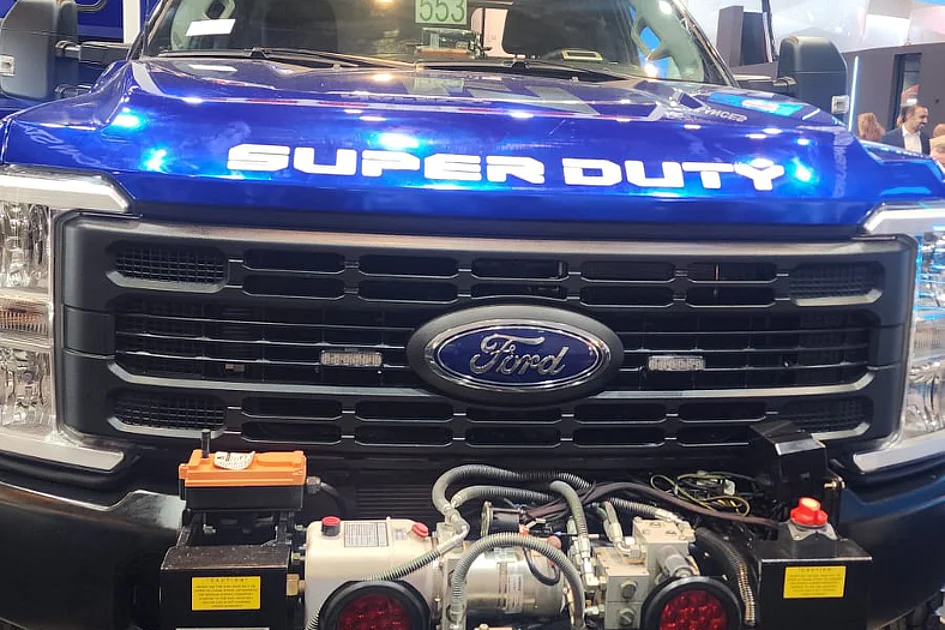
The United Arab Emirates has unveiled a groundbreaking medical response vehicle capable of operating on both roadways and railway tracks, marking a significant advancement in emergency healthcare accessibility for remote desert areas. This innovative ambulance, domestically manufactured by safety solutions provider Naffco, integrates conventional American ambulance specifications with an adaptable rail gear mechanism inspired by locomotive engineering.
The development coincides with the rapid expansion of the UAE-Saudi railway infrastructure, centrally supported by Etihad Rail’s 900-kilometer network connecting Ghuweifat at the Saudi border to Fujairah on the eastern coast. This strategic alignment enables the specialized ambulances to leverage emerging rail connections for reaching patients in geographically challenging territories where traditional emergency vehicles face operational limitations.
According to Mohammed Abdul Jabbar, Sales Account Manager at Naffco FZCO, the vehicle represents a fusion of international standards and localized innovation. “We’ve engineered a dual-mode ambulance that transitions seamlessly between road and rail operations,” Jabbar explained during the World Health Expo demonstration. “When approaching railway tracks, the front-mounted rail gear system engages, elevating the tires and converting the vehicle into a track-compatible emergency transport.”
The technical specifications reveal a comprehensive medical response unit equipped with advanced life support systems including oxygen and vacuum apparatus, DC/AC power outlets, automated external defibrillators, portable ventilators, and comprehensive trauma management kits. The interior configuration features strategically positioned medical cabinets with sliding Plexiglas, multi-access storage compartments, and specialized containment systems for medical waste.
Notably, the manufacturing process emphasizes local production with selective international component integration. Naffco sources vehicle chassis from Ford and imports the specialized rail mechanism from European suppliers, subsequently engineering the complete emergency response system within UAE facilities.
This innovation arrives as the Etihad Rail passenger service prepares to connect 11 stations across all seven emirates through phased inaugurations throughout the year. The broader Gulf Cooperation Council railway initiative, targeting full connectivity among six Gulf nations by 2030, further amplifies the potential for cross-border emergency medical cooperation through this pioneering transportation technology.