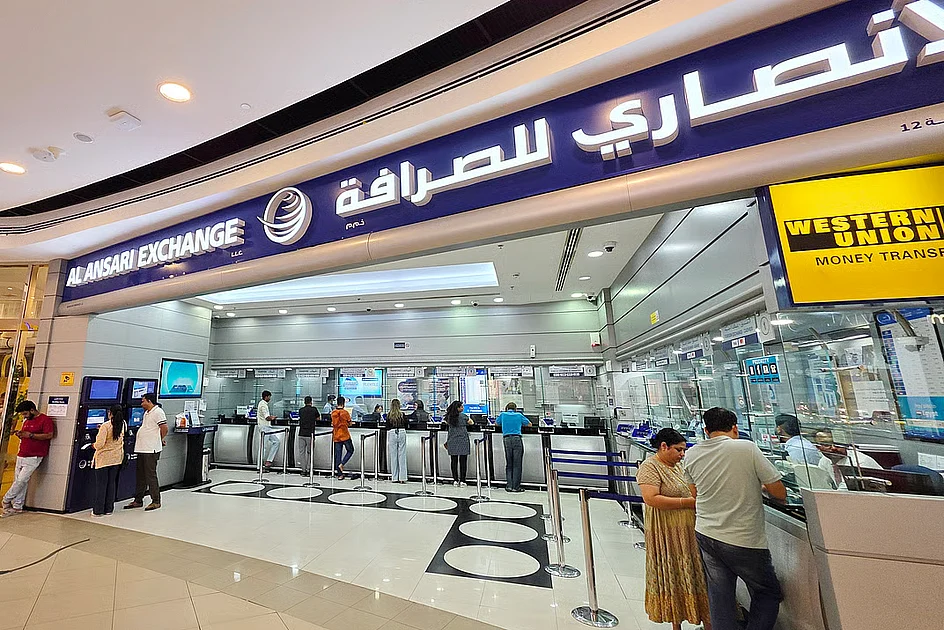
Indian expatriates across the United Arab Emirates are strategically amplifying their financial remittances amidst the Indian rupee’s historic decline against the UAE dirham. With exchange rates reaching unprecedented levels of approximately ₹24.5 per Dh1, residents are seizing the opportunity to transfer up to three times their usual amounts to families in India.
The currency depreciation has created an advantageous window for expats to address critical financial obligations back home. Exchange houses throughout the UAE report substantial increases in transaction volumes as workers leverage the favorable rates to cover educational expenses, household bills, and outstanding payments.
Sharjah resident Arif Khan, typically sending Dh1,200-1,500 monthly, dispatched Dh4,500 in a single transaction. “The additional rupees effectively cover three months of household expenses,” Khan noted. “My wife described it as an unexpected financial blessing.”
Dubai marketing executive Anthony Varghese characterized the rate shift as an “early Christmas gift,” explaining how his Dh3,000 transfer yielded an extra ₹8,000 compared to previous months—sufficient to cover his daughter’s educational costs.
For mechanic Farooq Ahmed, the strengthened remittance power provided immediate utility relief. “The ₹4,500 surplus paid our electricity bill and gas cylinder costs,” Ahmed stated. “This represents significant support for middle-class families.”
Despite these temporary advantages, expatriates acknowledge India’s persistent inflation challenges. Many recipients quickly absorb the increased funds due to rising living costs, indicating that the currency benefits provide temporary relief rather than lasting financial transformation.
The phenomenon demonstrates how global currency fluctuations directly impact migrant workers’ financial strategies and cross-border economic relationships between major labor destinations and home countries.