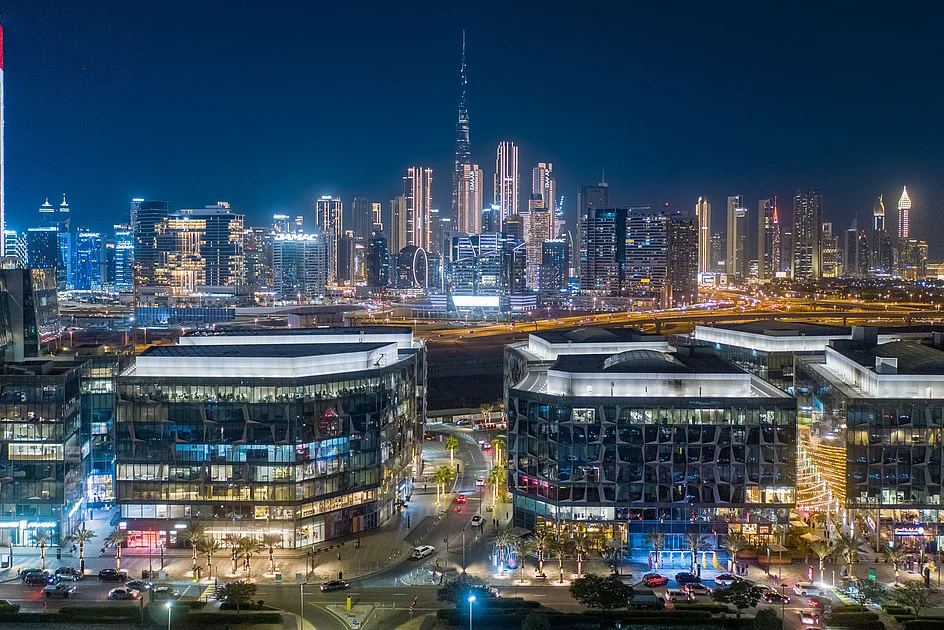
The Gulf Cooperation Council (GCC) is set for a significant economic upswing in 2026, with the UAE and Saudi Arabia leading the charge. According to the ICAEW’s Q4 2025 Economic Insight report, the GCC’s GDP is projected to grow by 4.4%, driven by surging non-oil activities in the UAE and Saudi Arabia. The UAE, in particular, is expected to achieve a 5.6% GDP growth, cementing its status as one of the Gulf’s fastest-growing economies. Key sectors such as tourism, trade, logistics, real estate, and financial services are anticipated to fuel this expansion, supported by strong population growth, a vibrant labor market, and sustained domestic demand. The UAE’s strategic initiatives, including the “We the UAE 2031” plan, are further bolstering long-term economic momentum. Dubai has already showcased the resilience of the UAE’s non-oil economy, with a 4.4% growth in the first half of 2025, driven by trade, transport, hospitality, and financial services. Abu Dhabi’s non-oil foreign trade surged by 34.7% to AED 195.4 billion in the same period, highlighting the emirate’s growing role as a global trade and logistics hub. The Central Bank of the UAE (CBUAE) forecasts real GDP growth of 4.9% in 2025 and 5.3% in 2026, with non-hydrocarbon GDP expected to grow by 4.5% and 4.8%, respectively. Hydrocarbon output is projected to rise by 5.8% and 6.5%, while inflation remains contained at 1.5–1.9%. Across the GCC, non-energy activity is expected to expand by 4.1% in 2026, supported by strong labor markets, improved credit conditions, and increased investment in technology and AI infrastructure. Saudi Arabia is also poised for robust growth, with a projected GDP increase of 4.3% in 2026, driven by non-oil sectors and policy reforms. Despite fiscal challenges, Riyadh remains committed to Vision 2030, prioritizing long-term diversification. Analysts emphasize that the UAE’s strategic location, economic reforms, and innovation-led investments are not only accelerating its own growth but also uplifting the entire GCC region, marking a pivotal shift towards sustainable and diversified economic expansion.