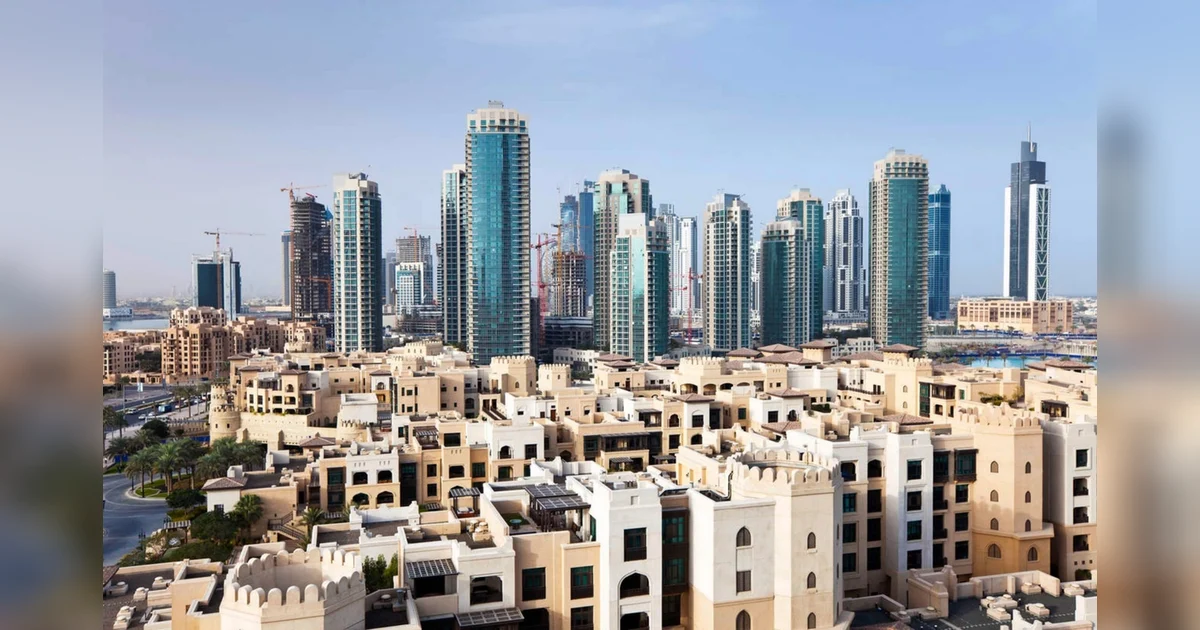
The United Arab Emirates (UAE) is poised to experience a ‘smaller’ impact from the global economic slowdown compared to other nations, according to a recent report by the World Bank. The UAE’s relatively limited exposure to major global markets such as the US, the European Union, and China has insulated its economy from the broader downturn affecting the Middle East, North Africa, Afghanistan, and Pakistan (Menaap) region. While countries like Tunisia and Morocco, which rely heavily on EU exports, face significant challenges, the UAE’s diversified trade relationships, particularly with Asia (excluding China), have mitigated adverse effects. The World Bank projects the UAE’s economy to grow by 4.8% in 2025, outpacing the 3.5% growth forecast for the GCC region. This growth is driven by robust contributions from financial services, construction, transport, and real estate sectors. In contrast, developing oil exporters like Algeria, Iran, Iraq, and Libya are expected to see a sharp slowdown, with growth forecasts dropping to just 0.5% in 2025. The International Monetary Fund (IMF) aligns with the World Bank’s optimistic outlook, projecting a 5% growth for the UAE in 2026. Despite global uncertainties, the UAE’s economic resilience underscores its strategic diversification and strong non-oil sector performance.