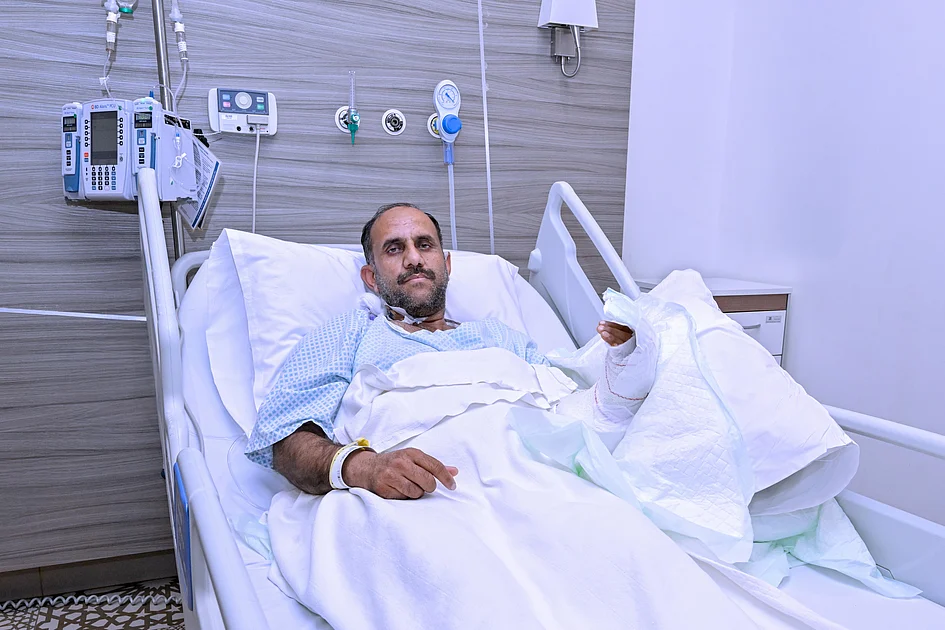
In a remarkable display of medical expertise and coordination, Abu Dhabi surgeons have successfully reattached the completely severed arm of a factory worker following a devastating industrial accident. The incident occurred when 50-year-old Tanveerullah Arif, a Pakistani resident of Al Dhannah City with two decades of lathe machine experience, suffered a catastrophic crush-avulsion injury that tore his left arm from his body at forearm level.
The emergency response unfolded with precision timing beginning at approximately 4:30 PM when coworkers and first responders rapidly transported the injured worker to Burjeel Al Dhannah Hospital. Recognizing the need for specialized microsurgical capabilities, medical professionals arranged an urgent transfer to Burjeel Medical City (BMC), where a multidisciplinary team began preparations upon receiving advance notice at 5:30 PM.
The patient arrived at BMC via emergency transport at 8:15 PM, remaining conscious despite significant blood loss. Medical teams immediately initiated stabilization procedures including nerve blocks before commencing the complex surgical intervention. Dr. Praveen Kumar Arumugam, Specialist in Plastic and Reconstructive Surgery at BMC, emphasized the particular challenge: ‘This was not a clean cut but a crush-avulsion injury, substantially increasing surgical complexity.’
The marathon procedure spanned nearly ten hours and involved meticulous microsurgical techniques under high-powered magnification. Surgeons first debrided damaged and contaminated tissue from both the amputated limb and remaining forearm before performing skeletal stabilization using plates and screws. The most critical phase involved reestablishing vascular circulation through the microscopic repair of two arteries and four veins, utilizing blood thinners to prevent clotting complications.
Following successful revascularization, the surgical team reconstructed muscular, tendinous, and neural structures before completing cutaneous closure. The patient received six units of blood during the procedure while anesthesiology specialists monitored for potential reperfusion injury complications. Three days postoperatively, surgeons applied skin grafts to affected areas and immobilized the limb in an elevated cast to optimize healing conditions.
The successful outcome depended on multiple favorable factors: the patient’s relative youth, absence of comorbidities, transportation within the critical six-hour window, and proper preservation of the severed limb during transit. Tanveerullah has now commenced physiotherapy and demonstrates encouraging early signs of functional recovery with returning hand movement.