In a landmark first legislative move aimed at resolving a 40-year armed conflict that has claimed tens of thousands of lives, a majority of Turkish Members of Parliament gave initial backing on Wednesday to a conditional amnesty bill for Kurdistan Workers’ Party (PKK) militants. The legislation, framed under the banner “Strengthening National Solidarity and Social Integration,” has drawn cross-bloc support, securing the signatures of 360 out of the 592 total sitting MPs. Backers include lawmakers from President Recep Tayyip Erdoğan’s ruling Justice and Development Party (AKP), its nationalist coalition partner the Nationalist Movement Party (MHP), and the pro-Kurdish People’s Equality and Democracy Party (DEM). The newly formed main opposition alliance Yeni Parti declined to participate, citing insufficient access to the full draft text during the preliminary stage.
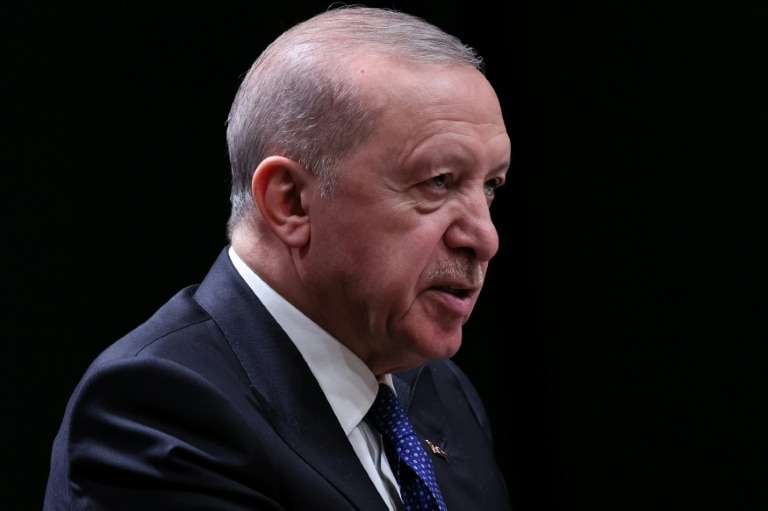
President Erdoğan has publicly thrown his weight behind the initiative, posting his support on the social platform X. In his statement, he expressed hope the legislation would permanently eliminate the terrorist threat facing Turkey, shore up national unity, and cement a lasting peace across the country and the broader region. He emphasized that the bill was drafted after months of broad consultations and introduced to parliament with widespread consensus, reflecting the Turkish public’s widespread desire for a negotiated end to decades of violence.
Notably, the current draft does not outline a clear future for Abdullah Öcalan, the 77-year-old founding leader of the PKK who has been held in solitary confinement on a Turkish prison island for 27 years. Öcalan has already signaled his backing for the new peace process, calling on the PKK movement to renounce armed struggle and surrender its weapons. The preamble of the bill, reviewed by Agence France-Presse, positions the legislation as the foundational first step of a broader peace process, with the stated goal of restoring peace and fraternal relations across Turkey and neighboring regions.
At its core, the bill establishes a formal pathway for PKK fighters to reintegrate into civilian life, but only after strict conditions are met. To qualify, the PKK must formally cease all operations, dissolve its organizational structure, and hand over all stockpiled weapons and ammunition. These steps must be verified by Turkey’s National Security Council, with the confirmation published in the nation’s Official Gazette. Under the terms of the proposal, investigations and ongoing sentences for PKK membership, organizational management, propaganda, and financing activities will be suspended for a period of five to 10 years, with the length of the suspension tied to the severity of the individual charges. If no new offenses are committed during the suspension window, all active investigations will be dismissed and existing sentences will be considered fully served, resulting in a de facto amnesty for qualifying fighters.
The legislation carves out key exceptions, however: perpetrators of intentional homicide and any offenses carrying a life sentence committed before June 1, 2005 are explicitly excluded from the amnesty program. A oversight body led by Vice President Cevdet Yılmaz, featuring multiple cabinet ministers and a parliamentary committee, will be tasked with monitoring the implementation of the law once passed. Eligible PKK members will have just six months from the law’s entry into force to file an application for amnesty. The legislation also formalizes a system for the registration of all weapons surrendered or declared by PKK members seeking to benefit from the program.
Proponents across the political spectrum have framed the bill as a transformative moment for Turkey. Tuncer Bakırhan, co-chair of the pro-Kurdish DEM party, called the vote a historic new chapter in Turkish political history, saying the legislation offers a unifying opportunity for all citizens and represents a commitment to peace, democracy, and a shared future. For the ruling AKP, parliamentary group chair Abdullah Güler emphasized that the critical end goal of the process remains the full disarmament and dissolution of all elements of the PKK, as verified by Turkish state security forces.
The draft bill is scheduled for review by parliament’s justice committee on Friday, ahead of a final full vote by all MPs. A fast-track legislative procedure means the entire process is expected to conclude as early as this weekend or the beginning of next week. The current peace initiative was first launched in October 2024 at the initiative of MHP leader Devlet Bahçeli, the key coalition ally of Erdoğan’s government. The decades-long conflict between the PKK and Turkish armed forces has killed at least 50,000 people since it began in the 1980s, making this legislative step the most significant push for a negotiated end to violence in a generation.