A Tunisian appeals court has delivered severe prison sentences ranging from four to forty-five years to dozens of opposition leaders, lawyers, and business figures accused of conspiring to overthrow President Kais Saied. The verdicts finalize what human rights organizations have condemned as a politically motivated judicial process targeting dissenters.
Among the most prominent defendants, opposition leader Jawahar Ben Mbarek received a twenty-year prison term alongside party leaders Issam Chebbi and Ghazi Chaouachi. All three have remained in detention since their arrest during the government’s 2023 crackdown on opposition voices. Businessman Kamel Ltaif received the maximum sentence of forty-five years, while opposition politician Khyam Turki was sentenced to thirty-five years.
The trial proceedings have drawn international criticism, with Amnesty International’s deputy regional director Sara Hashash describing the sentences as “unjust” and “an appalling indictment of the Tunisian justice system.” Defense lawyers characterized the trial as a judicial “farce” designed to eliminate political opposition.
Notably, twenty defendants who had fled abroad were sentenced in absentia, including prominent politician and feminist Bochra Belhaj Hmida and French philosopher Bernard-Henri Lévy. The appeals court unexpectedly acquitted three defendants while increasing sentences for others.
The case has unfolded against a backdrop of democratic backsliding in Tunisia since President Saied suspended parliament in 2021 and began ruling by decree. Tunisian authorities maintain the defendants, including former intelligence chief Kamel Guizani, genuinely attempted to destabilize the nation and topple the government.
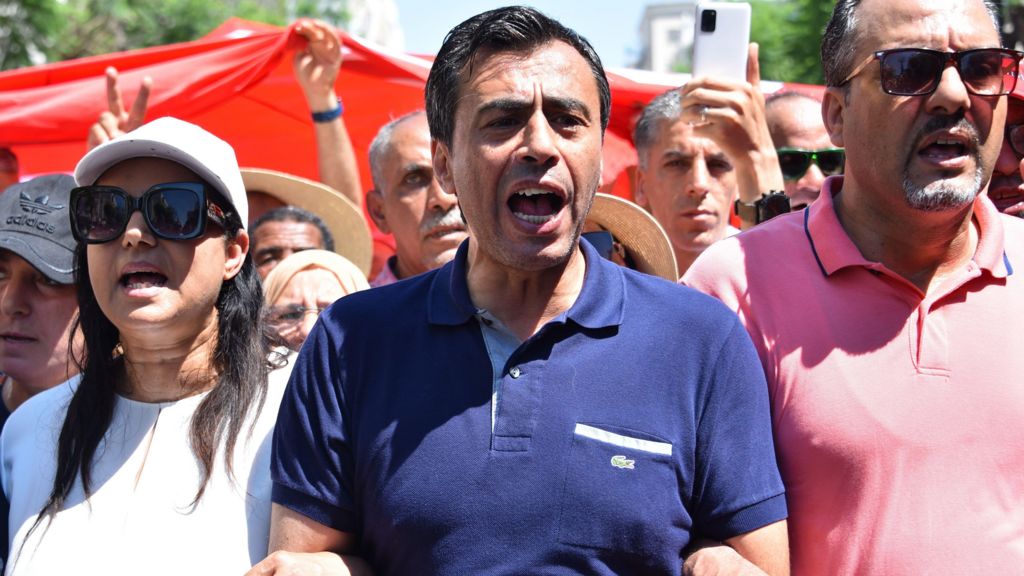
The sentencing has sparked renewed protests, with thousands marching through Tunis on Saturday accusing Saied of establishing one-man rule through judicial and police powers. The UN High Commissioner for Human Rights had previously expressed serious concerns about political motivations behind the trial, urging Tunisia to refrain from using counter-terrorism legislation to silence dissent.