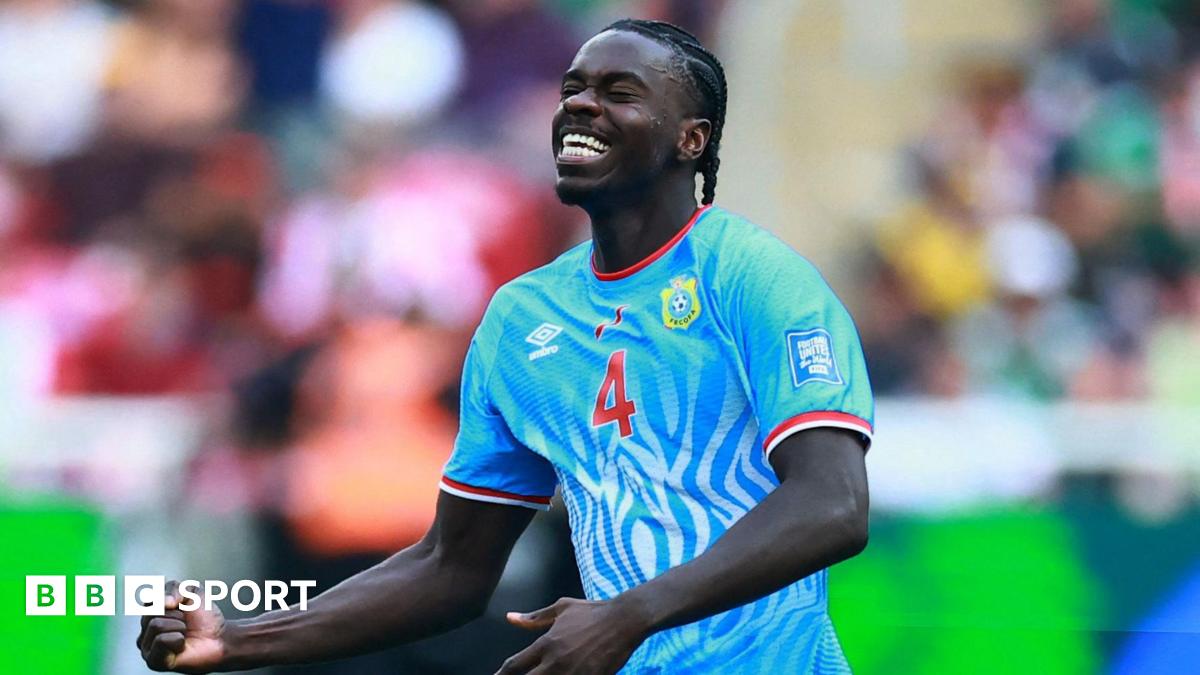
After more than half a century of waiting, the Democratic Republic of Congo has secured its spot at the 2026 FIFA World Cup, with a 100th-minute strike from naturalized defender Axel Tuanzebe sealing a dramatic 1-0 intercontinental play-off final victory over Jamaica at Mexico’s Guadalajara Stadium. This breakthrough ends the Central African nation’s 52-year absence from the world’s biggest football tournament, marking their first qualification since the country competed as Zaire at the 1974 edition.
Tuanzebe, a 28-year-old who only made his DR Congo debut in 2024 after switching allegiance from his former youth international role with England, entered the match already calling it the biggest contest of his career. Born in Bunia, a city caught in the ongoing eastern DR Congo conflict, his decisive goal has cemented his place as a national hero in Congolese football history. The moment of magic came from a Brian Cipenga in-swinging corner that glanced off the top of Jamaica defender Joel Latibeaudiere, falling perfectly into the path of the onrushing Burnley player. Tuanzebe redirected the ball into the net with his torso, and while celebrations were halted briefly for a handball check, video assistant referee (VAR) confirmed no infringement, allowing the goal to stand.
The tightly contested clash was always on track for extra time, even before the deadlock was broken. DR Congo striker Cedric Bakambu had two goals correctly ruled out for offside across 90 minutes of regulation play. His first disallowed effort came as early as the fifth minute, when he poked home from six yards out off a low Meschack Elia cross, before a second late regulation offside call — after Theo Bongonda was ruled offside in the build-up to his assist — left the game scoreless heading into extra time.
Both sides entered the play-off final on the back of momentum-boosting previous results. Jamaica defeated New Caledonia 1-0 in the play-off semi-final thanks to a single Bailey Cadamarteri goal, while DR Congo warmed up for the final with a 2-0 friendly win over Bermuda. Per FIFA’s play-off structure, DR Congo earned a direct bye to the final courtesy of their higher world ranking (49th, compared to Jamaica’s 68th) and had already navigated a 13-match qualifying campaign that stretched back to November 2023. After finishing second in their African group behind Senegal, Sebastien Desabre’s side defeated Cameroon and Nigeria in continental play-offs to earn their shot at a World Cup spot.
Jamaica, who were targeting their second World Cup appearance following their 1998 run in France, grew into the contest after a slow first half. Interim coach Rudolph Speid, who took over in November after Steve McLaren stepped down, watched his side create several promising chances: Kasey Palmer saw a goal-bound effort blocked by Chancel Mbemba just before the half-hour mark, and Leon Bailey’s powerful long-range left-footed strike flashed across the goal line shortly before halftime. Second half chances saw Jamaica goalkeeper Andre Blake pull off a strong save to deny Bakambu’s curling long-range effort, before Bailey’s diving far-post header drifted just wide of the post.
DR Congo dominated the added 30 minutes, and though Watford midfielder Edo Kayembe wasted a late clear counter-attack chance by blazing over an open goal, Tuanzebe’s early extra-time strike was enough to see the Leopards through. Jamaica never managed to carve out a clear equalizing opportunity after falling behind.
For DR Congo, qualification means more than just a spot at the expanded 48-team 2026 tournament — it is a chance to erase 52-year-old ghosts from their only previous World Cup appearance. When the nation competed as Zaire in 1974, they left the tournament without scoring a goal, conceding 14 across three defeats and leaving a lasting unfair stain on African football after right-back Mwepu Ilunga’s infamous free-kick incident, where he charged out of the defensive wall to clear a Brazil free-kick before it was taken. That moment created a long-held misconception that African players did not understand the rules of the game, a stigma Tuanzebe and his 2026 squad are now poised to overcome.
Desabre, who was appointed head coach in August 2022 with a mandate to qualify for the 2026 World Cup, has built a cohesive squad that leverages diaspora talent as a core strategic pillar. Tuanzebe is one of several high-profile players who switched from European youth setups to represent their country of birth, with former captain Gabriel Zakuani working to recruit players and their families, including West Ham’s Aaron Wan-Bissaka, who also recently switched from England. The squad’s semi-final finish at the 2023 Africa Cup of Nations has already demonstrated the progress made under Desabre’s steady leadership. With 110 million people in DR Congo and a large global diaspora following the team, the squad carries far more than just footballing hopes into the tournament, where they will face Portugal, Colombia and Uzbekistan in Group K, kicking off their campaign against Portugal in Houston on June 17. For a nation marked by decades of conflict and instability, this long-awaited World Cup berth represents a moment of national unity and hope 52 years in the making.