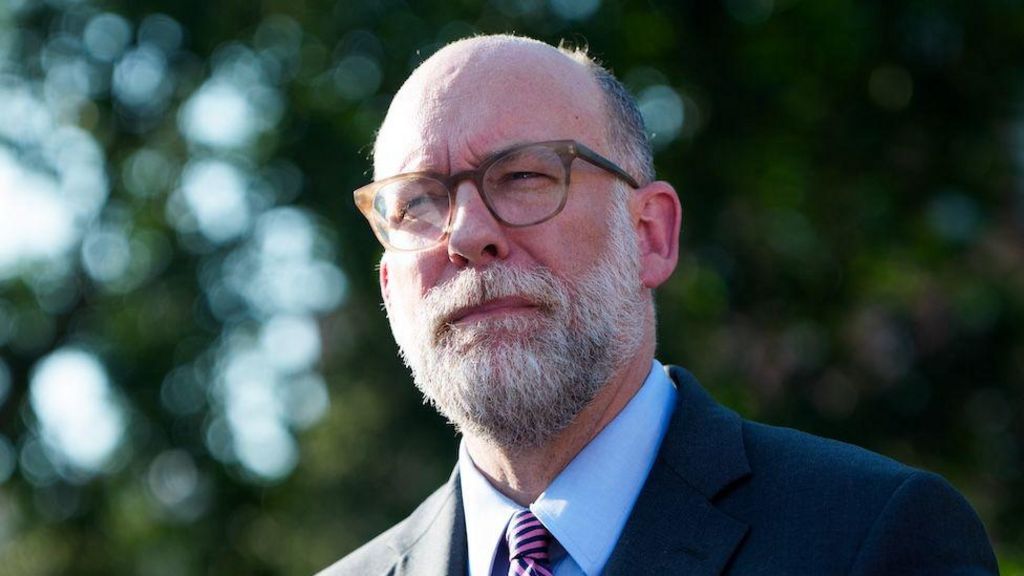
As the U.S. government shutdown enters its third day, former President Donald Trump is wielding the conservative blueprint of Project 2025 as a bargaining chip in his budgetary negotiations with Democrats. At the center of this strategy is Russell Vought, the director of the White House Office of Management and Budget (OMB), who has emerged as a pivotal figure in Trump’s push to drastically reduce federal spending and reshape government operations. Vought, though not a household name, is a key architect of Project 2025, a 900-page policy document that outlines sweeping conservative reforms, including shrinking the federal government, expanding presidential authority, and enforcing strict immigration policies. Trump, who initially distanced himself from the project during the 2024 campaign, is now using it as a threat to pressure Democrats into acquiescing to his demands. On his Truth Social platform, Trump shared an AI-generated parody video depicting Vought as the ‘grim reaper,’ ready to slash government programs favored by Democrats. Republican leaders on Capitol Hill have echoed Trump’s characterization of Vought as a formidable force in the White House. Senator Mike Lee of Utah remarked that Vought has been ‘preparing for this moment since puberty,’ highlighting his extensive experience in federal budgeting and conservative policy circles. Vought, who previously served as deputy director of the OMB during Trump’s first term, has transformed the office into a powerful engine for implementing Trump’s fiscal agenda. Earlier this year, he collaborated with Elon Musk’s ‘Department of Government Efficiency’ (Doge) to shutter multiple federal agencies and downsize departments. Now, with the government shutdown creating a legal grey area, Vought has the opportunity to make even deeper and more lasting cuts. He has already halted major infrastructure projects in New York City and Chicago and canceled nearly $8 billion in clean energy initiatives across 16 states that supported Trump’s opponent, Kamala Harris, in the 2024 election. Democrats and federal worker unions have vowed to challenge these cuts in court, accusing Trump of making empty threats to force concessions. Economists have also criticized the administration’s approach, noting that its deficit-ballooning policies undermine claims of fiscal responsibility. Despite these criticisms, Vought and the White House appear undeterred, viewing the long-term benefits of reducing government spending as outweighing the short-term political risks. As the shutdown continues, the stakes for both parties grow higher, with Republicans warning of the potential backlash if the public perceives the administration’s cuts as overly aggressive.