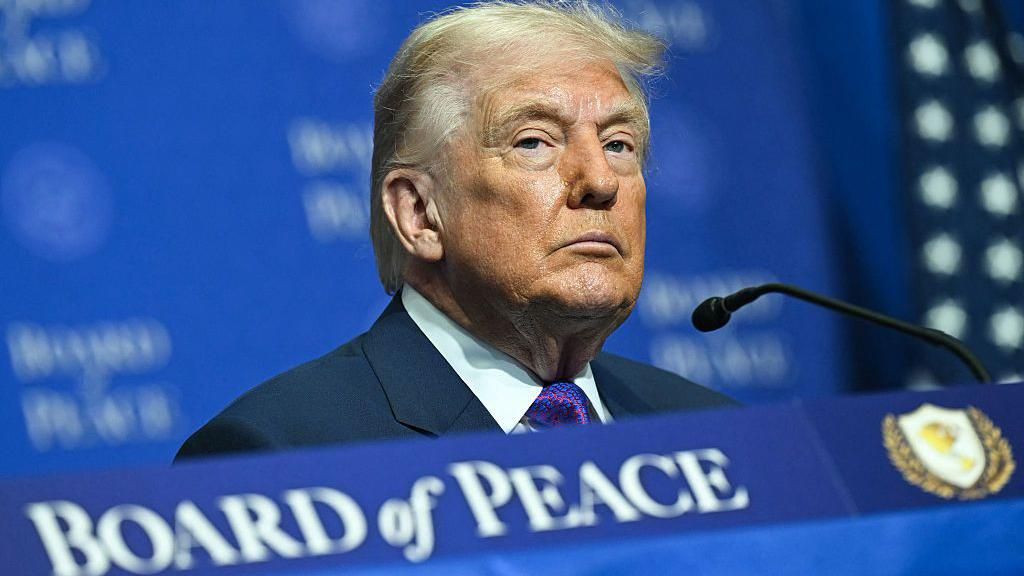
In a striking display of diplomatic duality, President Donald Trump simultaneously advocated for peace while threatening military action against Iran during Thursday’s Board of Peace summit in Washington. The address revealed the fundamental contradictions characterizing Trump’s second-term foreign policy approach, particularly regarding the escalating standoff with Tehran.
The administration maintains it prefers a diplomatic resolution to halt Iran’s nuclear weapons program, with a White House official recently suggesting Iran would be ‘very wise’ to negotiate. Yet this rhetoric contrasts sharply with the largest U.S. military buildup in the Middle East since the 2003 Iraq War, according to defense analysts.
This pattern of military escalation without congressional approval has become a hallmark of Trump’s second term. The administration followed through on similar threats against Venezuela in January, resulting in the capture of former President Nicolás Maduro. With Iran, however, the strategic objectives remain markedly unclear. While preventing nuclear proliferation remains a stated priority shared by U.S. allies, the administration has additionally demanded Tehran curb its ballistic missile program and cease support for regional proxy groups—conditions that have stalled indirect negotiations.
The rationale for additional military action remains particularly puzzling given Trump’s assertion that last June’s strike already ‘obliterated’ Iran’s nuclear facilities. The administration has not clarified what new targets might justify another campaign or how it would achieve different outcomes. Broader strategic questions also remain unanswered: Does the administration seek regime change? Is it prepared for Iranian retaliation against U.S. bases? How would prolonged conflict affect Middle East stability and Gaza reconstruction efforts?
Israel’s potential involvement adds another layer of complexity. Prime Minister Benjamin Netanyahu’s recent White House meeting suggests coordinated planning, though specifics remain undisclosed. Domestically, Trump faces political challenges as his actions contradict campaign promises to disengage from foreign conflicts—a position popular with his MAGA base and congressional Republicans. An extended Iranian campaign could alienate supporters ahead of midterm elections, particularly when voters express frustration over immigration and economic issues.
The situation creates a peculiar paradox for Trump’s Nobel Peace Prize aspirations. While he claims credit for ending eight conflicts since beginning his second term, he simultaneously pursues military interventions that contradict the prize’s fundamental purpose. No previous U.S. president has actively campaigned for the peace prize while conducting military operations abroad.
This strategic ambiguity appears intentional—a manifestation of Trump’s self-styled role as global dealmaker-in-chief. From tariff diplomacy to territorial disputes over Greenland, the president has consistently kept international counterparts guessing about his true intentions. Regarding Iran, Trump offered characteristically vague remarks: ‘We have to make a meaningful deal otherwise bad things happen.’ The world now watches to see whether those ‘bad things’ will involve diplomacy or destruction.