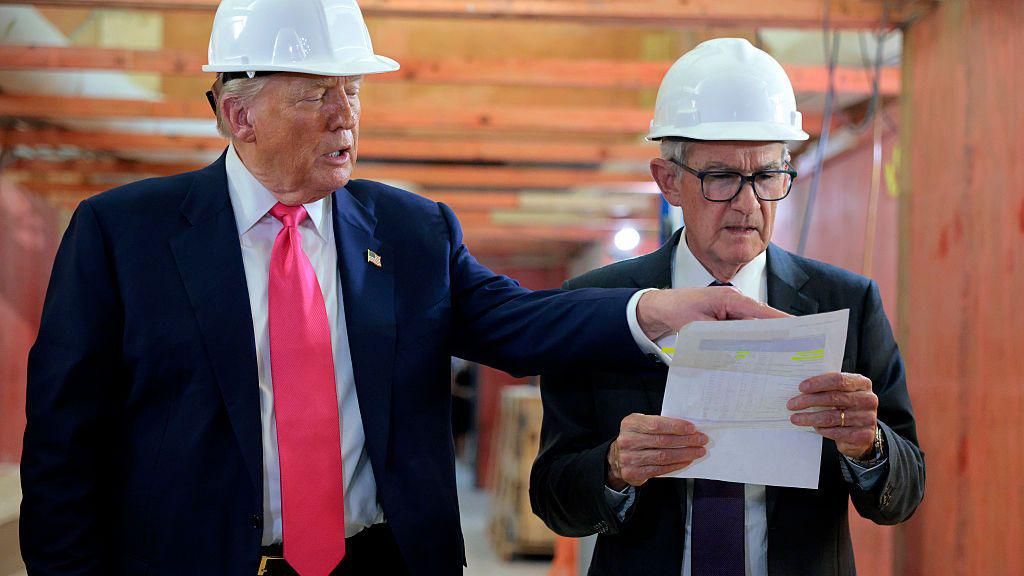
A remarkable political confrontation unfolding between former President Donald Trump and Federal Reserve Chair Jerome Powell bears striking resemblance to emerging market crises, according to global economists and former central bankers. The escalating tension has drawn comparisons to Argentina’s economic turmoil and Turkey’s inflationary spiral, raising questions about the resilience of U.S. institutions.
Martin Redrado, Argentina’s former central bank chief who was fired in 2010 for resisting government pressure to use reserves for debt payments, recognizes the pattern. ‘This seems more like an emerging market story,’ Redrado told the BBC, expressing surprise at seeing similar dynamics in the United States, traditionally considered a global model of institutional stability.
The conflict has intensified through multiple fronts: Trump’s public accusations that Powell has mishandled the economy by keeping interest rates too high, his August move to dismiss top policymaker Lisa Cook (now challenged at the Supreme Court), and the recent revelation that the Fed faces a Department of Justice criminal probe regarding property renovation cost overruns—which Powell has dismissed as ‘pretext.’
Prominent economists have used unusually strong language to describe the situation. Jason Furman, former head of Barack Obama’s Council of Economic Advisers, stated: ‘This is what you do in banana republics, not what should happen in the United States of America.’ Former Fed Chair Janet Yellen echoed this concern in a CNBC interview, warning that Trump’s approach represents ‘the road to a banana republic.’
Academic research supports these concerns. A study of 118 central banks between 2010-2018 found approximately 10% faced political pressure for lower rates each year, particularly in countries with nationalist or populist leaders. University of Texas economist Carola Binder’s research shows such pressure typically precedes higher inflation, as seen in Turkey where President Erdogan cycled through three central bank heads in three years while inflation soared past 50%.
While market reaction remains muted—interpreted as confidence in the Fed’s ability to maintain independence—analysts warn the situation could test investor faith. The dollar has already fallen 8% against a basket of currencies over the past year, with some analysts linking this to concerns about institutional integrity.
The Fed’s independence rests more on convention than legal design, with global rankings placing it in the bottom third for legal independence features. However, its committee structure—with 12 members having staggered terms—provides some insulation from political pressure.
As the Supreme Court prepares to hear arguments about Cook’s firing and Trump considers whether to reappoint Powell when his term ends in May, the world watches whether U.S. institutions will withstand pressures that have damaged economies elsewhere.