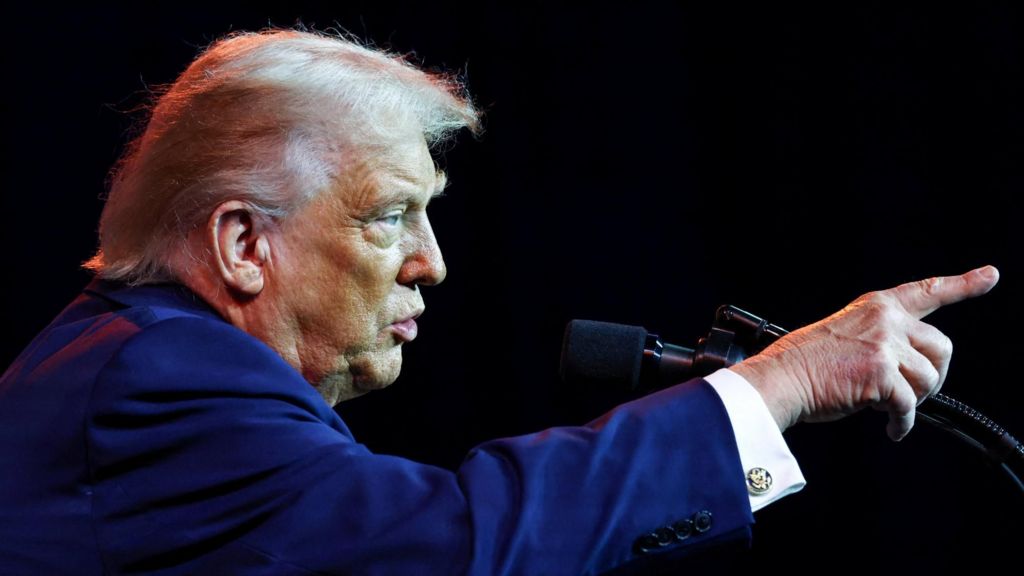
Former US President Donald Trump has issued a stark warning regarding potential military escalation in Nigeria, suggesting increased airstrikes if violence against Christians persists in the West African nation. During a comprehensive interview with the New York Times, Trump addressed the controversial Christmas Day operations in Sokoto state that targeted Islamist militants, indicating these strikes could become recurrent rather than isolated incidents.
Trump’s comments directly contradict Nigeria’s official position, which maintains that both Muslim and Christian communities face equal threats from jihadist organizations. The Nigerian government has previously rejected Trump’s characterization of religious persecution, emphasizing their commitment to protecting all citizens regardless of faith.
This diplomatic tension emerges against the backdrop of Nigeria’s complex security landscape, where multiple insurgent groups including Boko Haram and IS-affiliated factions have created a devastating fifteen-year insurgency primarily affecting the northeastern regions. The country additionally contends with criminal kidnapping networks, resource-based conflicts, and separatist movements across various territories.
Regarding the December strikes, US and Nigerian authorities described targeting camps operated by Lakurawa—a jihadist organization operating in the northwestern border region near Niger. While both governments confirmed the operation as a collaborative effort, they provided conflicting narratives regarding its religious motivations and timing. Nigerian Foreign Minister Yusuf Maitama Tuggar explicitly denied any connection to Christmas celebrations, despite Trump’s characterization of the strikes as a ‘Christmas present.’
The situation remains diplomatically delicate, with Nigeria’s foreign ministry spokesperson Alkasim Abdulkadir emphasizing continued engagement with international partners ‘on the basis of mutual respect, international law, and Nigeria’s sovereignty.’ Demographic context reveals Nigeria’s population of over 230 million people is nearly evenly divided between Christians (predominantly in the south) and Muslims (concentrated in northern regions), complicating simplistic religious narratives about the conflict.