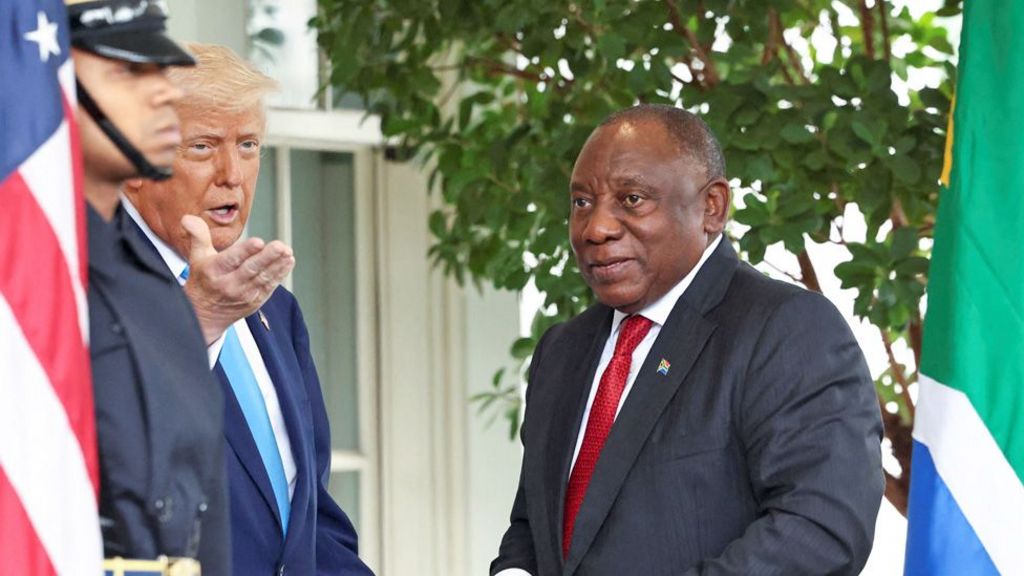
The diplomatic relationship between the United States and South Africa has deteriorated significantly this year, marked by sharp exchanges over South Africa’s role in the G20 and contentious refugee policies. US President Donald Trump has openly criticized South Africa’s inclusion in the G20, stating that the country ‘shouldn’t even be in the Gs anymore.’ Trump, who has repeatedly accused South Africa of discriminating against its white minority, opted not to attend the upcoming G20 summit in Johannesburg, sending Vice-President JD Vance instead. South Africa, however, remains confident in its ability to host a successful summit, with Presidential spokesperson Vincent Magwenya emphasizing the country’s readiness to welcome global leaders. The G20, established in 1999 to address global economic stability, holds significant weight in international diplomacy, with member states representing over 85% of the world’s wealth. Despite Trump’s criticisms, there is no formal procedure for expelling a country from the G20, as noted by Dr. Andrew Gawthorpe of the Foreign Policy Centre. South Africa has adopted themes of solidarity, equality, and sustainability for this year’s summit, reflecting its commitment to addressing global inequalities and the legacy of colonialism. Tensions were further exacerbated earlier this year when Trump offered refugee status to Afrikaners following South Africa’s land reform legislation, which allows the government to seize land without compensation in rare cases. South African President Cyril Ramaphosa attempted to ease tensions with a visit to the White House in May, but the meeting was overshadowed by Trump’s unsubstantiated claims of white farmer persecution. Efforts to mend relations have largely failed, with South Africa facing a 30% tariff on exports to the US, the highest rate in sub-Saharan Africa. The ongoing friction highlights the complex dynamics of US-South African relations, with both countries grappling with historical legacies and contemporary political challenges.
Trump wants South Africa out of the G20 as it gears up for world summit