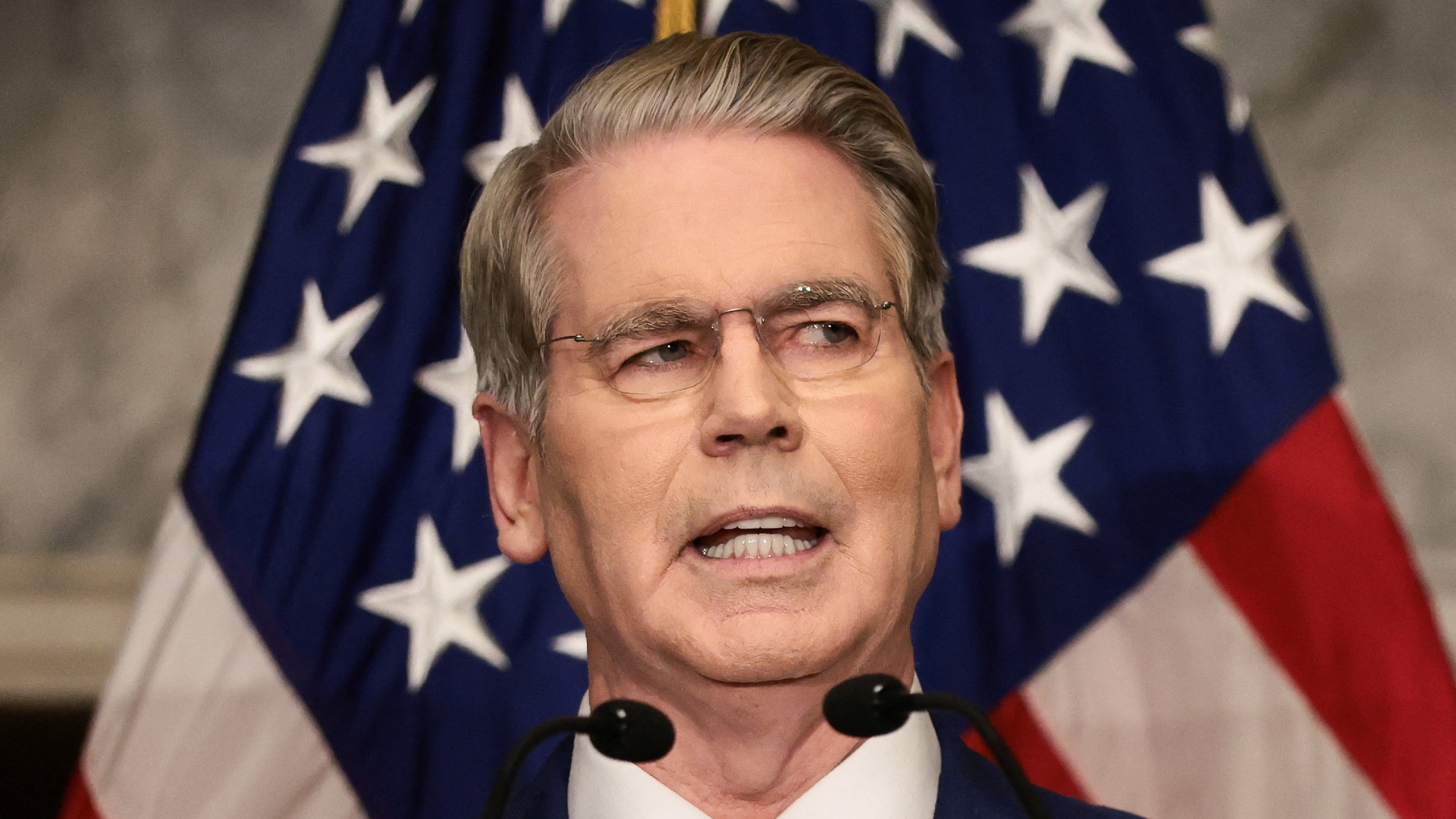
Amid a collapsing de facto ceasefire and escalating tensions in the strategic Strait of Hormuz, U.S. Treasury Secretary Scott Bessent announced a sweeping new round of sanctions against Iran and what the Trump administration terms the regime’s “enablers” on Monday, framing the action as a deliberate push to economically asphyxiate Tehran.
Speaking to reporters in Washington D.C., Bessent laid out what he calls Operation Economic Outcast, an initiative designed to eliminate any alternative path for the Iranian government beyond total capitulation to U.S. demands. “Iran now faces a very clear choice: complete global isolation and a subsistence economy, or a path back to normalcy with an opportunity to rejoin the global economy,” he told press. “America is no longer managing the Iranian threat. We are ending it.”
To implement the campaign, the Treasury Department has adopted what Bessent describes as a “zero leakage approach”, mapping every node, facilitator and network Iran has historically used to smuggle crude oil and evade existing international sanctions. President Donald Trump has also already held private phone calls with global leaders to issue specific demands that they cut all commercial and financial ties with Tehran, though Bessent declined to name the countries that received these requests.
Some 60 additional entities and individuals are set to face secondary sanctions in the coming weeks, but the administration is rolling out the measures gradually rather than imposing them immediately. When pressed on the phased timeline, Bessent acknowledged the need to avoid broader financial disruption, asking reporters “Why would I want to blow up the global financial system?” All countries have been given a structured deadline to wind down the activities the U.S. has flagged; if they fail to act, the Treasury will unilaterally impose penalties using its existing regulatory authority. A key target of the campaign is Bank Melli, Iran’s largest commercial bank with decades of history and a network of branches across Europe and the Middle East, which the U.S. demands be fully shuttered globally.
The new sanctions come as Washington faces lingering questions over its failure to reassert military control over the Strait of Hormuz, a chokepoint through which roughly a fifth of global oil supplies pass daily. The six-month U.S.-Israeli military campaign against Iran has already roiled global energy markets and upended international shipping, sending tanker charter rates soaring. A shipping-focused exchange-traded fund, BWET, has jumped 98% over the past month alone, reflecting widespread market disruption. With midterm elections approaching in November, rising energy prices have become a pressing political concern for Trump administration among American voters.
The phased rollout also reflects sensitivity around existing commercial ties between major U.S. partners and Iran, particularly China—currently the top buyer of Iranian crude oil, according to data from California-based research firm SRI International. Other major export destinations for Iranian energy include Iraq, the United Arab Emirates and Turkey. Asked about potential friction with Beijing ahead of Chinese President Xi Jinping’s planned state visit to the White House next month, Bessent said the administration is pursuing quiet diplomacy to set clear expectations for all global partners, adding that operating in the “gray areas” of the current conflict is no longer acceptable. “Countries cannot claim they are blind to enabling this activity,” Bessent said. “Iran’s enablers purchase and transport its petroleum. They facilitate the flow of its finances through exchange houses and free trade zones… all the while concealing the extent of their complicity.”
Because the global financial system is structured around U.S. banking standards and U.S. dollar transactions, newly sanctioned parties will effectively be locked out of most cross-border economic activity. Just last week, Bessent first previewed what he called “the toughest sanctions in history” against Tehran, while Trump framed the campaign as an “economic D-Day” in a social media post, warning that any country that provides even a minor lifeline to Iran will face “tremendous economic consequences.”
Iran has already pushed back against the new measures. In a speech last Thursday at an Arbaeen ceremony in Karbala, Iraq, Iranian Parliamentary Speaker Mohammad Bagher Ghalibaf said Tehran and Baghdad will not allow foreign powers to dictate their futures, calling for deeper security and economic cooperation between the two neighbors to advance shared prosperity.
U.S. and independent policy analysts have cast mixed doubt on the effectiveness of the new sanctions campaign. The National Iranian American Council (NIAC), a Washington-based advocacy group, warned Monday that the new measures will likely push Iran to escalate regional military actions—including a renewed blockade of the Strait of Hormuz or targeted attacks on Gulf energy infrastructure—consistent with Tehran’s long-held position that it will not tolerate economic warfare.
NIAC Policy Director Ryan Costello noted that the Trump administration’s maximum pressure campaign has a long track record of harming ordinary Iranians while leaving ruling elite largely insulated from economic pain, and that Tehran has never capitulated to U.S. demands. “Trump’s gamble is that this time, amid the destruction of war, and with the reinforcement of a blockade, time is on his side and ultimately Iran will be forced to concede defeat,” Costello said.
Richard Nephew, a former Biden administration national security official and architect of earlier U.S. sanctions campaigns against Iran, described Bessent’s announcement as mostly rhetorical bluster, noting on X that the phased rollout has watered down the “economic D-Day” framing into something far less decisive. “So, they took the weekend and looked at what they were going to do and thought ‘hmmmmm’ and are now turning this into less a ‘D Day’ than a ‘don’t make me count to 3’,” Nephew wrote.
Eurasia Group senior analyst Gregory Brew similarly characterized the announcement as a “warning shot”, arguing that the U.S. is seeking to ratchet up pressure on Tehran without triggering major Iranian retaliation or alienating key Iranian trading partners, most notably China.