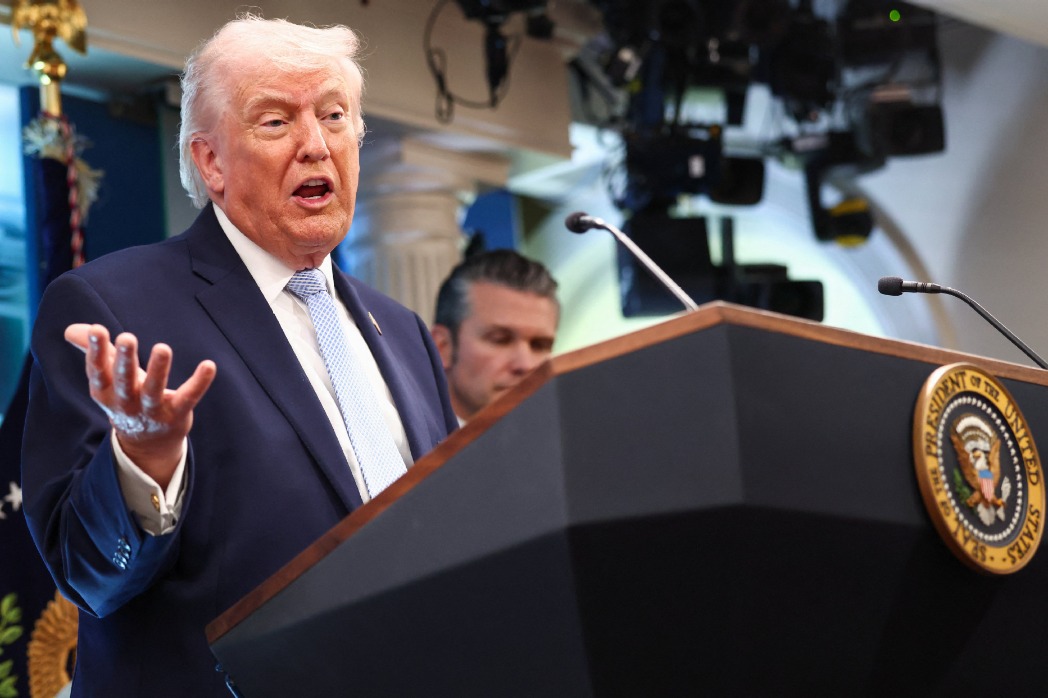
On April 6, 2026, U.S. President Donald Trump delivered a stark public warning to Iran during a White House press briefing in Washington D.C., standing alongside newly appointed Defense Secretary Pete Hegseth. The president set a firm 8 p.m. Eastern Time deadline on Tuesday for Iran to reach a negotiated agreement and reopen the strategically critical Strait of Hormuz, threatening that the entire Iranian nation could be “taken out” in a single night of military action — a night that could fall as soon as the deadline passes.
“The entire country could be taken out in one night, and that night might be tomorrow night,” Trump told reporters gathered in the James S. Brady Press Briefing Room. Despite the escalated threats, the president acknowledged that indirect negotiations through intermediaries have made progress, framing Iran as an “active, willing participant” in talks aimed at resolving the ongoing standoff.
“I can’t talk about ceasefire, but I can tell you that we have an active, willing participant on the other side. They would like to be able to make a deal. I can’t say any more than that,” Trump added, confirming that the Tuesday evening ultimatum remains final. Beyond broad threats of full-scale elimination of Iranian state capacity, the president revealed his administration has a detailed operational plan to demolish critical infrastructure across Iran, targeting key bridges and power plants by midnight Tuesday if no deal is reached. “I mean complete demolition by 12 o’clock. And it will happen over a period of four hours if we wanted to. We don’t want that to happen,” he claimed, emphasizing that military action remains a preventable outcome.
Defense Secretary Hegseth backed up the president’s threats, confirming that U.S. military forces have already ramped up offensive operations. He told reporters that Monday’s airstrikes would be the largest single wave of attacks launched since the U.S. military campaign against Iran began on February 28, with even heavier strikes scheduled for Tuesday ahead of the deadline. “Per the president’s direction, today will be the largest volume of strikes since Day One of this operation. Tomorrow, even more than today. And then Iran has a choice,” Hegseth stated.
The escalating exchange has ratcheted up fears of a full-scale regional conflict in the Middle East, centered on control of the Strait of Hormuz — a chokepoint through which roughly 20% of global oil supplies pass, making its closure a major threat to global energy markets and international economic stability.