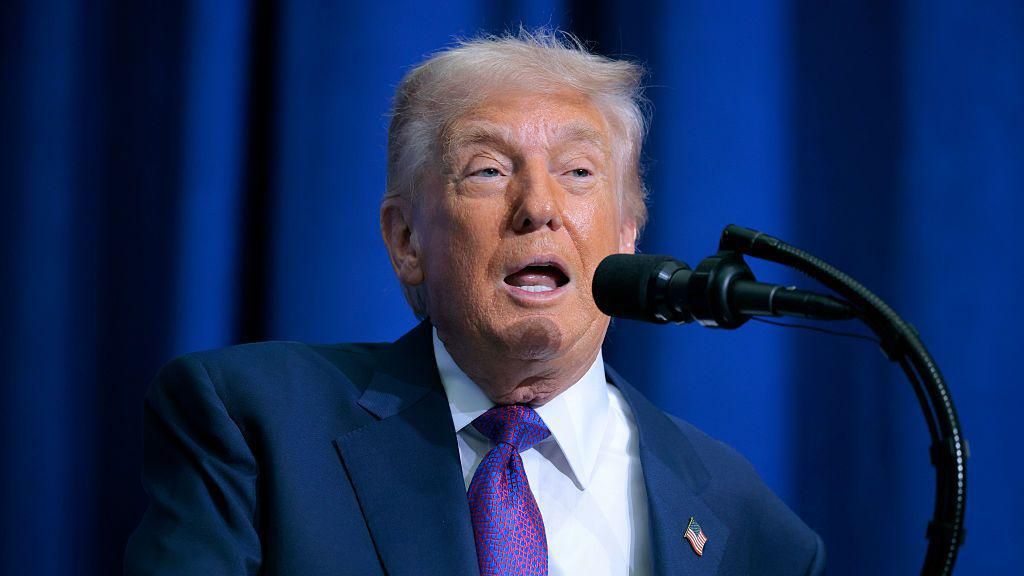
President Donald Trump has declared that the world will learn within approximately ten days whether the United States will secure a nuclear agreement with Iran or resort to military escalation. Speaking at the inaugural session of his newly established Board of Peace in Washington D.C., Trump characterized recent negotiations as “very good” while simultaneously acknowledging the historical complexity of reaching meaningful accords with Tehran.
The administration appears to be pursuing parallel tracks of diplomacy and military pressure. Recent days have witnessed both reported progress in U.S.-Iran talks held in Switzerland and a significant surge of American military assets to the Middle East, including the deployment of the USS Abraham Lincoln aircraft carrier. This dual approach has created an atmosphere of heightened tension, with satellite imagery confirming Iran’s reinforcement of military facilities and Supreme Leader Ayatollah Ali Khamenei issuing social media threats against U.S. forces.
Special Envoys Steve Witkoff and Jared Kushner, who also serves as Trump’s son-in-law, have conducted what the president described as productive meetings with Iranian representatives. However, Trump emphasized that additional work remains and warned that Washington “may have to take it a step further” if diplomatic efforts fail.
The Board of Peace, initially conceived to address the Israel-Hamas conflict, appears to have expanded its mandate beyond Gaza reconstruction. Its composition of approximately two dozen nations has raised questions about whether the Trump administration intends to create an alternative forum that might marginalize United Nations diplomacy.
Congressional opposition to potential military action is mounting across party lines. Representatives Ro Khanna (D-CA) and Thomas Massie (R-KY) are preparing to force a vote under the 1973 War Powers Act, which grants Congress authority to constrain presidential war powers. Khanna emphasized that conflict with Iran “would be catastrophic,” noting the nation’s significant military capabilities and the vulnerability of thousands of U.S. troops stationed in the region. Despite this legislative effort, prospects for passage remain uncertain, particularly after Senate Republicans blocked a similar resolution regarding Venezuela in January.
White House Press Secretary Karoline Leavitt previously stated that Iran would be “very wise” to negotiate a deal, indicating the administration’s preference for diplomatic resolution while maintaining military options. The situation remains fluid with last year’s strikes on Iranian nuclear facilities and reported discussions of new attack options underscoring the volatility of the current standoff.