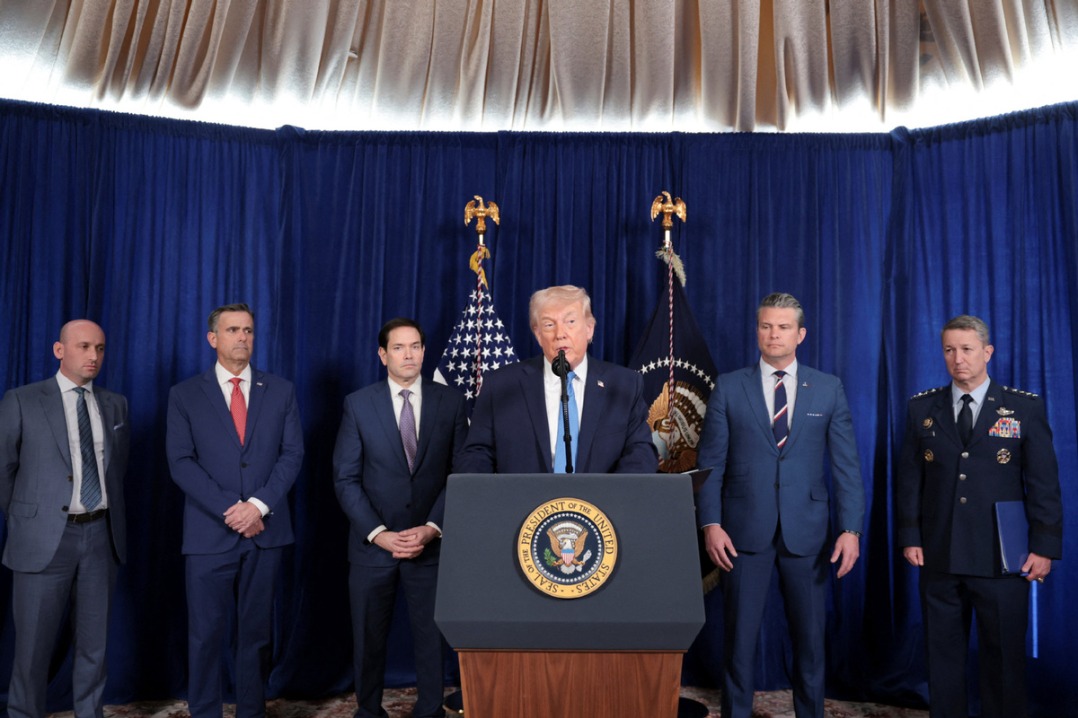
In a dramatic escalation of hemispheric tensions, President Donald Trump has announced the United States will establish temporary administrative control over Venezuela following a military operation that resulted in the capture of President Nicolás Maduro and his wife. The unprecedented declaration came during a press conference at Trump’s Mar-a-Lago resort in Florida on January 3, 2026, flanked by top defense and diplomatic officials.
Trump asserted that American oversight would continue until a ‘safe, proper and judicious transition’ could be implemented, explicitly not ruling out the deployment of ground troops during this interim period. The president characterized the operation as remarkably successful, suggesting additional military action might be unnecessary while simultaneously warning of readiness to escalate if required.
The administration’s financial justification drew immediate attention, with Trump claiming the intervention ‘won’t cost us a penny’ due to anticipated reimbursement from Venezuela’s substantial oil reserves. He further outlined plans for American energy companies to reconstruct the nation’s damaged infrastructure under US supervision.
This unilateral action triggered swift international condemnation. United Nations Secretary-General António Guterres expressed deep alarm through spokesperson Stéphane Dujarric, warning the operation established ‘a dangerous precedent’ that violated fundamental principles of international law and the UN Charter.
Global reactions mounted rapidly. Spain’s Prime Minister Pedro Sánchez declared his nation would not recognize an intervention that ‘violates international law and pushes the region toward uncertainty and belligerence.’ Venezuela and Colombia formally requested an emergency meeting of the UN Security Council, with Venezuelan Ambassador Samuel Moncada denouncing the operation as a ‘deadly and treacherous military attack’ against a peaceful nation.
China voiced profound shock and strong condemnation, characterizing US actions as hegemonic acts that seriously violate international law and Venezuelan sovereignty. Russia demanded Maduro’s immediate release and urged Washington to reconsider its position, emphasizing dialogue as the proper mechanism for conflict resolution.
France’s Foreign Minister Jean-Noël Barrot joined the criticism, stating that ‘no lasting political solution can be imposed from outside’ and that only sovereign people can determine their future. Legal experts from Chatham House reinforced these concerns, noting the operation collided with the UN Charter’s baseline prohibition on using force as national policy without either Security Council authorization or circumstances of self-defense against armed attack.