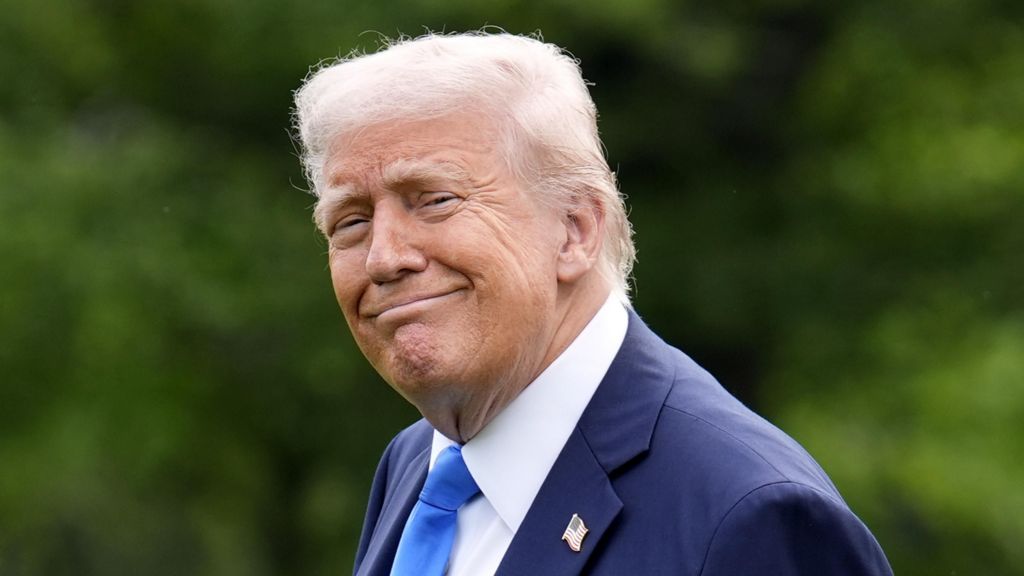
Former U.S. President Donald Trump has reiterated his controversial proposal to impose a 100% tariff on all films not produced within the United States, asserting that the American film industry has been ‘stolen’ by other nations. Speaking on his Truth Social platform, Trump emphasized that California, in particular, has suffered significantly due to the decline in domestic film production. He framed the tariff as a solution to what he described as a ‘long-time, never-ending problem.’
This announcement follows Trump’s broader tariff strategy, which recently included a 100% levy on branded or patented drug imports and 50% tariffs on kitchen and bathroom cabinets. Trump’s rhetoric has drawn criticism and skepticism, with many questioning the feasibility and economic impact of such a policy. Investment analyst Dan Coatsworth of AJ Bell highlighted the complexities of defining what constitutes an ‘American-made’ film, especially when productions involve foreign actors, directors, or funding.
Coatsworth also noted that filmmakers have increasingly relocated to countries offering more favorable tax incentives, leading to a decline in the prominence of the Los Angeles film industry. He warned that forcing productions back to the U.S. could drive up costs, which might ultimately be passed on to consumers, potentially harming demand for streaming services and cinema operators. Despite these concerns, investors have yet to treat the proposal as a serious threat, with stocks for companies like Netflix and Disney showing only brief dips before recovering.
The proposal’s implications for streaming platforms and international co-productions remain unclear. For instance, films like ‘Wicked,’ which was shot in the UK but produced by an American studio, could face ambiguous treatment under the proposed tariffs. Recent data from movie industry research firm ProdPro reveals that while the U.S. remains a major global production hub, spending has declined by 26% since 2022, with countries like Australia, New Zealand, Canada, and the UK attracting increased investment.