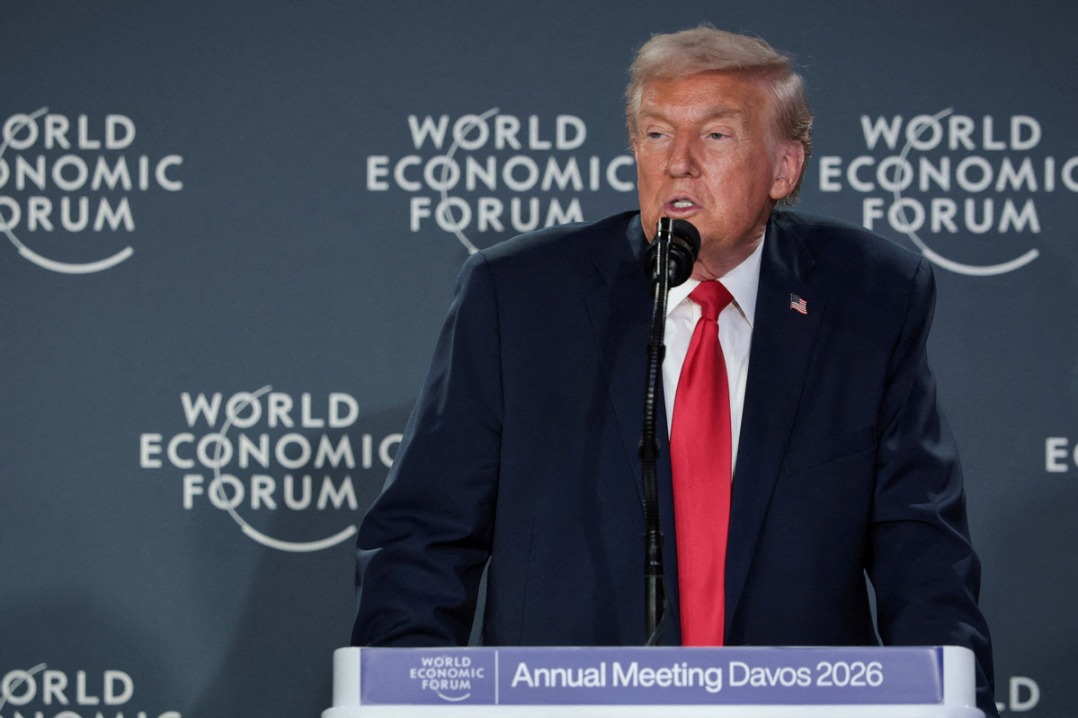
At the 2026 World Economic Forum in Davos, the United States delegation led by President Donald Trump delivered a stark departure from traditional globalist consensus with an uncompromising ‘America First’ agenda. The record-sized US contingent focused programming around aggressive trade protectionism, artificial intelligence dominance, and sovereign expansion ambitions.
President Trump’s 70-minute special address defended tariff policies as essential tools for national growth, claiming a 77 percent reduction in monthly trade deficits while positioning the US as the planet’s primary economic engine. The administration’s trade representative, Jamieson Greer, framed tariffs as legitimate geopolitical instruments, explicitly repudiating twenty-five years of trade policy by declaring the US market would not remain “permanently available to everyone.”
The delegation’s confrontational stance extended to artificial intelligence, where officials promoted deregulation and infrastructure ownership. Trump announced an extraordinary offer to Silicon Valley: nuclear power plant approvals within three weeks to fuel AI development. Administration officials criticized the European Union’s AI Act as “an absolute disaster” while advocating a “light-touch” regulatory approach.
Commerce Secretary Howard Lutnick explicitly declared that “globalization has failed the West and the United States of America” in both panel discussions and a Financial Times op-ed. The administration’s position emphasized economic security and sovereign control, particularly regarding Trump’s renewed pursuit of Greenland acquisition for its strategic resources and shipping lanes.
The delegation’s statements generated significant geopolitical concern, with experts warning that the administration’s denial strategy risks further fragmenting the international system and eroding consensus on global rules and norms. The proceedings highlighted a fundamental shift in how the United States engages with multilateral institutions and international partners.