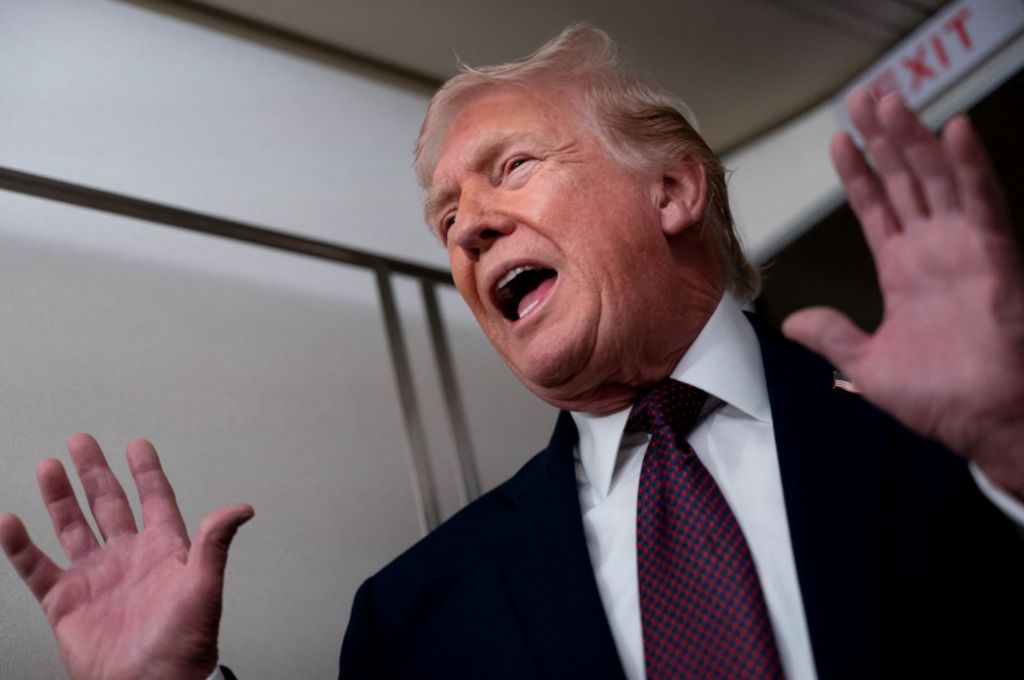
Financial markets experienced significant turbulence following former President Donald Trump’s unexpected call for a drastic reduction in credit card interest rates. Through his Truth Social platform on Friday, Trump demanded that credit card companies implement a one-year cap of 10% on interest rates effective January 20, 2026, claiming this would prevent the American public from being “ripped off” by financial institutions.
The announcement triggered immediate sell-offs across the banking and payment processing sectors. Barclays Bank, which maintains substantial U.S. credit card operations, saw its shares decline by 3.5%. Pre-market trading indicated similar downward trends for American Express (-4%), Visa (-1.2%), and Mastercard (-2%). Major U.S. banks including JPMorgan Chase and Bank of America also experienced declines of 3.2% and 2.5% respectively.
Industry representatives responded with strong opposition. Five leading U.S. banking associations issued a joint statement warning that such a cap would severely restrict credit availability and prove “devastating” for millions of families and small businesses. They argued that the measure would ultimately drive consumers toward less regulated, more expensive alternative credit sources.
Legal and political challenges emerged quickly. Democratic Senator Elizabeth Warren dismissed Trump’s proposal as insufficient, noting that actual implementation would require congressional legislation. She highlighted Trump’s previous efforts to dismantle the Consumer Financial Protection Bureau (CFPB), which oversees consumer financial products.
The proposal revives earlier legislative efforts from Senators Bernie Sanders and Josh Hawley, who introduced bipartisan legislation in early 2024 to cap credit card rates at 10% for five years, though their bill has not advanced.
Notably, the Trump administration had previously moved to eliminate an $8 cap on credit card late fees implemented by the Biden administration in April 2025. Billionaire investor Bill Ackman expressed support for the goal of reducing rates but warned that a 10% cap would likely cause widespread card cancellations as companies struggle to price subprime credit risk adequately.