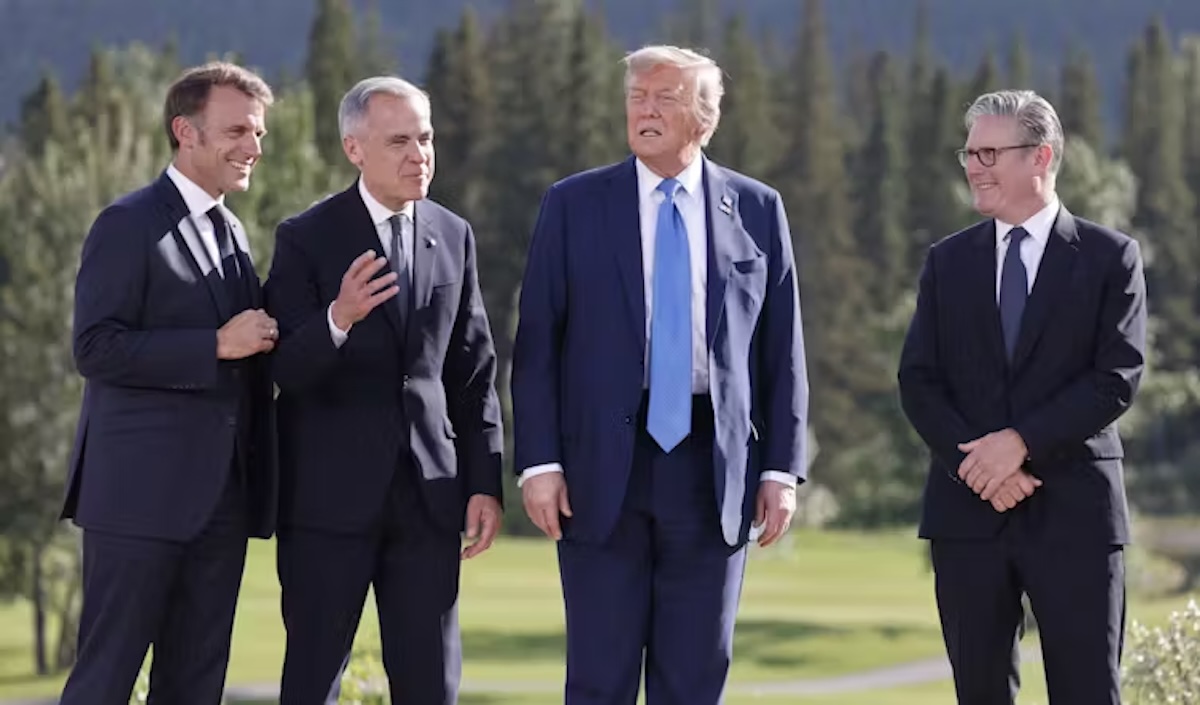
President Donald Trump’s abrupt departure from the recent G7 summit in Canada has reignited concerns about his strained relationships with Western democratic allies. While French President Emmanuel Macron speculated that Trump’s exit was linked to the escalating tensions between Iran and Israel, the U.S. president offered no clear explanation, merely stating he left for “obvious reasons.” Trump later took to social media to criticize Macron, asserting that his departure was unrelated to a ceasefire and involved something “much bigger.” This cryptic behavior has fueled speculation about potential U.S. involvement in Israel’s military actions against Iran. Trump’s recent statements, including claiming “complete and total control of the skies over Iran” and demanding Tehran’s “unconditional surrender,” suggest a hardening stance. Israeli Prime Minister Benjamin Netanyahu appears to be leveraging Trump’s impulsive nature to secure advanced military support, such as the 30,000-pound “bunker buster” bomb and a B-2 bomber, to target Iran’s uranium enrichment sites. Trump’s actions have left U.S. allies scrambling to interpret his intentions, further straining transatlantic relations. His history of early departures from G7 meetings, skepticism toward NATO, and preference for bilateral deals over multilateral cooperation underscore his “America First” agenda. Trump’s call for Russia’s return to the G7 and his admiration for Vladimir Putin have also alarmed allies, raising questions about his commitment to collective security. As tensions in the Middle East escalate, Trump’s approach risks undermining global stability and deepening divisions among Western powers.