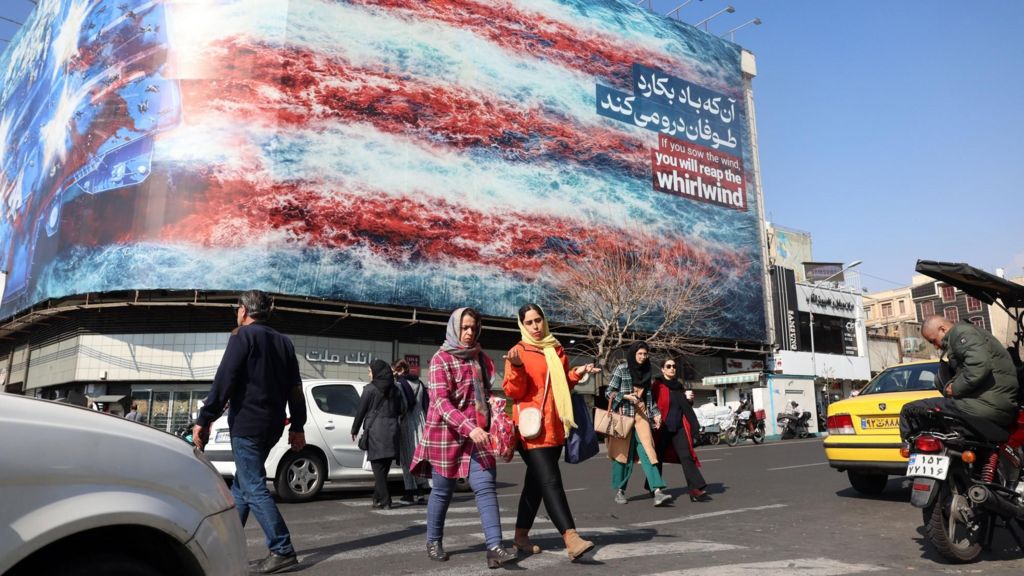
Amidst the largest U.S. military deployment to the Middle East since the 2003 Iraq invasion, President Donald Trump has signaled a preference for diplomatic engagement with Iran rather than military confrontation. During his historic State of the Union address, Trump notably avoided making a comprehensive case for potential military action, instead emphasizing his openness to negotiation while maintaining consistent demands for Iranian nuclear transparency.
The diplomatic landscape is reaching a critical juncture as envoys prepare for the third round of negotiations this month in Geneva. Trump’s top envoy Steve Witkoff and son-in-law Jared Kushner are expected to engage in talks that could determine whether the two nations can bridge their significant differences. A diplomat familiar with the process warned that failure to secure an acceptable agreement text from Tehran could prompt military action shortly after the negotiations.
Central to the discussions remains Trump’s insistence that Iran explicitly declare it will never pursue nuclear weapons—a demand that appears partially met by Iranian Foreign Minister Abbas Araghchi’s recent statement on social media that “Iran will under no circumstances ever develop a nuclear weapon.” However, verification mechanisms and Iran’s ballistic missile program continue to present substantial obstacles.
The current negotiations differ significantly from previous rounds, with International Atomic Energy Agency head Rafael Grossi playing an expanded role in technical discussions. Iran has offered new proposals including diluting its highly enriched uranium, which at 60% purity approaches weapons-grade concentration. The involvement of Ali Larijani, secretary of Iran’s Supreme National Security Council and senior adviser to Supreme Leader Ayatollah Ali Khamenei, signals the seriousness of Tehran’s engagement.
Complicating the diplomatic calculus are Trump’s controversial claims about Iranian domestic unrest, including an unsubstantiated assertion that authorities killed approximately 32,000 protesters—a figure dramatically higher than the 3,100 acknowledged by Tehran and the 7,000 documented by HRANA activists. Iranian officials immediately denounced these statements as “big lies.”
Analysts note that both nations face unprecedented pressures: the Islamic Republic confronts severe economic sanctions and internal legitimacy challenges, while the Trump administration balances its anti-interventionist base against concerns about Iran’s regional ambitions and nuclear capabilities. As the clock counts down toward decisive negotiations, the world watches to see whether diplomacy can prevail over military escalation in one of the world’s most volatile regions.