After more than a month of open conflict between the U.S.-Israeli bloc and Iran, regional tensions have spiraled to new heights in recent days, fueled by a fiery public ultimatum from U.S. President Donald Trump and a wave of reciprocal cross-border strikes that have put global energy security at grave risk.
The latest escalation follows the downing of an American F-15 fighter jet over southwestern Iran on Friday. Both the pilot and a second crew member ejected safely after the crash, and the pilot was rescued within hours. After a multi-day search carried out by both U.S. and Iranian teams in the mountainous crash site, the White House announced Sunday that the second service member had also been successfully extracted from hostile Iranian territory.
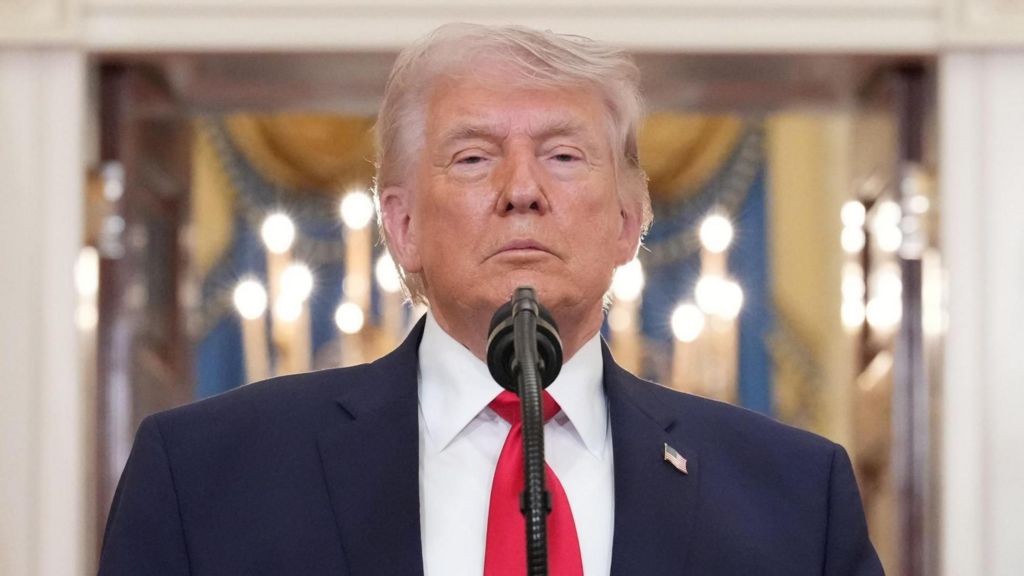
Hours after confirming the rescue, Trump took to his Truth Social platform to issue a profanity-laced threat against Tehran, tying his demand to a rapidly approaching deadline. Iran has blocked all commercial shipping traffic through the Strait of Hormuz, the world’s most critical chokepoint for global oil exports, for more than a month. The closure has sent crude prices soaring worldwide and stoked widespread fears of a sustained global inflation surge. Trump first issued a series of deadlines for Iran to reopen the waterway back in March, and Sunday’s post reaffirmed that demand with unprecedented harsh language.
“Tuesday will be Power Plant Day, and Bridge Day, all wrapped up in one, in Iran. There will be nothing like it!!! Open the Fuckin’ Strait, you crazy bastards, or you’ll be living in Hell – JUST WATCH! Praise be to Allah. President DONALD J. TRUMP,” the post read. Later, Trump clarified an adjustment to the timeline, posting “Tuesday, 8:00 P.M. Eastern Time!” – an extension from the original Monday, April 6 deadline. In subsequent interviews with U.S. media outlets, the president struck a contradictory tone: he repeated his earlier threat to unleash “hell” on Iran if the deadline is not met, but added that he believes there is a “good chance” a negotiated deal can be reached with Tehran before the clock runs out. He also acknowledged he is considering a more extreme option: “blowing everything up and taking over the oil” if no agreement is secured quickly.
Iranian officials have responded with open mockery and defiance of Trump’s ultimatum. Gen. Ali Abdollahi Aliabadi, a senior commander with Iran’s central military command, dismissed the threat as a “helpless, nervous, unbalanced and stupid action,” warning that “the gates of hell will open” for the U.S. president if Washington follows through on the attack.
Parallel to the diplomatic standoff, both sides have ramped up military strikes across the region in recent days. Israel has carried out a wave of attacks on civilian infrastructure targets across Iran in recent days, with a petrochemical facility hit Saturday marking the latest in that campaign. According to senior Israeli defense officials, Jerusalem is currently awaiting final approval from Washington to launch expanded strikes on Iranian energy facilities as early as next week. On Sunday, joint U.S.-Israeli strikes hit the Qasem Soleimani International Airport in southwestern Iran, a key logistical hub for Iranian military operations.
Iran has continued its reciprocal retaliatory strikes targeting Israel and U.S. Arab allies across the Persian Gulf. On Sunday, an Iranian ballistic missile scored a direct hit on a residential building in the Israeli coastal city of Haifa, leaving four people injured. Further north in the Gulf, Abu Dhabi emergency responders spent Sunday battling large fires at the Borouge petrochemical complex, sparked by debris from an intercepted Iranian missile. Kuwaiti officials reported severe damage to key oil and petrochemical facilities from Iranian drone strikes, while industrial and fuel infrastructure in Bahrain was also targeted in separate attacks.