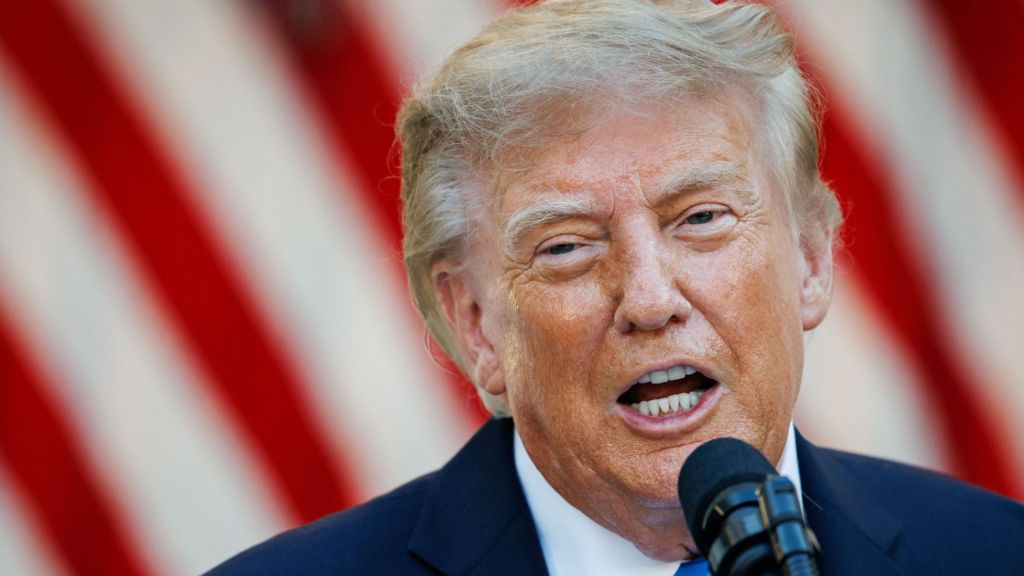
A controversial new statement from former and current US President Donald Trump has sent ripples through international diplomacy, after he openly refused to guarantee American military backing for the United Kingdom if a new territorial conflict breaks out over the Falkland Islands between London and Buenos Aires.
Speaking in a recent interview with UK broadcaster GB News, Trump tied his reluctance to what he frames as unreciprocated cooperation from the UK during the United States’ ongoing tensions with Iran. He argued that when he requested limited naval support from the then-UK prime minister Keir Starmer for operations in the Strait of Hormuz — a critical global chokepoint for oil supplies, a large share of which are imported by the UK — his request was denied on the grounds that no vessels were available for deployment.
“It was pretty sad,” Trump told GB News. “Your country was not there to help me. We didn’t need help, but I did ask Nato, and I asked your former leader, ‘why didn’t you send a couple of ships?’ Nato was not there, even though most of those countries get a big portion of their oil from there. So we’re doing that by ourselves.”
The Falkland Islands, a remote British overseas territory located in the South-West Atlantic, have been at the center of a bitter sovereignty dispute between the UK and Argentina for decades. The disagreement boiled over into open armed conflict in 1982, when Argentine military forces invaded the islands to stake Buenos Aires’ long-held territorial claim. A 74-day conflict followed, ending when a British task force retook the islands. The war claimed the lives of 255 British service members, three Falkland Island civilians and 649 Argentine soldiers, leaving a lasting legacy of tension between the two nations.
This is not the first time Trump has signaled a potential break from longstanding US policy on the Falklands. Earlier, he stated that the US could revise its long-held neutral position on the islands’ sovereignty if the UK failed to meet NATO’s required target for defense spending. When questioned by the BBC recently about whether he was reviewing the US’ long-standing position on the sovereignty dispute, Trump replied: “I always review every position. That’s just one of many.”
For decades, all previous US administrations have maintained a formal policy of recognizing the UK’s de facto administrative control over the Falklands, while declining to take an official stance on the ultimate question of sovereignty. That long-standing neutrality may now be at risk of shifting under a second Trump administration.
The comments come as Argentine President Javier Milei is set to address the nation in a prime-time televised address on Thursday evening, where he is expected to lay out his government’s stance on what Buenos Aires calls its “historic sovereignty claim” to the islands.
The UK government has issued a firm response to Trump’s remarks, reaffirming its long-held commitment to the self-determination of the Falkland Islanders. “Falkland islanders are British with a right to determine their own future,” a UK government spokesperson said. “The islanders have repeatedly expressed their wish to remain a British overseas territory and our commitment to them is unwavering.” That commitment was most recently validated by a 2013 referendum, where 99.8% of voting island residents opted to retain their status as a British overseas territory, with only three votes cast against the proposal.