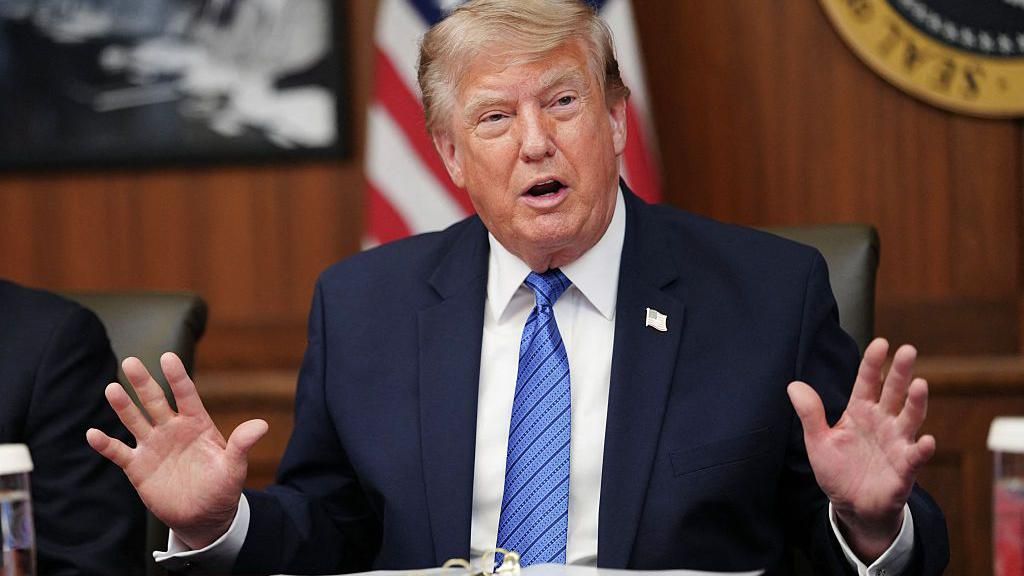
Six months into open conflict between the United States and Iran, mounting scrutiny has fallen on the Trump administration over the status of U.S. military stockpiles, spurring a sharp public pushback from the former president that includes vows of severe legal action against officials leaking unflattering information.
In an early Thursday post on his Truth Social platform, Donald Trump rejected widespread reports of a critical munitions shortage, insisting the U.S. currently holds massive stockpiles of all major types of ammunition and missiles, with additional production lines ramping up to deliver new inventory as required. He went further to label the claims of a shortfall as “treasonous statements” from rogue insiders, confirming that law enforcement and intelligence officials are actively tracking down those responsible for the leaks and that the administration will pursue lengthy prison sentences for anyone found responsible.
The latest wave of reports questioning stockpile levels originated from two separate outlets. CBS News, U.S. reporting partner to the BBC, cited two anonymous sources with direct knowledge of U.S. arsenal status to claim the war has already drawn down most of America’s global stockpile of long-range precision missiles. A day earlier, the Washington Post also reported, again citing unnamed sources, that Trump had confronted Defense Secretary Pete Hegseth over a potential weapons shortage during a private meeting the previous week. The BBC has not independently verified the claims in the Post reporting.
This controversy comes as the U.S. and Iran remain locked in a cycle of tit-for-tat strikes, despite multiple temporary ceasefire agreements that have failed to produce a lasting peace deal. Over the course of the conflict, the U.S. military has expended massive quantities of specialized, hard-to-manufacture precision weapons during major combat operations including Operation Epic Fury. The Trump administration and Pentagon have repeatedly attempted to reassure the American public that overall missile stockpiles remain sufficient to meet all current defense needs.
Independent analysis from nonpartisan experts paints a far grimmer picture, however. The Center for Strategic and International Studies (CSIS), a leading Washington-based national security think tank, released new estimates Wednesday based on publicly available data that show steep drawdowns. Retired Marine Corps Colonel Mark Cancian, a senior CSIS adviser, told reporters that between 759 and 827 Patriot missiles remain in U.S. stockpiles as of the end of July, down sharply from a pre-conflict total of 2,330. The think tank also estimates that roughly 60% of the U.S. Terminal High Altitude Area Defense (THAAD) interceptor missile stockpile, used to defend against incoming long-range strikes, has been expended over the course of the war.
Compounding the strain on U.S. stockpiles is the enduring demand for American weapons from global allies beyond the Iran conflict. Since Russia’s 2022 full-scale invasion of Ukraine, the U.S. has shipped large numbers of Patriot missiles to Kyiv to help defend Ukrainian cities and critical infrastructure against Russian attacks. With U.S. stockpiles now depleted, Cancian predicts the Pentagon will hold back on future transfers of the systems to Ukraine. During a cabinet meeting Friday, Trump addressed Ukraine’s latest request for additional Patriots, telling reporters that approving the request would be a “big step” and that discussions between the two governments are still ongoing.
Modern precision weapons have notoriously long production timelines, requiring years of planning, funding, manufacturing, and delivery, which makes rapid replenishment of expended stockpiles extremely difficult. Despite their consistent public denials of any shortage, administration officials have already moved to ramp up production and seek emergency funding to rebuild inventory. Last month, Hegseth submitted a request to the U.S. Senate for $87 billion in emergency appropriations, which would go toward troop pay and the rapid replenishment of depleted military equipment and munitions.
Hegseth has echoed Trump in dismissing the shortage claims as a “manufactured story,” telling CBS’ Face the Nation in a mid-June appearance that reports of stockpile gaps are untrue. Trump made similar comments to the Wall Street Journal last month, claiming “We have far more munitions than anyone in the world, and far more than we need.” Since taking office as Defense Secretary, Hegseth has also implemented sweeping new restrictions to limit the information reporters can gather from Pentagon officials, a move widely seen as an effort to crack down on unauthorized disclosures. All official information on U.S. missile stockpile levels remains classified.
Readers can follow ongoing coverage of the second Trump administration’s key policy shifts through North America correspondent Anthony Zurcher’s weekly newsletter, *US Politics Unspun*. Sign-up is available here for readers based in the United Kingdom, and here for readers based outside the UK.