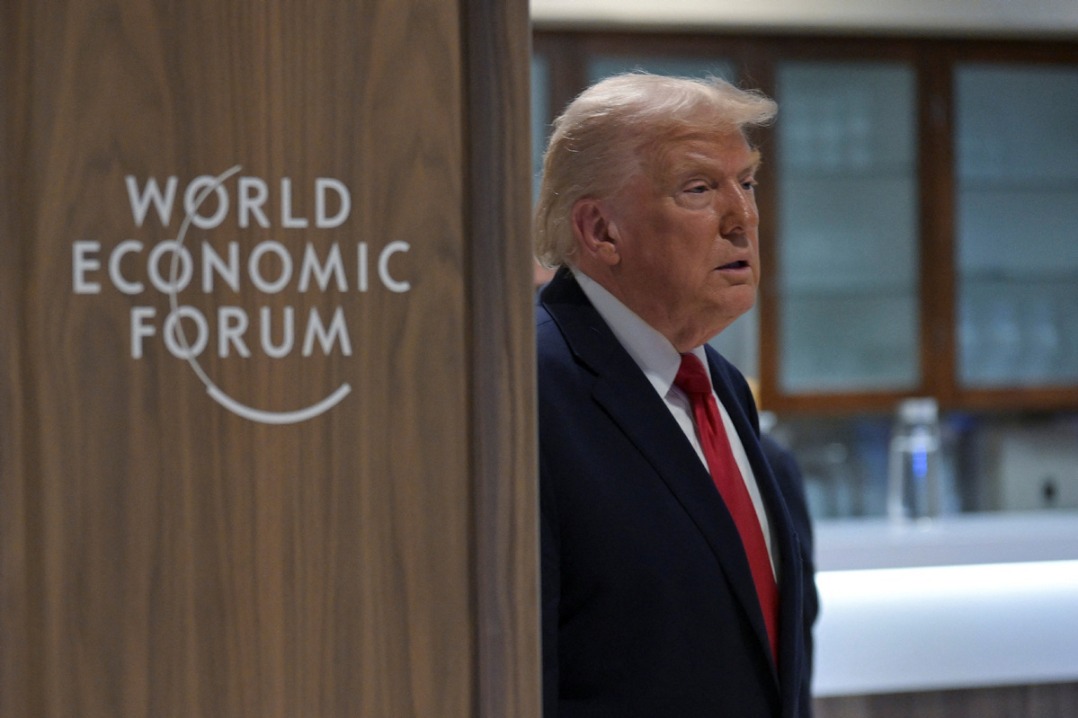
At the World Economic Forum in Davos on January 21, 2026, U.S. President Donald Trump vigorously defended his controversial proposal to acquire Greenland from Denmark while justifying his tariff-based economic approach. The American leader characterized the Arctic territory as a critical strategic asset for national and international security, asserting that “no nation or group of nations is in any position to be able to secure Greenland other than the United States.”
Trump’s address came amidst growing European opposition to both his territorial ambitions and economic policies. The president explicitly ruled out military force while demanding “immediate negotiations” for the purchase, framing it as a straightforward transaction rather than an expansionist maneuver.
Regarding economic policy, Trump positioned tariffs as fundamental to American prosperity, declaring that “We have made some great trade deals; everyone knows when the U.S. grows, you will follow.” This defense followed his weekend threat on Truth Social to impose escalating tariffs—starting at 10% on February 1 and potentially reaching 25% by June—on eight NATO allies including the UK, Germany, and France unless they acquiesced to the Greenland acquisition.
European leaders mounted a coordinated response ahead of Trump’s appearance. French President Emmanuel Macron rejected what he termed “the law of the strongest,” criticizing Trump’s approach as “new colonialism” and reaffirming Europe’s commitment to international law. European Commission President Ursula von der Leyen warned that tariff threats risked creating a “downward spiral” in transatlantic relations, while UK Prime Minister Keir Starmer condemned the proposed measures as “completely wrong.”
The confrontation escalated following Trump’s speech, with the European Parliament formally suspending work on approving a previously negotiated U.S.-EU trade deal. European Council President Antonio Costa confirmed an emergency summit in Brussels to coordinate retaliatory measures, potentially targeting €110 billion ($129 billion) worth of American exports.
Trump further complicated diplomatic tensions by attacking European renewable energy policies, particularly wind power, which he dismissed as a “hoax” that allegedly benefits China. However, industry data from the World Wind Energy Association directly contradicted his claims, showing China as the world’s largest wind power market with cumulative installed capacity exceeding 600 GW by mid-2025, including 51.4 GW added in the first half of that year alone.