Against a backdrop of sustained cross-border tensions and soaring domestic fuel costs that contributed to the Republican Party’s underperformance in the latest U.S. congressional elections, the Islamic Republic of Iran has emerged as a defining test of former U.S. President Donald Trump’s domestic political credibility and global geopolitical leverage. This electoral setback has given the Trump administration an urgent political incentive to deliver a publicly marketable, seemingly successful conclusion to the ongoing Iran conflict, after months of costly military engagement.
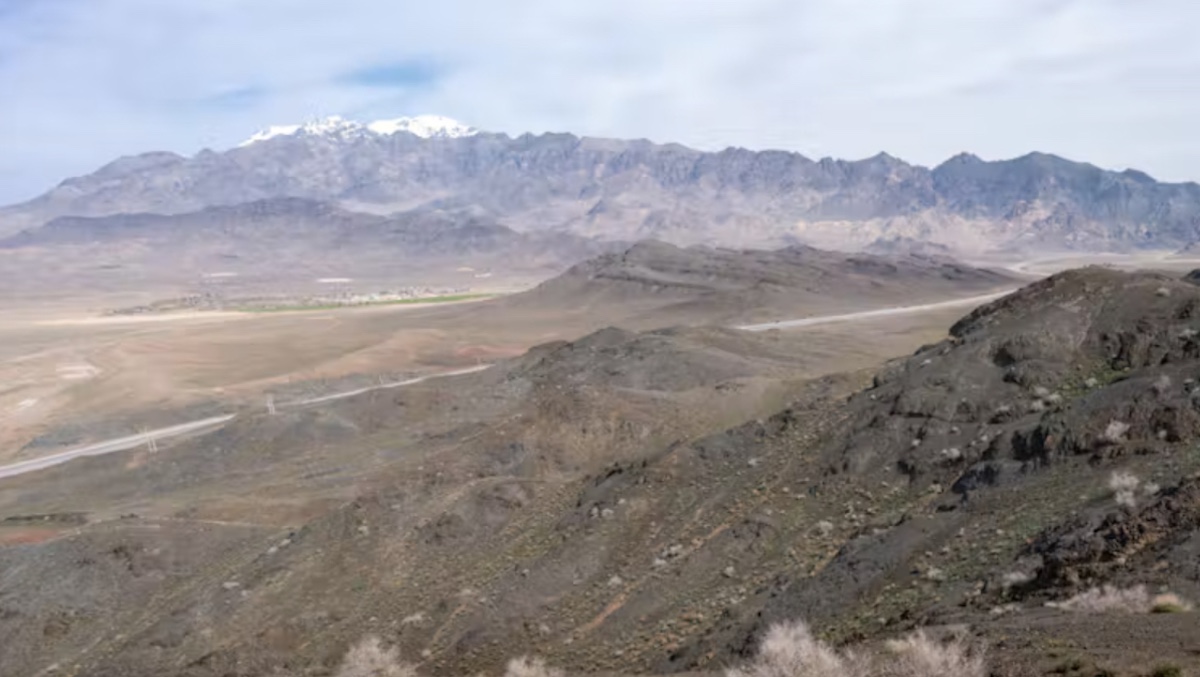
On November 9, Trump laid out a tentative approach to the standoff, stating his preference for maintaining the status quo of current military deployments, while issuing a stark warning that U.S. forces stood fully “locked and loaded” to escalate rapidly if conditions shifted on the ground. At the epicenter of this delicate strategic calculus sits a 1,600-metre granite peak codenamed Pickaxe Mountain by Western analysts, locally known as Kūh-e Kolang Gaz Lā, located just 1.6 kilometres south of Iran’s Natanz nuclear complex in the country’s central plateau. Trump has repeatedly singled out the site for public threats, declaring as early as October that U.S. military forces could dismantle the facility in a swift, decisive operation — a claim that faces significant logistical and operational hurdles that independent analysts have begun to flag for public scrutiny.
The heavily fortified underground nuclear complex nested beneath Pickaxe Mountain was commissioned in the aftermath of a wave of unexplained, high-profile sabotage attacks that swept across Iran in 2020. Those blasts targeted a string of sensitive national assets, including military missile production sites, critical power infrastructure, and a key centrifuge assembly workshop at the Natanz nuclear facility on July 2 of that year. The damaged workshop, which was used to manufacture the precision machines that enrich uranium for both civilian power generation and nuclear weapons applications, prompted Iran’s Atomic Energy Organization to announce later that September that a new, hardened replacement facility would be constructed deep within the bedrock of Pickaxe Mountain, far more robustly protected than surface-level or shallow underground sites.
Current intelligence assessments, including leaked briefings from Israeli security agencies and a September 2026 analysis from the U.S.-based Center for Strategic and International Studies, indicate that Tehran has already begun moving sensitive centrifuge arrays and related uranium enrichment equipment into the mountain’s tunnel network. U.S. national security officials fear the hardened site could eventually be used to enrich uranium to weapons-grade levels, or host classified research and development work tied to a functional nuclear weapons programme. Public satellite imagery confirms ongoing, large-scale construction activity at the site, with heavily reinforced entry points being added to the mountain’s exterior, though independent international nuclear inspectors have never been granted access to the facility, leaving its exact contents, operational status, and internal layout entirely unconfirmed to the public.
The site’s unique engineering makes it extraordinarily difficult to disable via conventional military strike. Buried an estimated 80 to 100 metres beneath solid, dense granite bedrock, Pickaxe Mountain’s defences far exceed the protections of Iran’s previously targeted nuclear sites at Fordow and Natanz, which were struck by the U.S. military’s largest conventional bunker-buster munition, the GBU-57, in June 2025. Military analysts note that existing public data on the GBU-57’s earth-penetration capabilities offers no reliable indication of how the weapon would perform against hundreds of metres of solid, high-density granite. The only U.S. military aircraft certified to deploy the 13,600-kilogram bunker-buster is the B-2 Spirit stealth bomber, a limited fleet of aircraft that requires complex, high-risk mission planning to penetrate Iranian air defences.
Even a targeted U.S. strike that successfully collapses surface entrances and external support infrastructure would at best delay the site’s operations, rather than fully destroy all assets buried deep within the mountain. There is no reliable method to verify the extent of damage to the deepest underground chambers via satellite surveillance alone, creating a strategic loophole that Trump could exploit to declare a decisive military victory even if the core of Iran’s nuclear enrichment infrastructure remains intact. This scenario would allow the Trump administration to frame a limited strike as the successful neutralization of Iran’s most advanced nuclear threat, providing a politically palatable justification to draw down U.S. military operations and bring the costly, unpopular conflict to a close.
This dynamic has not gone unnoticed by Iranian strategic planners, who have floated the possibility of allowing Trump to claim a public symbolic victory via visible surface damage to the site, and forgoing immediate retaliation to bring the wider war to an end and preserve Iran’s hidden, deeply buried nuclear capabilities. Tehran’s foreign ministry has publicly rejected reports that the Trump administration has reached out to negotiate such a quid pro quo, insisting that any unprovoked attack on Iranian territory will be met with a direct, proportional response. Even if a mutually agreeable face-saving arrangement were reached, a limited strike would fail to resolve the long-running standoff over maritime security in the Strait of Hormuz, and would leave outstanding core disputes including international nuclear inspection access, sweeping international sanctions on Iran, and a host of other geopolitical flashpoints that have sustained the years-long conflict. Arash Beidollahkhani, a research fellow at the University of Manchester’s Global Development Institute, contributed the core analysis underpinning this report.