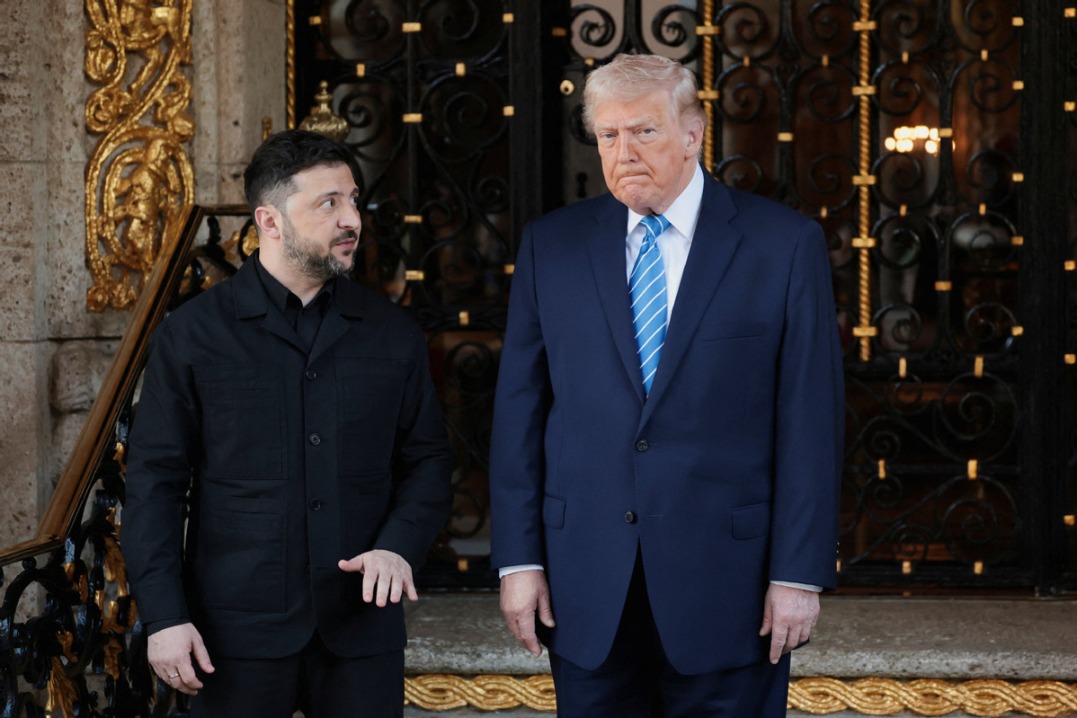
In a high-stakes diplomatic engagement at his Mar-a-Lago estate in Florida, former US President Donald Trump hosted Ukrainian leader Volodymyr Zelensky for critical negotiations aimed at resolving Europe’s deadliest conflict since World War II. Both leaders emerged from the December 28, 2025 meeting characterizing the discussions as exceptionally productive, though significant hurdles remain before a comprehensive peace agreement can be finalized.
Trump described the closed-door session as ‘terrific’ during a subsequent press briefing, noting that substantial progress had been achieved despite persistent ‘thorny issues.’ The US leader revealed that the negotiation process has been ongoing for approximately one month, emphasizing that ‘this is not a one-day process deal’ but rather ‘very complicated stuff’ involving multiple stakeholders.
Zelensky corroborated Trump’s assessment, indicating that approximately 90% of a peace framework had been agreed upon by the negotiating parties. The Ukrainian president highlighted security guarantees as the cornerstone for establishing durable peace, noting that such protections were nearing finalization between Ukraine, the United States, and European partners. ‘We agreed that a security guarantee is the key milestone in achieving lasting peace,’ Zelensky stated, adding that technical teams would continue working on all aspects of the agreement.
The Mar-a-Lago meeting represented the fifth direct engagement between Trump and Zelensky on US soil, underscoring the continuity of diplomatic efforts regardless of administrative changes in Washington. The US delegation included Secretary of State Marco Rubio and Defense Secretary Pete Hegseth, while Ukraine’s representation featured Economy Minister Oleksii Sobolev among other officials.
In a revealing prelude to the Florida summit, Trump disclosed that he had held a ‘good and very productive’ telephone conversation with Russian President Vladimir Putin. Kremlin spokesperson Yury Ushakov confirmed the exchange, noting that both leaders shared the perspective that a temporary ceasefire would merely ‘prolong the conflict.’ The Russian administration further urged Ukraine to make prompt decisions regarding the status of the Donbas region without delay.
Outstanding contentious issues include the disposition of Russian-occupied territories encompassing four key regions and the Crimean Peninsula, alongside the operational status of the Zaporizhzhia nuclear facility. Moscow has consistently demanded that Ukraine abandon its NATO membership aspirations, warning against any deployment of alliance troops on Ukrainian soil.
The diplomatic movement occurs against the backdrop of competing peace proposals circulating in recent weeks, including a 28-point plan believed to originate from Moscow and a 20-point alternative put forward by Kyiv. Zelensky reinforced Ukraine’s commitment to peaceful resolution through a social media statement preceding the meeting: ‘Ukraine is willing to do whatever it takes to stop this war. We need to be strong at the negotiating table.’
Significantly, the Ukrainian leader has indicated willingness to withdraw NATO membership applications if equivalent security protections are provided. The United States has recently committed to offering Ukraine security guarantees comparable to those extended to NATO members. When questioned about these assurances, Trump affirmed that ‘there will be a security agreement’ involving substantial European participation.
The diplomatic tempo accelerated during the holiday period, with Zelensky holding discussions on Christmas Day with US special envoy Steve Witkoff and Trump’s son-in-law Jared Kushner. While characterizing these exchanges as addressing ‘certain substantive details,’ the Ukrainian president cautioned that ‘there is still work to be done on sensitive issues’ and anticipated intensive negotiations in the coming weeks.
Trump struck an optimistic yet realistic tone regarding conflict resolution, observing that ‘Russia would like to see it end, and Ukraine would like to see it end, and I think it’s time to end.’ The Mar-a-Lago meeting thus represents the latest development in a complex multilateral negotiation process that continues to evolve amid persistent geopolitical challenges.