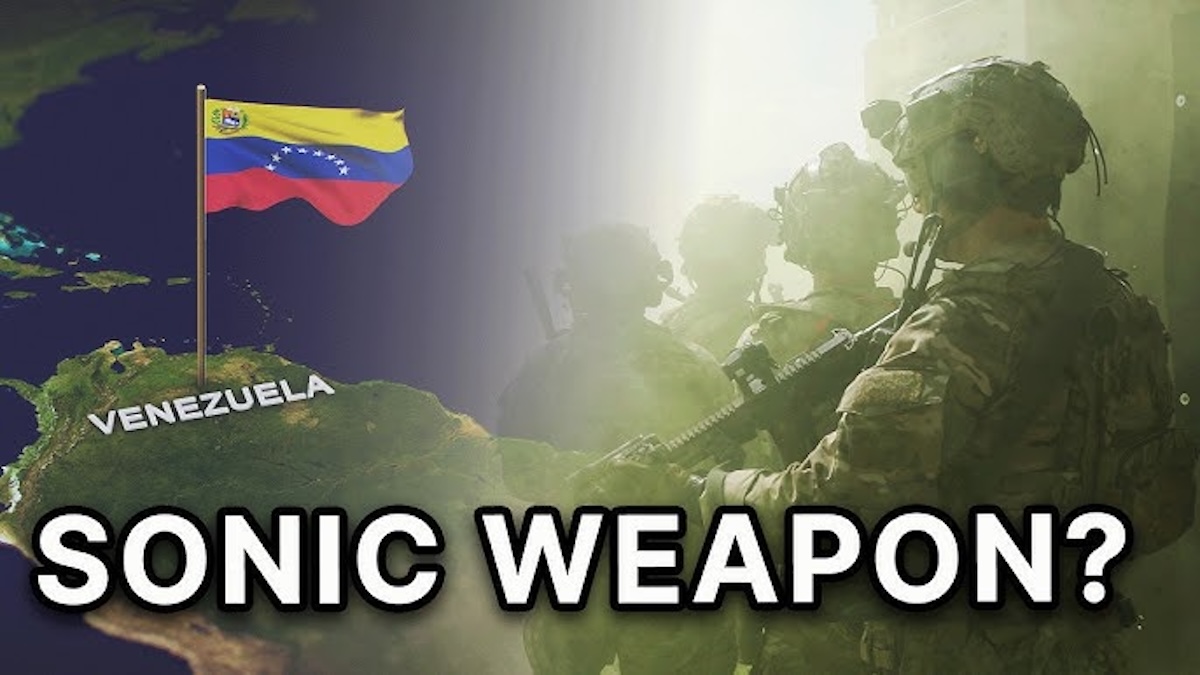
Former President Donald Trump has seemingly verified the deployment of an advanced sonic weapon during a military operation in Caracas, Venezuela, on January 3rd. During a televised interview with NewsNation’s Katie Pavlich that aired Tuesday night, Trump indirectly confirmed the use of this clandestine technology against Venezuelan and Cuban soldiers, an operation that resulted in numerous casualties including civilians.
When questioned about the existence and potential concerns surrounding such weaponry, Trump responded: ‘No one else has it. We have weapons that no one knows about. It’s probably better not to talk about it, but we have amazing weapons. It was an amazing attack.’
This marks not the first instance of White House insinuations regarding the weapon’s deployment during the assault, which culminated in the capture of Venezuelan President Nicolás Maduro and his wife, Cilia Flores. On January 10th, White House press secretary Karoline Leavitt circulated an English translation of an alleged interview with a Maduro-loyal security guard, though its authenticity remains unverified. The guard described experiencing ‘a very intense sound wave’ that caused internal head pressure, nasal bleeding, vomiting of blood, and temporary paralysis among personnel.
The development of sonic weapons, often categorized as ‘directed energy weapons’ or colloquially termed ‘pain rays,’ has been an acknowledged part of US military research. These systems utilize sound waves or focused microwaves to induce discomfort or incapacitate targets. Military analysis outlet The War Zone, through reporter Joseph Trevithick, noted that while no concrete evidence substantiates the weapon’s use in ‘Operation Absolute Resolve,’ the elite Delta Force unit leading the assault would be the most probable operator of such exotic non-lethal technology.
The revelation raises significant questions about the evolving nature of modern warfare and the ethical implications of deploying such advanced weaponry in international conflicts.