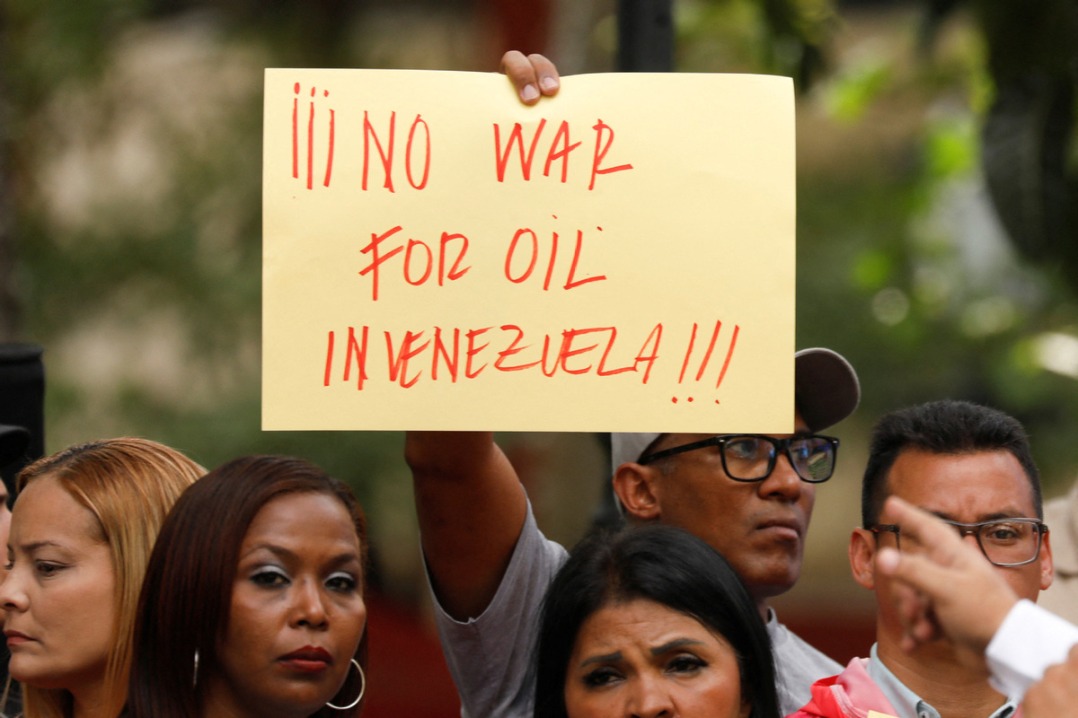
WASHINGTON — U.S. President Donald Trump intensified pressure on Venezuela Wednesday by demanding the return of what he characterized as stolen American oil assets, while simultaneously enforcing a comprehensive naval blockade against the oil-rich nation.
Addressing reporters at the White House, Trump asserted that Venezuela had unlawfully seized valuable oil rights from American corporations. “They confiscated our oil assets—we possessed substantial resources there. As everyone is aware, they expelled our companies, and we insist on their restitution,” Trump declared, referencing Venezuela’s historical nationalization of its oil industry during the 1970s and under the administrations of both Nicolás Maduro and Hugo Chávez.
The administration’s rhetoric escalated further through social media channels. Stephen Miller, Trump’s deputy chief of staff, described Venezuela’s resource nationalization as “the most extensive documented theft of American wealth and property in history.” Miller additionally alleged that these appropriated resources had been utilized to “finance terrorist activities and inundate American communities with violent actors, mercenaries, and narcotics.”
This verbal offensive follows Tuesday’s presidential directive implementing a full-scale blockade on all sanctioned oil tankers entering or departing Venezuelan waters. The administration has simultaneously designated Venezuela as a Foreign Terroristic Organization (FTO), though official registry updates remained pending as of Wednesday evening.
The geopolitical confrontation intensified last week when Pentagon forces intercepted an oil tanker near Venezuela’s coastline, redirecting the vessel to a U.S. port. White House officials subsequently confirmed intentions to retain the confiscated petroleum—a maneuver condemned by Caracas as outright “piracy.”
Despite Venezuela’s status as holder of the world’s largest proven oil reserves, U.S. crude imports from the South American nation have dramatically declined over the past decade due to escalating sanctions and diplomatic tensions. Chevron Corporation continues operations in Venezuela under special governmental authorization, reporting no current disruptions to its activities.
The United States has maintained substantial naval deployment in the Caribbean for nearly four months, ostensibly for counter-narcotics operations—a justification Venezuelan authorities reject as pretext for forced regime change. Since September, U.S. forces have destroyed至少25 suspected drug-trafficking vessels in Caribbean and eastern Pacific waters, resulting in至少95 fatalities.
Contrasting with official narratives, Drug Enforcement Administration data indicates Venezuela does not rank among primary sources of narcotics entering the United States. Domestic sentiment appears skeptical of administration strategies, with a Quinnipiac University poll revealing 63% of American adults oppose military actions against Venezuela, compared to 25% expressing support.