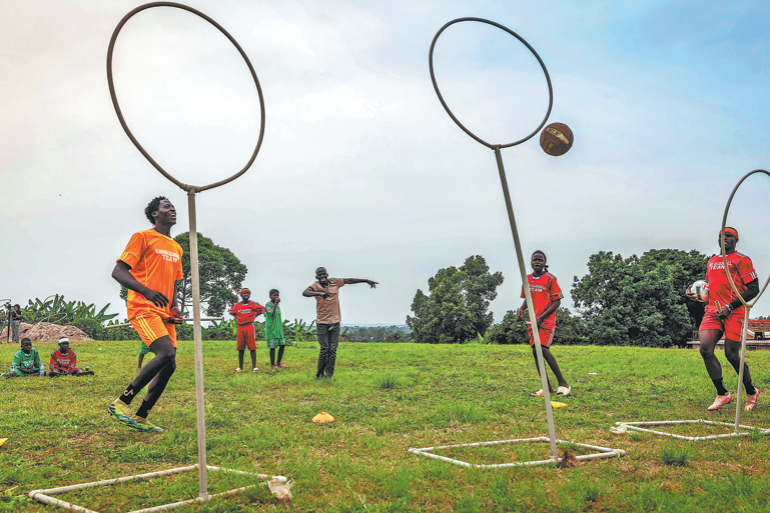
Deep in the rural village of Katwadde, approximately 135 kilometers from Uganda’s capital Kampala, an extraordinary sporting phenomenon is taking root. Surrounded by banana trees, athletes maneuver across makeshift fields with broomstick-like implements between their legs, practicing a sport that bridges literary fantasy and athletic reality.
This adaptation of Quidditch—the magical sport from J.K. Rowling’s Harry Potter series—has been officially rebranded as quadball in the muggle world. Unlike its fictional counterpart, quadball requires no magical abilities but has captured global imagination since its literary debut in 1997.
The sport’s unlikely journey to rural Uganda began in 2013 when primary school teacher John Ssentamu, 47, encountered the concept during a bus journey. “The word ‘Quidditch’ meant nothing to me,” Ssentamu recalled. “I researched it online and immediately recognized its potential for my community.”
Ssentamu established Uganda’s first quadball team at Good Shepherd Primary School where he teaches. Through ten years of dedicated coaching, his initiative has blossomed into a national movement with over 200 players across the East African nation. The sport’s hybrid nature—combining elements of netball, football, volleyball, and rugby—proves particularly appealing, as does its mandatory gender integration requiring mixed teams.
The program achieved a significant milestone in 2023 when Ssentamu’s team hosted and won Uganda’s inaugural national quadball tournament. However, financial constraints prevent international participation, leaving the team unable to attend the biennial Quadball World Cup despite invitations. The most recent tournament in Belgium attracted 31 teams from across the globe.
Beyond competitive aspirations, quadball has become a community unifier in Katwadde. Vicky Edith Nabbanja, Ssentamu’s 25-year-old daughter and team “beater,” emphasizes how the sport “has brought youth together and opened up their minds” while fostering “a community of belonging” in a region where educational priorities often face challenges.
Ssentamu’s vision remains undimmed: “My dream is to see a team from here going to the Quidditch World Cup because it would be a revelation for the whole world.”