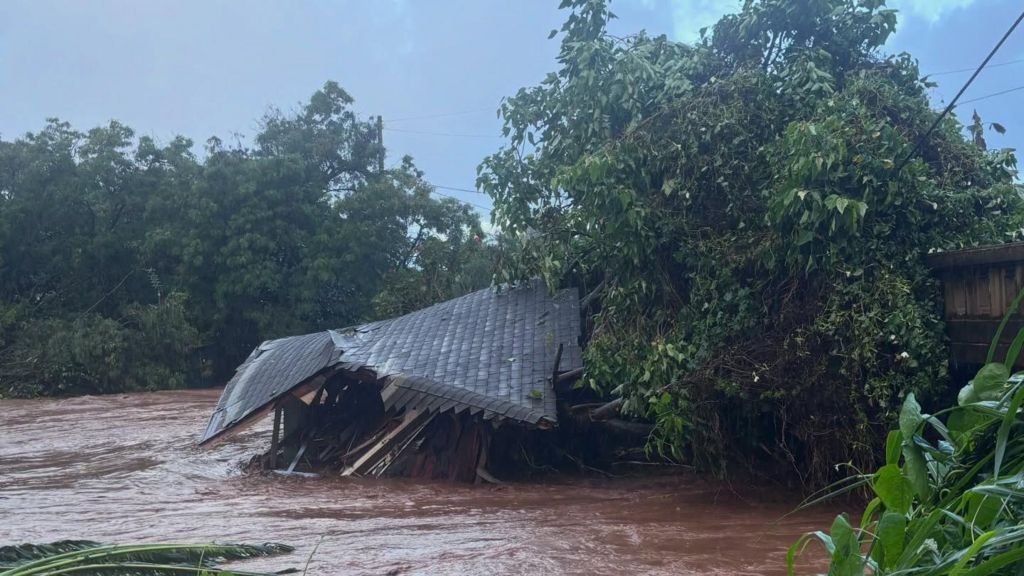
Hawaii is confronting its most severe flooding event in two decades, prompting urgent evacuation orders for thousands of residents as a powerful ‘Kona Low’ storm system continues to batter the archipelago. This marks the second major storm to strike the islands within a single week, with Honolulu Mayor Rick Blangiardi projecting potential damages exceeding $1 billion.
Emergency response teams have executed more than 230 rescues since the crisis began, with operations continuing through Saturday morning as heavy rainfall persisted. Authorities have issued grave warnings about structural integrity at an Oahu dam, urging residents in vulnerable areas to seek higher ground immediately.
The meteorological phenomenon responsible for the devastation—a Kona Low—is characterized as a slow-moving low-pressure system that draws warm, moisture-saturated air across the islands. This has resulted in extraordinary rainfall exceeding 10 inches (25cm) in some regions and destructive winds reaching 100mph (160km/h). The resulting floodwaters have displaced vehicles, compromised infrastructure, and even caused building collapses amid dangerously muddy conditions.
Governor Josh Green confirmed no storm-related fatalities to date, praising emergency workers while acknowledging the storm’s severe impact on critical infrastructure including airports, schools, and hospitals. Approximately 5,500 residents north of Honolulu received mandatory evacuation orders as floodwaters inundated neighborhoods.
The Honolulu Department of Emergency Management maintains active flash flood warnings for multiple islands including Maui, Molokai, and The Big Island. While the most intense weather has passed, forecasters anticipate continued heavy showers and thunderstorms through the weekend, complicating recovery efforts.
This natural disaster represents another severe challenge for Hawaii, still recovering from the devastating 2023 Lahaina wildfires that claimed over 100 lives. The state’s vulnerability to extreme weather events continues to test its emergency response capabilities and infrastructure resilience.