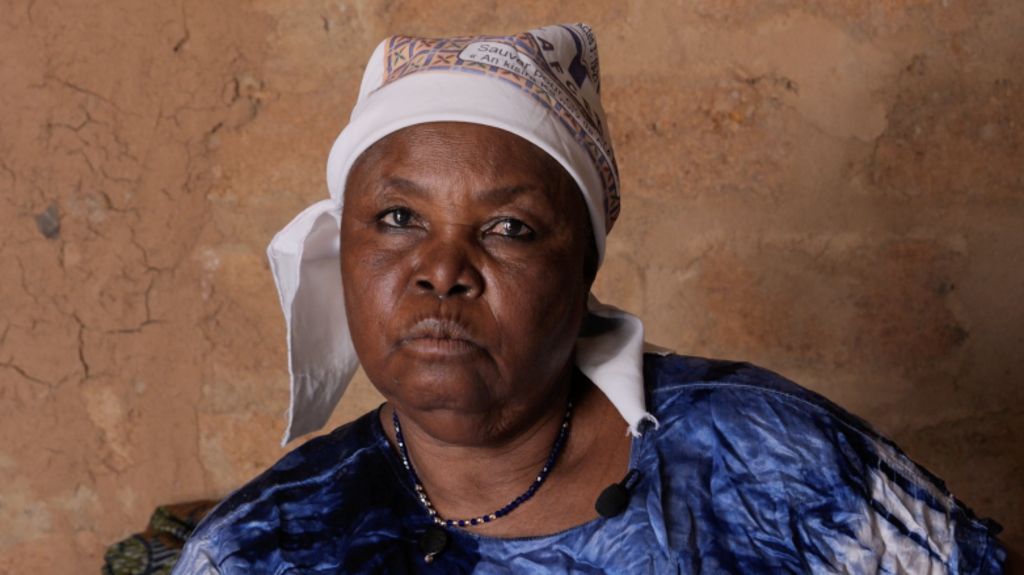
In the dim confines of a refugee camp in Ivory Coast, 57-year-old Yameogo Aminata grapples with the traumatic memory of her four sons being executed by jihadist fighters in Burkina Faso. The attack occurred in 2022 when armed insurgents—who have terrorized central Burkina Faso for nearly fifteen years—overran her village, slaughtering residents and seizing property.
“They slit the throats of four of my children,” Aminata recounted to the BBC, her voice trembling with emotion. “When I arrived, they were killing my fourth son.” Despite attempting to fight back with a knife, she was overpowered, severely beaten, and left with critical injuries. Her daughter remains missing since the assault.
Aminata is among thousands who have fled to the Nioronigué camp, established in 2023 near the Burkinabé border through a collaboration between the United Nations and Ivorian authorities. Here, she preserves the bloodied clothing from the attack as a harrowing reminder of her loss.
The Sahel region, described by the UN as the “epicentre” of global jihadist violence, has seen over 10,000 fatalities and the displacement of more than three million people. Countries like Burkina Faso, Mali, and Niger have been particularly affected, leading to military coups and a strategic pivot from Western alliances to Russian military support under the Africa Corps. Yet, insurgency persists, notably from al-Qaeda affiliate JNIM.
Hassane Tall, a 60-year-old farmer, escaped northern Burkina Faso with his three wives and 19 children after repeated attacks. “We thought we would die,” he said. Now in Nioronigué, he mourns the loss of his ancestral land but sees no safe future at home.
The camp, designed for 6,000 people, now shelters approximately 13,000 refugees—far exceeding its capacity. More than 80,000 Burkinabés currently reside in Ivorian camps, with many others integrated into local communities. This influx strains resources, despite the Ivorian government’s commitment to welcome refugees as “brothers” sharing cultural and historical ties.
Blerta Cela of the UN Development Programme warned that host communities and infrastructure are under severe pressure. Meanwhile, refugees like a 27-year-old Malian finance graduate describe fleeing pervasive fear and violence after family members were targeted.
For Aminata, the struggle to rebuild her life is overshadowed by enduring trauma. “I still cannot erase what happened to me,” she confessed. “We just pray to God that peace comes back to Burkina Faso.”