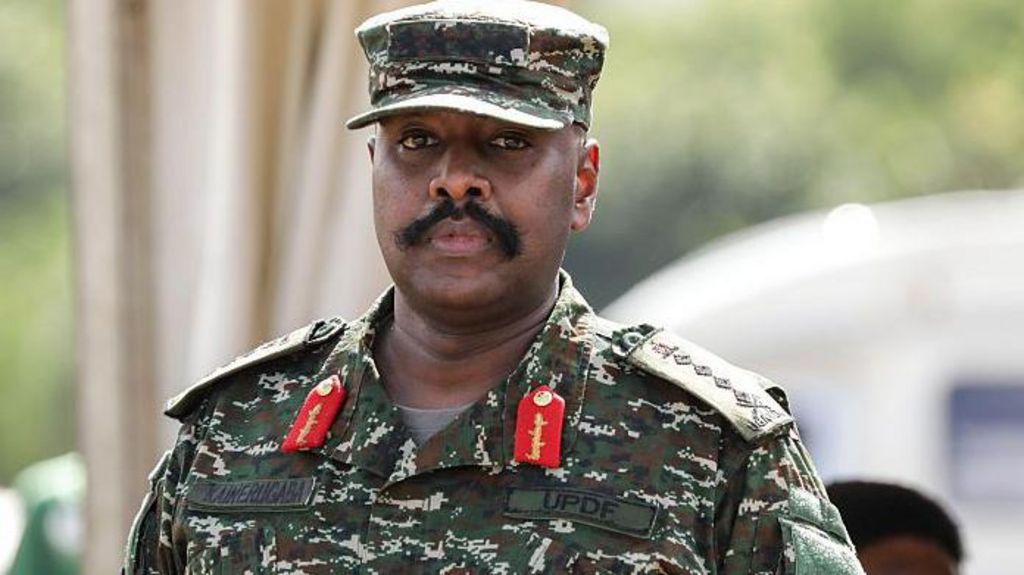
Uganda’s military leadership finds itself at the center of both political and digital controversy as General Muhoozi Kainerugaba, son of long-serving President Yoweri Museveni, continues to generate international attention through his provocative social media presence. The general’s recent posts on platform X, including threats against opposition figures and claims of divine right to rule, have sparked concerns about Uganda’s democratic processes and the apparent consolidation of power within a single family dynasty.
Following the January presidential election that granted President Museveni a seventh term with over 70% of votes, General Kainerugaba engaged in a series of inflammatory online statements. These included threats to physically harm defeated opposition candidate Bobi Wine and declarations about his supposed bloodline connection to Jesus Christ. While many posts were subsequently deleted, they revealed the increasingly blurred lines between state authority and personal political ambition in the East African nation.
Analysts identify what they term an ‘unholy trinity’ of power comprising President Museveni, his son General Kainerugaba, and the president’s influential brother Salim Saleh. This power structure appears designed to ensure dynastic continuity, with the general being groomed as successor to his 81-year-old father. Security expert Nicodemus Minde of the Institute for Security Studies notes that while Kainerugaba’s statements often appear ‘wild,’ they must be understood within the context of Uganda’s succession politics.
The general’s online behavior has occasionally strained international relations, most notably in 2022 when he threatened to invade neighboring Kenya, requiring presidential intervention to repair diplomatic damage. His supporters describe him as ‘incredibly loyal’ and compare his communication style to that of former US President Donald Trump, while critics point to human rights abuses and the suppression of opposition voices.
Uganda’s security apparatus, particularly the Special Forces Command (SFC) which Kainerugaba helped establish, has been accused of systematic repression including abductions, torture, and election interference. The recent election occurred amid internet blackouts and reports of widespread intimidation, with the UN noting an ‘environment marked by widespread repression.’
As the Museveni dynasty potentially extends to a third generation with the general’s son joining the military, Uganda faces continuing questions about democratic governance, military influence in politics, and the consequences of concentrated family power.