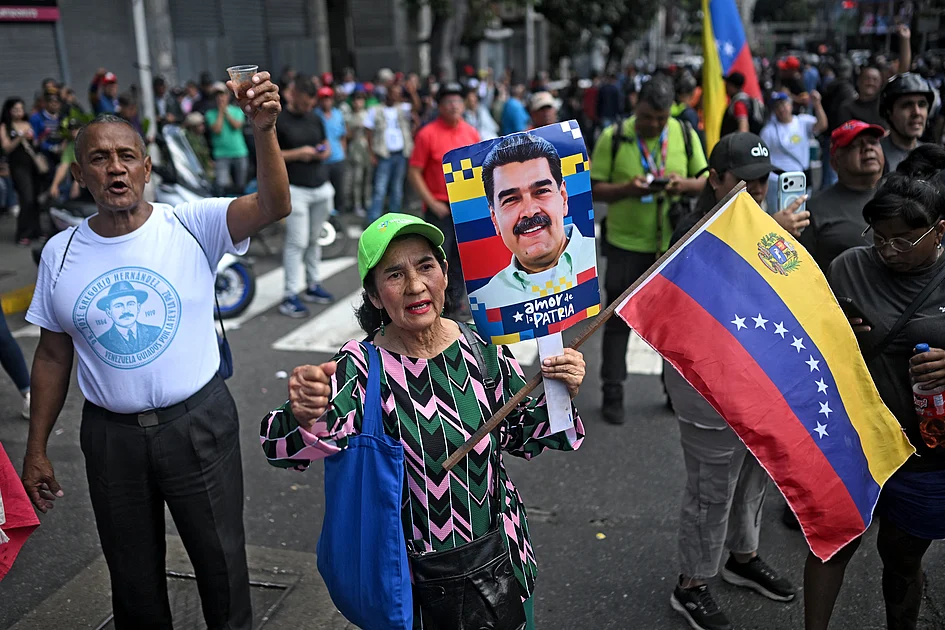
CARACAS – Explosions echoing through the night sky and the roar of US warplanes over Caracas triggered immediate mobilization among Venezuela’s armed colectivos, who rushed to arm themselves fearing an imminent confrontation. This US-led operation, which resulted in the dramatic ouster of President Nicolas Maduro, has ignited fury and confusion among these fiercely loyal socialist factions.
Jorge Suarez, a colectivo member adorned in black sunglasses and a cap bearing the slogan ‘Doubt is treason,’ described the unprecedented events as surreal. ‘We’re not used to it—it was like a bestseller, like something out of a movie,’ he stated. The groups, established under former leader Hugo Chavez to maintain social order but accused by opponents of intimidation, now find themselves navigating a precarious political vacuum.
The colectivos have unanimously closed ranks behind interim President Delcy Rodriguez, Maduro’s former deputy. While she has pledged cooperation with US President Donald Trump regarding access to Venezuela’s vast oil reserves, she simultaneously insists the nation is not ‘subordinate’ to Washington. This duality has created a complex narrative that colectivo members are struggling to decipher.
Willians, a 43-year-old member of the Red Beret collective, expressed the prevailing sentiment of ‘frustration, anger and a will to fight.’ Many members believe Maduro was betrayed from within, pointing to inexplicable failures in the nation’s air defense systems during the raid. ‘It was so perfect we didn’t notice, and we still don’t know who betrayed us,’ said Alfredo Canchica, leader of the Fundacion 3 Raíces collective.
Despite their negative international image as a motorcycle-riding shock force, colectivos maintain significant local support in neighborhoods where they are credited with crime prevention and distributing subsidized food. They now stand as a potentially volatile element in Venezuela’s transition, fiercely committed to their ideological cause. Canchica issued a stark warning to any foreign forces considering further intervention: ‘They’ll have to kill us first.’