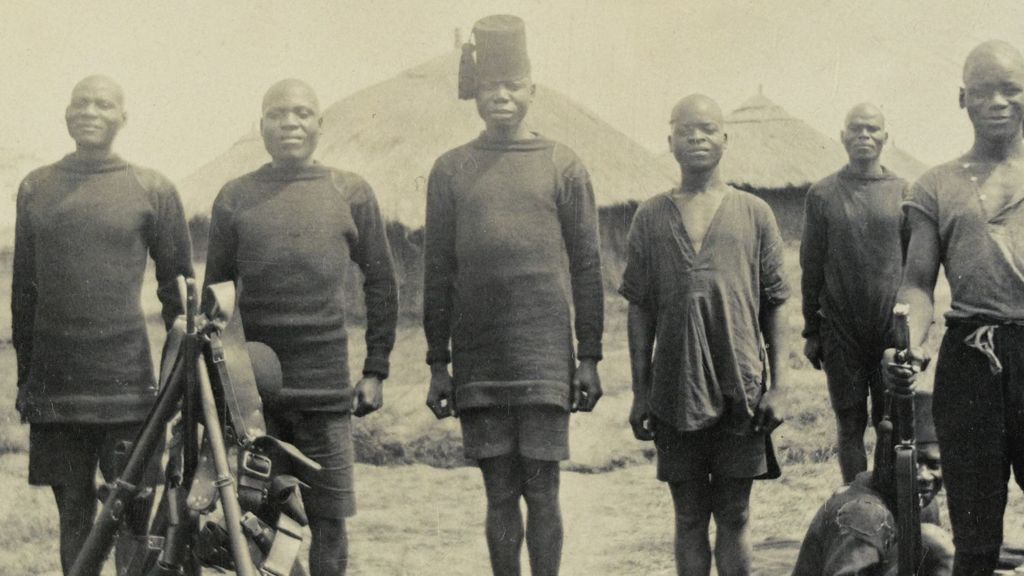
Nearly eight decades after his disappearance, the fate of Mutuku Ing’ati, a Kenyan soldier who fought in the British army during World War Two, has come to light. Ing’ati, who vanished from his village of Syamatani in southern Kenya, was discovered through British military records to have enlisted as a private with the East African Scouts. Tragically, he was killed in action on June 13, 1943, though the exact circumstances and location of his death remain unknown. His family, who had spent years searching for him, only learned of his fate recently through the efforts of the Commonwealth War Graves Commission (CWGC).
The CWGC, dedicated to commemorating those who died in the world wars, has been working to uncover the stories of thousands of Kenyan soldiers like Ing’ati who served in the British forces. These soldiers, many of whom were never officially recognized or commemorated, played a significant role in the global conflicts. The CWGC, in collaboration with the Kenyan Defence Force, has unearthed a trove of colonial-era military records, shedding light on the lives and sacrifices of over 3,000 East African soldiers.
Among the records are stories of individuals like George Williams, a decorated sergeant major with the King’s African Rifles, and Abdulla Fadlumulla, a Ugandan soldier who enlisted at just 16 years old. Both died in combat, their contributions largely forgotten until now. Historians like Patrick Abungu, whose own great uncle was conscripted and never returned, emphasize the emotional toll on families who were left without answers for decades.
The CWGC aims to build memorials to honor these soldiers and integrate their stories into Kenya’s educational curriculum, ensuring future generations understand the pivotal role Africans played in the world wars. As George Hay, a CWGC historian, notes, ‘These are not just dusty files—they are personal stories.’ The organization’s efforts to recover and commemorate these forgotten heroes will continue indefinitely, ensuring their sacrifices are never erased from history.