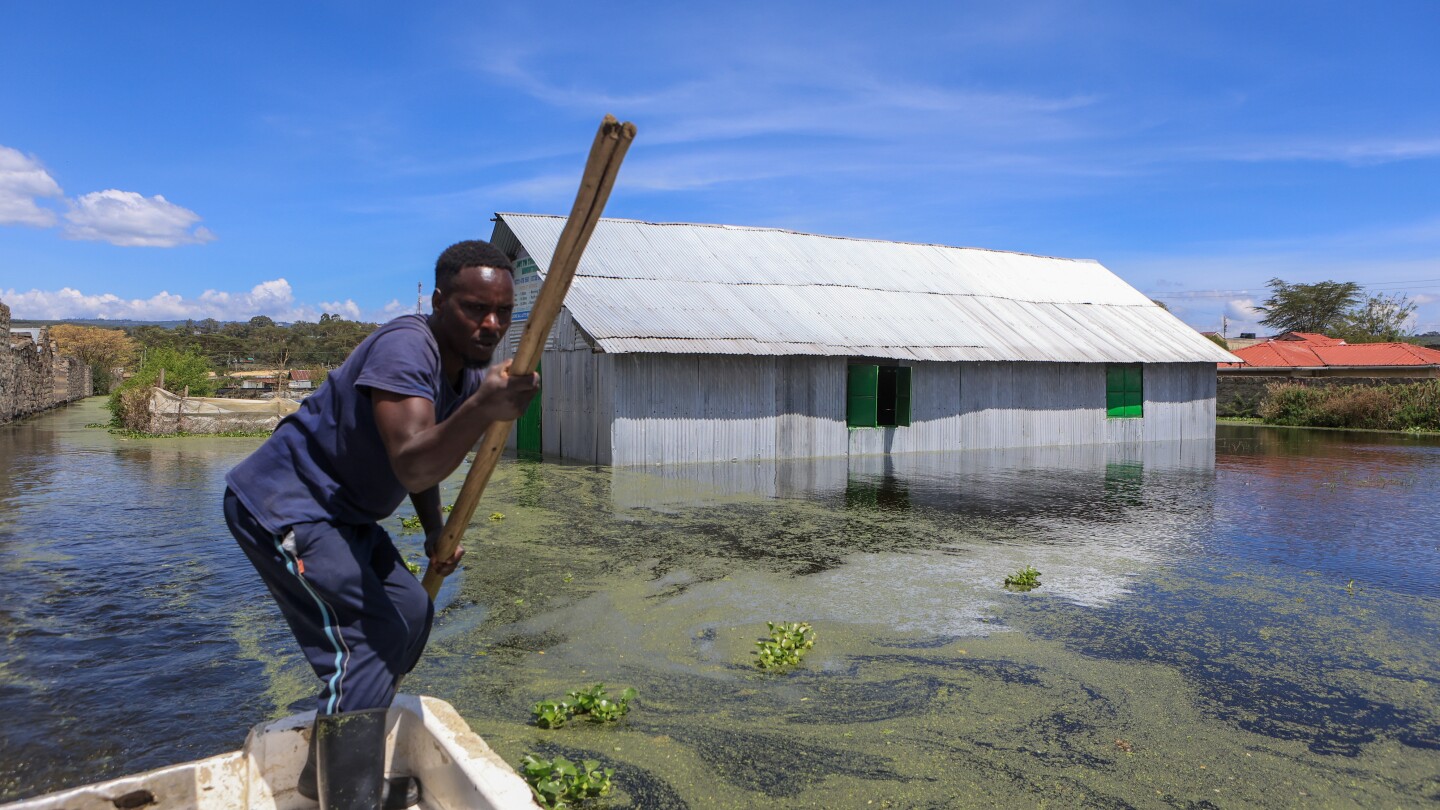
NAIVASHA, Kenya — Dickson Ngome’s agricultural livelihood has been literally swallowed by water. When he first leased his 1.5-acre farm near Lake Naivasha in 2008, the shoreline stood approximately 2 kilometers away. Today, his property lies completely submerged beneath the expanding waters of Kenya’s Rift Valley lake system.
The dramatic transformation occurred with startling speed. After early rains began in September and continued relentlessly for months, Ngome and his family awoke one October morning to find their home and farmland inundated with approximately a foot of water. “It seemed as if the lake was far from our homes,” recounted Rose Wafula, Ngome’s wife. “And then one night we were shocked to find our houses flooded. The water came from nowhere.”
This personal tragedy reflects a broader regional crisis. Lake Naivasha’s expansion has displaced approximately 5,000 residents this year alone, part of a concerning pattern affecting multiple Rift Valley lakes including Baringo, Nakuru, and Turkana. According to scientific analysis, these water bodies have been experiencing steady increases over the past 15 years, with some reaching their highest recorded levels.
Simon Onywere, an environmental planning expert at Kenyatta University, confirms the unprecedented scale: “The lakes have risen almost beyond the highest level they have ever reached.” Research published in the Journal of Hydrology documents that East African lake areas expanded by 71,822 square kilometers between 2011 and 2023, resulting in the displacement of over 75,000 households across the Rift Valley region by 2021.
The economic repercussions are substantial. Lake Naivasha’s surrounding horticulture industry, which generates over $1 billion annually and supplies 40% of the EU’s rose market, has suffered significant losses with three-quarters of some flower farms now underwater.
Scientific consensus points to climate change as a primary driver. Richard Muita, acting assistant director of the Kenya Meteorological Department, explains: “The Kenya Meteorological Department found that the water level rises are associated with rainfall patterns and temperature changes.” Additional factors include sedimentation from agricultural runoff, which compounds the problem by reducing lake capacity.
Complicating the situation are historical land management issues. The Ngome family’s community of Kihoto sits on riparian land that legally cannot be privately owned. Silas Wanjala of the Lake Naivasha Riparian Association traces this problem to “a mess established by the government” in the late 1960s when temporary agricultural leases were improperly converted into permanent settlements.
Local authorities are responding to the immediate humanitarian crisis. “We are tackling this as an emergency,” stated Joyce Ncece, chief officer for disaster management in Nakuru County. “The county government has provided trucks to help families relocate. We have been helping to pay rent for those who lack the finances.”
Meanwhile, scientists advocate for long-term strategies including climate change mitigation, improved forecasting, and nature-based solutions incorporating indigenous knowledge. For displaced families like the Ngomes, currently sheltering in an abandoned school, the future remains uncertain as Lake Naivasha continues its relentless expansion with no signs of reversal.