Islamabad, the capital of Pakistan, is fully prepped and waiting this week to host what may be the most consequential diplomatic negotiations of 2026: direct talks between the United States and Iran. Local crews have repainted road curbs in high-visibility yellow and black, security teams have deployed to their posts across the venue zone, and authorities have even declared a two-day public holiday for the capital to clear the way for the high-profile gathering. As the host nation, Pakistani officials have struck an optimistic tone, noting that they hold rare mutual trust with both Washington and Tehran – a fragile balance that made this breakthrough meeting possible in the first place.
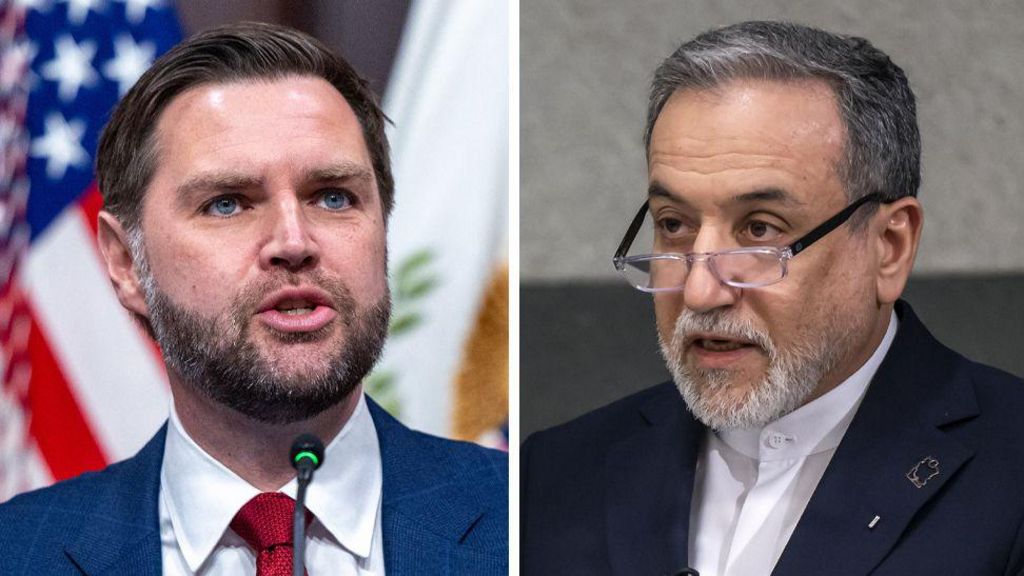
Leading the US delegation to the talks is Vice President JD Vance, who has signaled cautious openness while issuing a clear warning to Iranian negotiators ahead of his departure from Washington. “If the Iranians are willing to negotiate in good faith, we’re certainly willing to extend the open hand,” Vance said. But he added a sharp caveat: “If they’re going to try to play us, then they’re going to find the negotiating team is not that receptive.” On the Iranian side, reports indicate Foreign Minister Abbas Araghchi will serve as co-leader of Tehran’s negotiation team.
Despite the carefully laid groundwork, a cascade of interconnected challenges threatens to derail the talks before formal negotiations even begin. The most immediate flashpoint is Israel’s ongoing military campaign against Hezbollah, Iran’s powerful Lebanese ally and key member of Tehran’s regional “Axis of Resistance”. Iranian President Masoud Pezeshkian has issued a blunt warning that continued Israeli military action renders the entire negotiation process meaningless. “Our fingers remain on the trigger. Iran will never abandon its Lebanese sisters and brothers,” Pezeshkian wrote in a post on X.
Israeli Prime Minister Benjamin Netanyahu has remained firm, stating there will be “no ceasefire” in the campaign against Hezbollah, though repeated evacuation warnings for Beirut’s southern suburbs have not yet been followed by a full-scale ground incursion. Former US President Donald Trump, who remains a central figure in shaping US policy in the region, has said he expects Israeli operations in Lebanon to shift to “a little more low key” in the coming days. The US State Department has also announced that direct Israeli-Lebanese negotiations will begin in Washington next week, a move designed to de-escalate tensions ahead of the US-Iran talks. Even so, it remains unclear whether the scaled-back operations will be enough to satisfy Tehran and keep the Islamabad talks on track.
A second major point of friction ahead of the talks centers on the Strait of Hormuz, the strategic oil shipping chokepoint that connects the Persian Gulf to global markets. Since a preliminary ceasefire between the US and Iran took effect, only a tiny trickle of commercial vessels have been allowed to pass through the strait, leaving hundreds of ships and an estimated 20,000 seafarers stranded inside the Gulf. Trump has publicly slammed Iran for failing to honor an apparent agreement to open the waterway, calling Tehran’s performance “very poor” and accusing the country of acting dishonourably in a Truth Social post. “This is not the agreement we have!” he declared.
Tehran has moved to formalize its control over the strait, claiming the waterway as sovereign Iranian territory and announcing plans to implement a new regulatory regime for transiting vessels. Last week, it unveiled new transit routes north of the existing two-way shipping lanes, justifying the change as a necessary measure to avoid anti-ship mines laid in the main traffic corridor – a statement that has stoked existing anxiety among global shipping companies. Adding to tensions, widespread reports suggest Iran has been charging passing tankers a $2 million toll for transit, a move Trump has warned Tehran against continuing.
By far the most intractable and long-standing dispute on the negotiating table is Iran’s nuclear program. Trump launched Operation Epic Fury earlier this year with the explicit goal of ensuring Iran “can never have a nuclear weapon”. Iran has repeatedly denied seeking to build a nuclear bomb, a claim most Western governments view with deep skepticism, but maintains that as a signatory to the Nuclear Non-Proliferation Treaty, it retains the legal right to enrich uranium for peaceful civilian purposes.
Tehran has put forward a 10-point negotiation framework that Trump has acknowledged is “a workable basis on which to negotiate”, with one of its core demands being international recognition of Iran’s sovereign right to uranium enrichment. By contrast, Trump’s reported 15-point counter-plan requires Iran to end all uranium enrichment activities on its own territory. When asked about this stark demand earlier this week, US Secretary of Defense Pete Hegseth would only confirm that the US position remains that Iran will “never have a nuclear weapon or the capability to get a path to one”. It took global negotiators more than a decade to hammer out the 2015 Joint Comprehensive Plan of Action (JCPOA), the landmark deal that addressed the nuclear issue in exhaustive detail, leaving many observers skeptical that a new comprehensive agreement can be reached quickly.
Another core sticking point is Iran’s network of regional allies and proxy groups, which extend from Hezbollah in Lebanon and Hamas in Gaza to the Houthis in Yemen and pro-Iran militias in Iraq. This network, which Tehran calls the Axis of Resistance, has given Iran substantial regional influence, allowing it to maintain a forward defense posture in its decades-long rivalry with the US and Israel. Since the outbreak of the Gaza war in October 2023, the entire network has come under sustained attack, with one key pillar – the regime of former Syrian dictator Bashar al-Assad – falling completely. Israel views the network, which it calls part of an “Axis of Evil”, as an existential threat that must be fully eradicated.
Domestically, Iran’s economy is reeling under decades of crippling international sanctions, and many Iranian citizens have called on their government to redirect spending away from regional military engagements and toward improving domestic living standards. Even so, there has been little public indication that Tehran is willing to abandon its regional allies as part of any deal with the US.
Sanctions and frozen assets represent another immediate hurdle to even getting negotiations off the ground. Iran is demanding the full lifting of all US and international sanctions as a core condition of any final agreement. Last week, Iranian Parliament Speaker Mohammad Bagher Qalibaf stated that the estimated $120 billion in frozen Iranian assets held abroad must be released before formal talks can begin. Qalibaf claimed this release was one of two pre-negotiation agreements reached between the parties, alongside a ceasefire in Lebanon. But the April 7 ceasefire announcement by Pakistani Prime Minister Shehbaz Sharif made no mention of asset releases, and it remains unclear what prior agreement Qalibaf was referencing. Most analysts agree the Trump administration is highly unlikely to make such a major concession simply to open the talks, leaving another major rift to bridge before substantive discussions can even begin.
As the delegations prepare to sit down in Islamabad, the entire world is watching: a breakthrough could dramatically reshape Middle East security and global energy markets, while a collapse could trigger a new wave of regional escalation.