A recent bombshell interview with U.S. Vice President JD Vance has pulled back the curtain on a deeply troubling convergence of apocalyptic religious ideology, tech elite power, and anti-democratic political ambition that is reshaping the global political landscape.
In comments to a Christian podcaster, Vance displayed chilling indifference to the prospect that his political actions could trigger an apocalyptic end of the world. “I’m trying to focus on doing as much of God’s work as possible. And if that leads to the end times, okay,” he stated plainly, with no trace of irony.
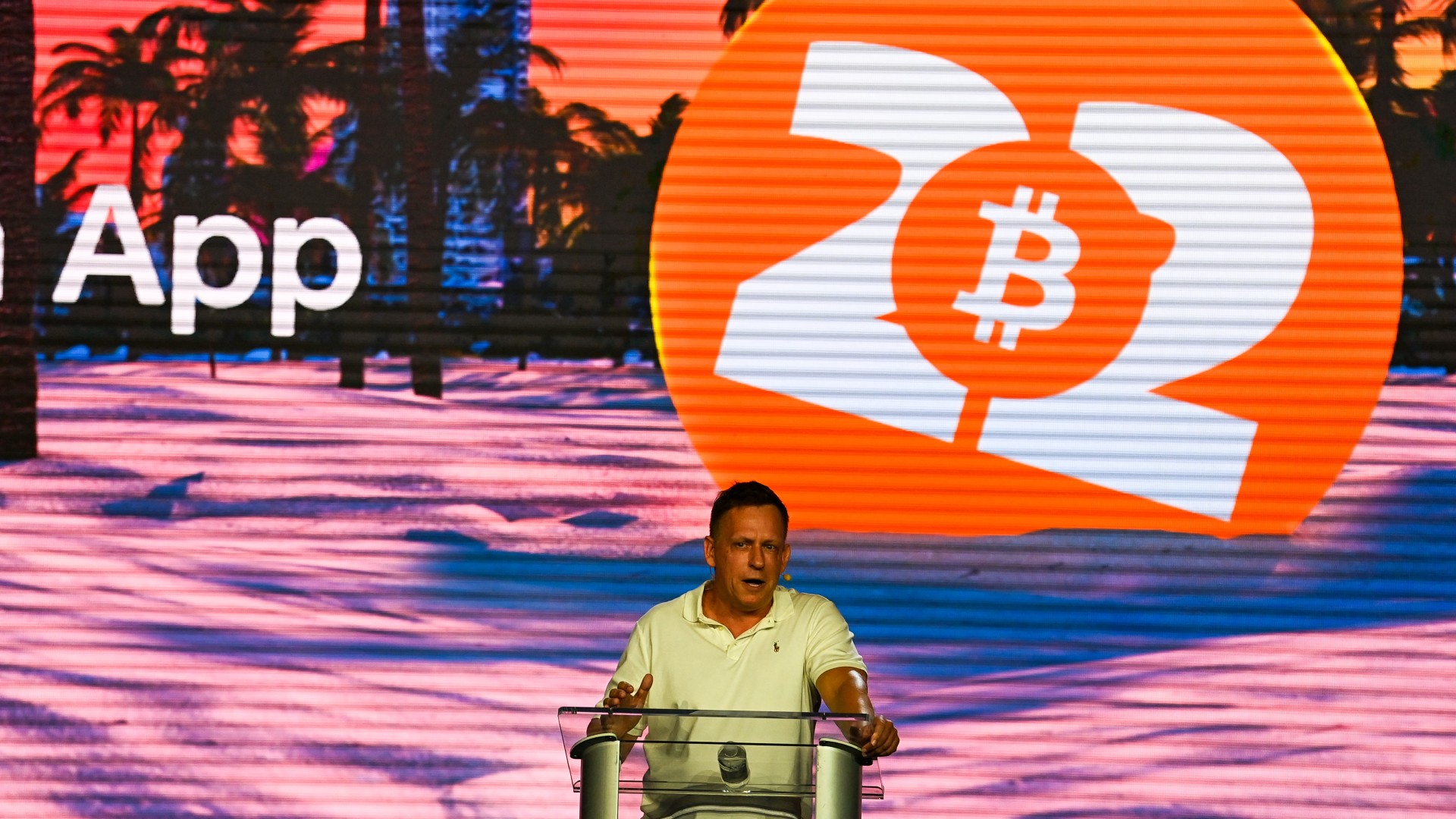
Vance’s rapid rise in politics is not an organic success story: it is almost entirely a product of patronage from Peter Thiel, the reclusive tech billionaire and co-founder of Palantir. Thiel, who identifies as a small-o orthodox Christian, is notorious for his obsessive fixation on the idea of an Antichrist that he claims will bring about the apocalypse. The pair first connected in 2011, when Vance, then a Yale Law School student, attended a lecture by Thiel – an encounter Vance later described as the most transformative moment of his time at the university, pushing him to pursue a career in technology. Vance went on to join Thiel’s venture capital firm Mithril Capital in 2015, before securing Thiel’s financial backing to co-found his own VC firm, Narya Capital. Like Palantir and Mithril, Narya draws its name from J.R.R. Tolkien’s *The Lord of the Rings*, a common cultural touchstone for Thiel’s ideological circle. When Vance shifted into electoral politics, Thiel poured $15 million into his 2022 Senate campaign and is widely reported to have helped secure a coveted endorsement from former President Donald Trump.
Thiel first amassed his fortune as a co-founder of PayPal alongside Elon Musk, the owner of X (formerly Twitter). In private, off-the-record lectures, Thiel has claimed the Antichrist will emerge as a luddite opposing scientific progress – and he has infamously named 23-year-old climate and pro-Palestine activist Greta Thunberg as an example of this figure. Journalist Gil Duran traces Thiel’s core ideological beliefs to the controversial book *The Sovereign Individual: How to Survive and Thrive During the Collapse of the Welfare State*, which argues that democracy has become obsolete in the digital age, and that this collapse should be welcomed, accelerated, and exploited by a select class of elite investors. This worldview is a form of accelerationism, a white supremacist ideology that frames violence as a necessary tool to trigger inevitable societal collapse, clearing the way for a new global order rooted in apocalyptic eugenics: a utopia for the “strong, deserving” few who survive, and a dystopia for everyone else.
Thiel has long stated that he sees technology as an “incredible alternative to politics,” and has openly declared, “I no longer believe that freedom and democracy are compatible.” Today, billionaire elites who share this accelerationist, apocalyptic worldview are actively preparing for a coming collapse, pouring billions into underground survival bunkers and funding far-right political movements pushing to create segregated, fortressed ethnostates. Musk, for example, has collaborated with far-right movements across 18 countries, amplifying harmful “great replacement” conspiracy theories at rallies from Germany to the United Kingdom, and has used his control of X to elevate extreme right-wing voices and marginalize opposing perspectives. Thiel’s Palantir already provides surveillance technology used by U.S. authorities to track migrants for deportation, facilitates mass surveillance and targeting of Palestinians by Israel, and has embedded its systems into core public services including the UK’s National Health Service.
Across the Atlantic, the UK’s far-right Reform Party recently received a record-breaking £7 million donation from just two crypto billionaires, and has pushed to create an American ICE-style domestic agency to oversee mass deportations of undocumented migrants. Reform’s former head of policy James Orr, who was forced to resign after an undercover investigation caught him apparently attempting to circumvent UK electoral law, has longstanding ties to Thiel and hosted Thiel’s Antichrist-themed lectures at the University of Cambridge.
Beyond political meddling, these elites are pouring resources into outlandish tech-driven escape plans: Musk funds fantastical projects to colonize Mars and push for a transhumanist AI takeover of global society. Other billionaires are investing in private artificial island communities or so-called “freedom cities” – unregulated, tax-free havens run by AI robots and funded by cryptocurrency, designed to shelter the elite as climate change and perpetual conflict drive mass displacement and widespread deprivation across the globe. Thiel himself has relocated to Argentina, where libertarian pro-Israel President Javier Milei has taken office promising to “destroy” the Argentine state from within. A leaked website cache also revealed that Thiel has invited dozens of the world’s wealthiest and most powerful figures to secret closed-door retreats for his “Dialog” society, where discussions have ranged from cult building to prepping for World War III.
The most alarming dynamic? As these powerful figures plan their escapes to a private tech-driven utopia, they continue to profit massively from the fossil fuel and arms industries that are actively accelerating the very climate breakdown and global conflict they claim to be preparing for.
Vance’s public comments have thrown a clear spotlight on the overlapping ideological project that unites two seemingly disparate groups: Christian alt-right nationalists and Silicon Valley libertarian billionaires. Both groups share a core apocalyptic vision that divides the world into a “saved” elite and a “damned” mass that will be left behind when collapse comes. Academic research confirms the dangerous political implications of this worldview: a study by political scientist James Piazza found that Christian nationalists with apocalyptic beliefs are far more likely to hold hostile attitudes toward marginalized social outgroups, reject democratic norms and civil discourse, and normalize political violence against political opponents.
While apocalyptic religious ideas have long circulated as an undercurrent in American society among Evangelicals, Christian nationalists, and Christian Zionists, Piazza notes these voices have grown dramatically in influence in recent years, and now constitute a mainstream political force, counting among their ranks senior U.S. officials including U.S. Ambassador to Israel Mike Huckabee and Secretary of Defense Pete Hegseth. Christian Zionists like Huckabee and Hegseth argue that Jews must return to what they call the Holy Land – encompassing modern Israel, the occupied West Bank, and parts of Egypt, Syria, Lebanon, and Jordan – to fulfill biblical prophecy and trigger the Second Coming of Jesus Christ. At the same time, they view Israel as a model for the high-tech theocracy they hope to implement in the United States. Huckabee has publicly called Israel the “land that God gave…to a people that he chose” and stated he would be unbothered by Israeli expansion across nearly the entire Middle East. In his first worship service at the Pentagon following the outbreak of conflict with Iran, Hegseth publicly prayed for “overwhelming violence” against U.S. enemies, while senior U.S. military commanders have reportedly told troops that the war with Iran is “all part of God’s divine plan”, aligned with biblical prophecies of the end times. For Christian nationalists, the apocalypse is pre-ordained and inevitable, Piazza explains – so it must be ushered in, not resisted.
This same apocalyptic framework has permeated Silicon Valley’s approach to artificial intelligence, argues tech journalist Karen Hao in her book *Empire of AI*. Hao writes that a quasi-religious cult has formed around the myth of Artificial General Intelligence (AGI), the hypothetical idea of an AI system that can outperform humans at nearly every cognitive task. As far back as 2014, Musk told MIT students that developing AI was “summoning the demon” and represented humanity’s “biggest existential threat.” OpenAI CEO Sam Altman has described AI as a “genie that can grant any wish”, while acknowledging it “will probably most likely lead to the end of the world, but in the meantime, there will be great companies created.” Thiel once infamously paused for an extended period when asked if he believed humanity should survive, offering no clear answer.
In a recent high-profile move, Altman, Musk, and Anthropic CEO Dario Amodei agreed to an industry-wide AI development slowdown, after multiple whistleblowers raised alarms that unregulated AI development could lead to human extinction within a decade. OpenAI has also asked U.S. Congress to bypass antitrust laws that would regulate the company’s market power, and has ruled out going public in 2025, citing unaddressed safety concerns.
But critics argue the push for an AI slowdown and focus on existential risk is a convenient PR move for an industry facing deep economic troubles. Virginia Tech professor Lee Vinsel, who coined the term “criti-hype” to describe how overstating technology’s risks can actually validate the industry’s own claims of transformative power and inflate stock prices, notes that nearly all AI firms are currently losing massive amounts of money – with the sole exception of Nvidia, which sells AI infrastructure and finances unprofitable AI firms through a web of circular deals that have inflated the so-called AI bubble. The technology has also failed to deliver on its promised productivity gains, with many companies rehiring laid-off workers after AI failed to meet performance expectations.
Vinsel explains that apocalyptic doomerism about AI is an effective marketing tool because it taps into deep cultural narratives from science fiction and religious end-times prophecy. Today, it is not just outside critics spreading these doomsday claims – AI companies themselves are actively broadcasting the idea that AI poses existential apocalyptic risk, turning the technology into a kind of messianic force for true believers in the industry.
“Silicon Valley has absorbed a techno-religion that brings together science fiction, century-old transhumanist aspirations…and American apocalyptic brands of Christianity,” explains Robert Geraci, a professor of religion, science, and technology. While superintelligent AI may not be technically impossible, Geraci notes that the vision advanced by the industry is profoundly religious and not rooted in rigorous logic or economics, relying on unproven assumptions of exponential growth that ignore the hard reality that all systems have natural limits.
Eryk Salvaggio, a fellow at Tech Policy Press, points out that AGI lacks any concrete, agreed-upon definition or clear success criteria, leaving space for believers to fantasize about either monstrous or messianic outcomes lurking in the technology. In a 2025 academic paper, Salvaggio and a cross-disciplinary group of experts found that while massive amounts of investment are flowing into AI based on promises of machine superintelligence, current AI systems have little ability to deliver on those lofty claims.
Mona Sloane, an assistant professor of data science and media studies at the University of Virginia, agrees that while unregulated AI poses very real near-term harms, the idea of “existential AI risk” is a deliberately moving target that distracts from current harms. “When there is this level of uncertainty, we latch onto narrative structures we are familiar with – in the case of machines and automation, that is the utopia-dystopia or boomer-doomer nexus,” Sloane explains. “Many powerful actors in the AI world believe in technology being deterministic,” she adds, revealing “their bleak and narrow understanding of humans as not having any agency”, while conveniently letting AI industry leaders avoid responsibility for the harms their technology already causes. “Having this threat always in the future keeps those who built AI systems in their powerful position, even when these systems become mundane and lose their magical aura – as is happening with AI.”
The risks of this inflated AI bubble are already on the radar: one major U.S. credit rating agency recently warned that if global markets lose faith in the AI industry’s ability to deliver returns on investment, a major market crash could follow, likely triggering a U.S. recession that would ripple across the entire global economy. While claims that AI will imminently eliminate all human jobs are widely overhyped, a market crash driven by inflated AI valuations could easily trigger mass unemployment. Beyond economic risk, unregulated AI poses immediate tangible harms: massive carbon emissions from energy-intensive data centers that worsen climate change, a range of social harms from cognitive decline to rising rates of mental health issues, and growing risks from autonomous weapons and widespread cybersecurity vulnerabilities.
“The reality is that U.S. tech giants are causing real harm, right now to people and planet,” says Donald Campbell, director of advocacy at digital rights organization Foxglove Legal. “What is clear about the tech billionaires is their staggering indifference to the human suffering their companies and platforms are causing – and their determination to ensure that there are no laws or regulations which could stand in their way.”