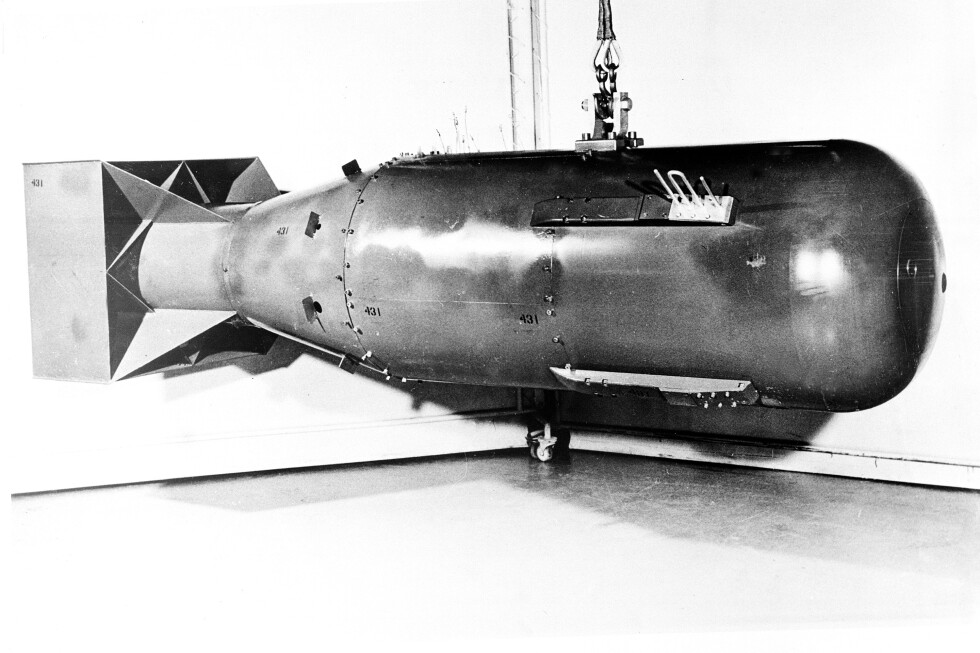
Human innovation has always held a dual nature: it can lift humanity to new heights of progress, or unleash destruction on a scale never before imagined. No invention embodies this contradiction more sharply than the atomic bomb, a scientific breakthrough that forever altered the course of global history when it was first deployed in warfare 78 years ago.
On August 6, 1945, the United States dropped the world’s first combat atomic bomb, codenamed “Little Boy”, an olive-green steel device, over the Japanese city of Hiroshima. The devastating explosion killed tens of thousands of civilians instantly, left countless more suffering from lifelong radiation-related illness, and redrew the map of global geopolitics permanently. Just three days later, a second atomic weapon, the plutonium-based “Fat Man”, detonated over Nagasaki, claiming another 70,000 lives and leaving tens of thousands more with life-altering injuries.
Unlike other transformative American innovations – from the airplane that connected continents, to the polio vaccine that eradicated a deadly disease, to the personal computer that revolutionized global communication – the atomic bomb carries an unresolvable dual legacy. While it accelerated Japan’s surrender and brought an end to the bloodshed of World War II, it also inaugurated an era of existential fear of total human annihilation and sparked a decades-long global nuclear arms race that continues to shape international security today.
Firsthand accounts from survivors and reporters on the ground bring the scale of this destruction into sharp, human focus. United Press International correspondent Leslie Nakashima traveled back to his native Hiroshima in the days after the bombing, and found the city of 300,000 residents completely reduced to rubble, though his own mother survived. In his August 27, 1945 report, he documented what he called the weapon’s “stupendous destructive power” that defied description.
In Nagasaki, 16-year-old Sumiteru Taniguchi was delivering mail just 1.8 kilometers from the bomb’s epicenter when the blast threw him from his bicycle. He suffered deep, scarring wounds across his back and three broken ribs that permanently damaged his lungs, causing chronic pain until his death in 2017 at the age of 88. Decades after the blast, Taniguchi remained one of the most prominent public voices speaking for nuclear disarmament, keeping the memory of the bombings alive for global audiences.
Then-U.S. President Harry S. Truman, who made the decision to deploy the weapons, framed the attack as a landmark scientific achievement upon hearing the news while returning from talks about Nazi Germany’s defeat. Back in the United States, crowds celebrated the end of the war, embracing the narrative that the bombings had cut short a years-long global conflict.
In the decades that followed the 1945 bombings, nuclear proliferation spread steadily across the globe. The Soviet Union successfully tested its own atomic weapon in 1949, followed by independent nuclear programs in the United Kingdom, France, China, India, Pakistan and North Korea. Today, the status of nuclear capabilities in the Middle East remains one of the most contentious flashpoints in international relations.
Global debate over the impact of nuclear weapons continues to this day. Some security analysts argue that the mutually assured destruction doctrine born from nuclear proliferation has prevented large-scale direct conflict between major world powers. But other experts warn that the rising competition between states seeking nuclear status has created new, unquantifiable risks that threaten global stability.
In a recent analysis, former British diplomat Tim Willasey-Wilsey noted that while artificial intelligence has expanded nations’ capacity to defend against modern threats like terrorism, cyberattacks and drones, the gravest threat to modern civilization remains nuclear weapons falling into the hands of irresponsible leaders. “The greatest danger of a massive global shock would come from the use of a nuclear weapon in anger for the first time since 1945,” Willasey-Wilsey wrote. He added, “A nuclear war will not be about an inability to connect intelligence, but another massive failure of human imagination.”
This reporting is part of “American Objects”, a recurring series marking the 250th anniversary of the founding of the United States that explores the inventions and artifacts that have shaped the nation’s history and global legacy.