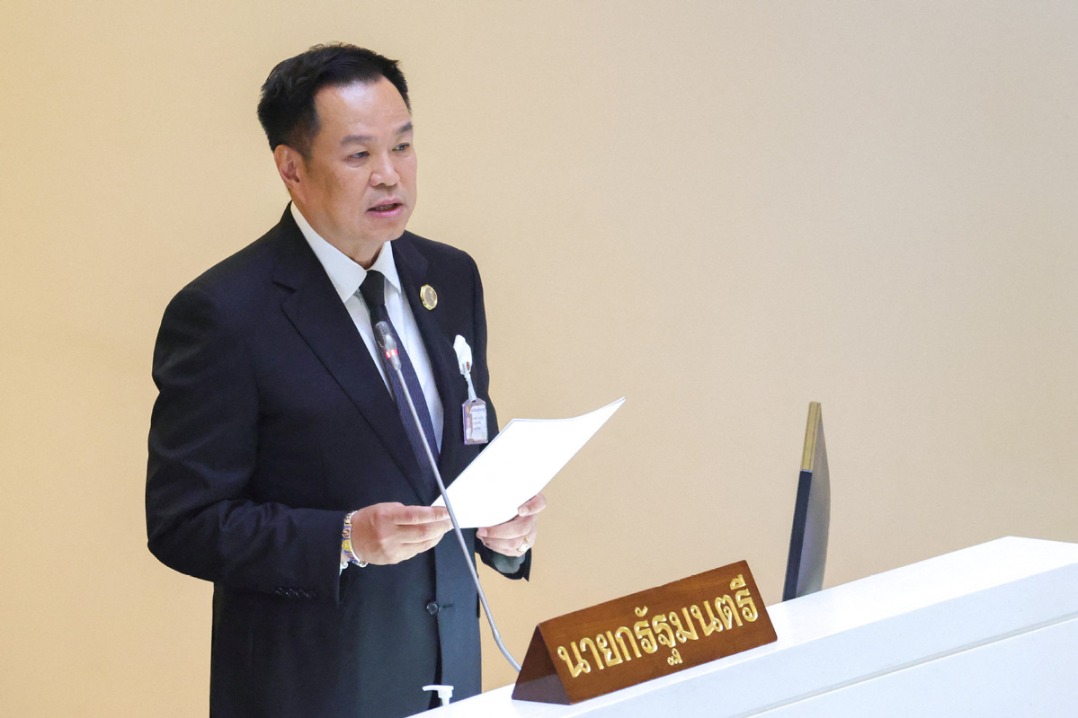
BANGKOK — On April 9, 2026, Thailand’s newly inaugurated Prime Minister Anutin Charnvirakul laid out an ambitious, cross-sector policy framework during an address to the national parliament, framing his administration’s priorities around strengthening domestic economic resilience, improving public welfare, and shoring up national stability in the face of growing global headwinds.
Delivering a 60-minute policy statement to assembled lawmakers, Anutin emphasized that his government’s core mission centers on elevating the well-being of the Thai people. “I will make consistent efforts to ensure Thailand is strong from within, our people can stand on their own feet, the country’s economy is competitive, and we maintain confidence from the outside world,” he told parliament.
To deliver on these pledges, the new administration has outlined policy initiatives spanning five core domains: economic growth, foreign relations, national security, social welfare, disaster response, and environmental stewardship. On the economic front, Anutin identified three urgent, immediate priorities: generating new employment opportunities, expanding access to quality work, and implementing systematic solutions to the country’s growing household and business debt burdens.
Among the key upcoming economic stimulus measures is a revamped version of Thailand’s popular Half-Half Plus program, a government co-payment scheme designed to boost domestic consumer spending. The administration also plans to roll out widespread upskilling programs for Thai workers, with a particular focus on improving financial literacy and building future-ready professional capabilities. To support small and medium-sized enterprises (SMEs), which form the backbone of Thailand’s domestic economy, Anutin vowed to ease ongoing cost pressures, devolve greater authority to local governments to drive development, and adjust national tax policies to accelerate balanced growth across all regional economies.
The plan also calls for expanded investment in science, technology, and innovation to restructure Thailand’s economic profile and attract high-value strategic foreign capital. These technological upgrades will extend to the country’s critical agricultural sector, with the long-term goal of positioning Thailand as a leading global hub for food security.
To improve public service delivery and government accountability, Anutin announced a strategic administrative shift to an integrated “cluster” governance model, which centers on clear performance-based targets and standardized key performance indicators to measure policy outcomes.
In trade policy, the administration aims to deepen Thailand’s integration into global supply chains while strengthening the international competitiveness of domestic Thai firms and imposing stricter rules of origin checks to block low-quality, low-value imports. Thailand’s vital tourism sector, a major source of foreign exchange and employment, will receive targeted support to preserve the country’s standing as a premier regional travel destination.
On foreign policy, Anutin said the government will prioritize rebuilding global investor confidence while maintaining a balanced diplomatic stance amid ongoing global geopolitical realignment. For national security, priorities include strengthening border management, cracking down on transnational criminal networks, and reviewing existing visa-free policies to curb financial crimes including cross-border scams and money laundering.
Following the prime minister’s address, parliament began deliberations on the policy statement, presided over by House Speaker Sophon Zaram. The debate is scheduled to conclude on April 10, after which the new administration will formally take full executive power to begin implementing its policy agenda.
The new government takes office at a moment of significant economic uncertainty, with multiple external shocks weighing on Thailand’s growth outlook. The ongoing global energy crisis, driven in large part by regional conflicts including the escalating tensions in the Middle East, has pushed fuel prices sharply higher, raising industrial production costs and raising fears of a looming stagflationary scenario. The World Bank’s Development Research Group director Aaditya Mattoo noted earlier this week that Thailand is one of the most exposed economies in Southeast Asia to rising global energy prices.
A recent second-quarter business survey released by the Thai-Chinese Chamber of Commerce confirmed that the Middle East conflict is already having both direct and indirect ripple effects on Thailand’s economy. Narongsak Putthapornmongkol, president of the chamber, warned that the conflict has already disrupted global economic activity, and the sector of greatest immediate concern for Thailand is tourism.
These concerns are echoed in early spending projections for Thailand’s iconic Songkran new year holiday, which runs from April 13 to 15. A nationwide survey conducted by the University of the Thai Chamber of Commerce projects total holiday spending will reach 130 billion baht (approximately $4 billion), marking the first drop in annual Songkran spending in four years.
Narongsak added that severe economic shocks are expected to persist through 2026, with energy shortages driving continued price increases that create major uncertainty for Thailand’s full-year growth outlook. “The government must accelerate efforts to address corruption and structural debt problems to ensure the economy can move forward,” he said.