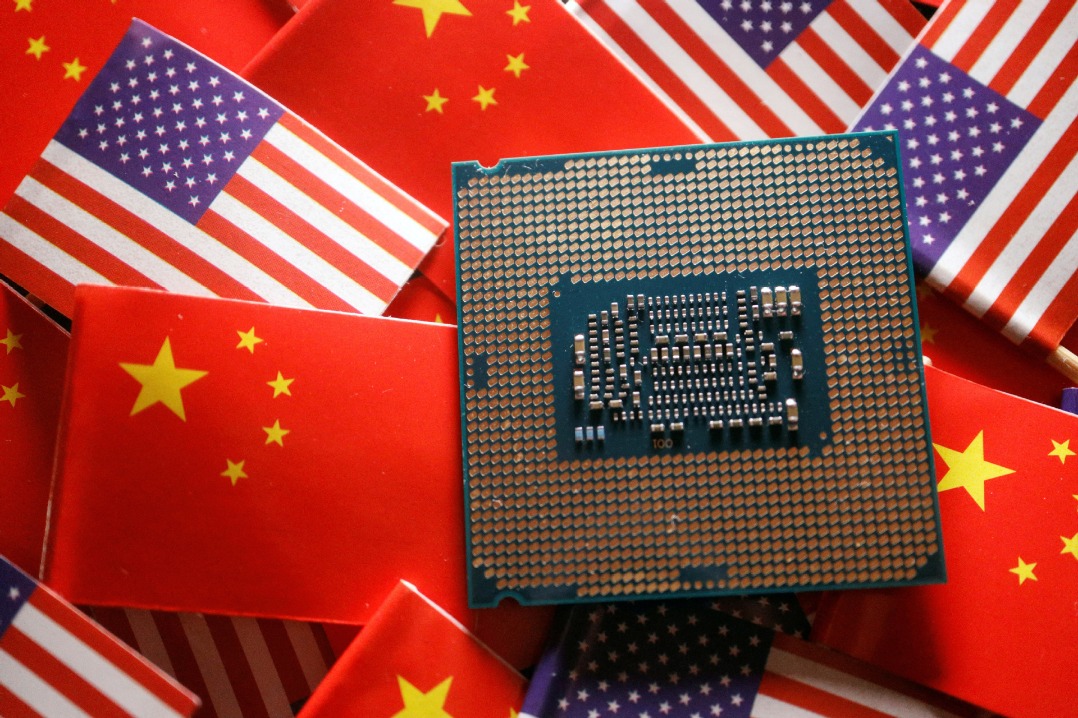
The technological competition between the United States and China dominated bilateral relations throughout 2025, with semiconductor and artificial intelligence sectors emerging as primary battlegrounds in this strategic rivalry. Washington significantly expanded export control measures targeting Chinese technology companies while simultaneously pursuing international alliances to counter China’s growing technological influence.
Throughout the year, the US Department of Commerce’s Bureau of Industry and Security implemented stringent restrictions, adding over 80 Chinese entities involved in advanced integrated circuits, quantum computing, and AI to its Entity List. The introduction of the controversial Affiliates Rule in September further extended these controls to foreign companies with significant ownership ties to listed entities, though implementation was temporarily suspended during trade negotiations.
Concurrently, the US Treasury Department enacted outbound investment screening mechanisms effective January 2025, limiting American capital flow into Chinese semiconductor, quantum computing, and AI enterprises. The diplomatic offensive culminated in December with the ‘Pax Silica’ Declaration, through which Washington sought to establish a coalition of allied nations dedicated to creating alternative supply chains for critical minerals and technology components.
Despite these comprehensive constraints, Chinese technology firms demonstrated remarkable resilience and innovation capacity. AI startup DeepSeek emerged as a particularly striking example, developing large language models that rivaled established US products while utilizing significantly reduced computational resources. Through sophisticated software optimization and hardware efficiency improvements, the company achieved performance levels comparable to OpenAI’s GPT-5 and Google’s Gemini 3.0 Pro.
Similarly, Huawei and Semiconductor Manufacturing International Corporation (SMIC), both subject to Entity List restrictions, made substantial advances in domestic chip production technology. Huawei’s November release of the Kirin 9030 processor, manufactured using SMIC’s enhanced fabrication processes, represented China’s most sophisticated semiconductor achievement to date according to industry analysts.
Technology policy experts increasingly question the long-term effectiveness of US export controls, noting that restrictions appear to be accelerating Chinese technological independence rather than stifling it. The International Center for Law and Economics and Information Technology and Innovation Foundation both published analyses suggesting that American measures have inadvertently stimulated innovation within China’s technology sector.
The two nations presented contrasting visions for global AI governance, with the US emphasizing competitive leadership through its AI Action Plan while China promoted multilateral cooperation and inclusion of developing nations through its Global AI Governance Initiative. Despite these divergent approaches, experts identified potential areas for collaboration including apolitical technical standards, public health datasets, and energy infrastructure development for data centers.
As trade negotiations continue into 2026, technology remains deeply intertwined with broader economic discussions, with semiconductor and AI policy expected to remain central factors shaping the complex relationship between the world’s two largest economies.